When Formula 1 returned to the historic expanse of Spa-Francorchamps for the 2025 Belgian Grand Prix, the narrative surrounding Lewis Hamilton was supposed to center on the incremental gains of a legendary driver embedding himself within Maranello's fabled red walls. Instead, the Ardennes weekend unraveled into a masterclass in operational friction. For Hamilton, who spent the summer break firing off multi-page strategy documents and holding high-level alignment meetings with chairman John Elkann, CEO Benedetto Vigna, and team principal Fred Vasseur, Spa laid bare the unforgiving gap between a driver's grand ambitions and the harsh mechanical reality of the SF-25.
The trouble began long before the lights went out on Sunday. Throughout the opening stages of the weekend, Ferrari debuted a major rear suspension upgrade designed to allow the team to run the car lower—extracting vital downforce without prematurely chewing up the underbody plank. While teammate Charles Leclerc extracted a productive baseline from the new components, Hamilton found himself wrestling with a sequence of cascading variables that exposed the limits of mid-season adaptation.
During final practice, a hefty shunt at the very end of FP3 destroyed the rear of Hamilton’s Ferrari, leaving his mechanics with a frantic two-hour repair window. While the crew performed heroics to get the car ready, the machine that emerged from the garage no longer matched the predictable balance Hamilton had enjoyed earlier in the session. The car felt amazing in FP3 and I really felt confident,
Hamilton reflected, noting that a couple of tenths vanished once qualifying got underway (Sky Sports). The post-crash rebuild left the setup slightly altered, depriving him of the precise handling window required to exploit Spa's high-speed sections.
Compounding the physical damage to the chassis was an internal team dynamic shift: a newly integrated performance engineer—promoted from within Maranello and previously known to Hamilton from his Mercedes tenure—had stepped into the garage right ahead of the triple-header crunch. Hamilton admitted that both he and his new engineer were thrust squarely into the deep end, attempting to decipher complex new car characteristics on the fly.
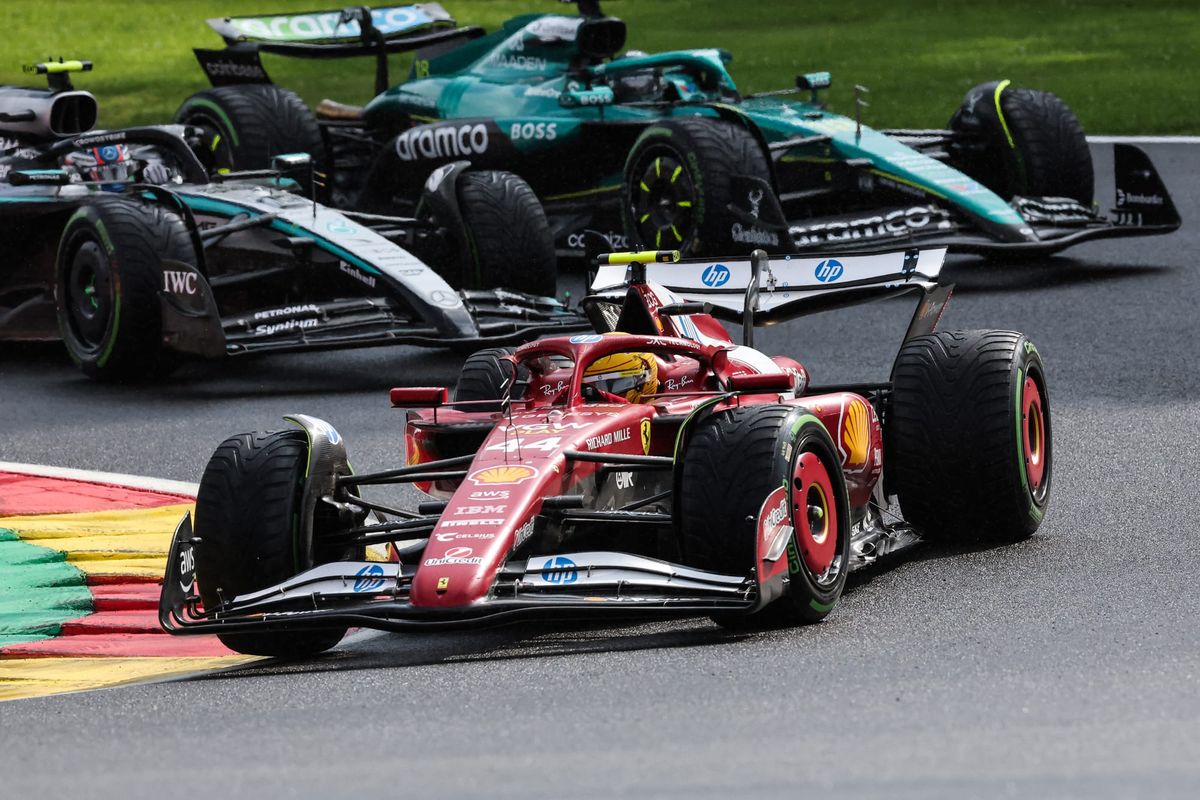
Those characteristics manifested violently during sprint qualifying on Friday, when a rear brake bite caught the seven-time world champion completely unawares. A sudden locking and snapping motion at the final chicane triggered an unusual spin, dumping him into 18th on the sprint grid. Ferrari's technical staff noted that the new brake configuration—which altered how aggressively the rear brakes engaged under heavy pedal pressure—had already caught Leclerc out earlier in the season during the Canadian Grand Prix. For Hamilton, Spa served as his brutal first introduction to the quirk.
The nadir arrived on Saturday afternoon during the primary qualifying session. Having barely scraped through a tense Q1 requiring an extra set of soft tyres just to survive, Hamilton's fastest lap was promptly deleted by race stewards for exceeding track limits at the sweeping Raidillon corner. The infringement, measuring just a hair beyond the white lines, dropped him to 16th on the timesheet and sealed a humiliating double Q1 exit following his sprint qualifying woes.
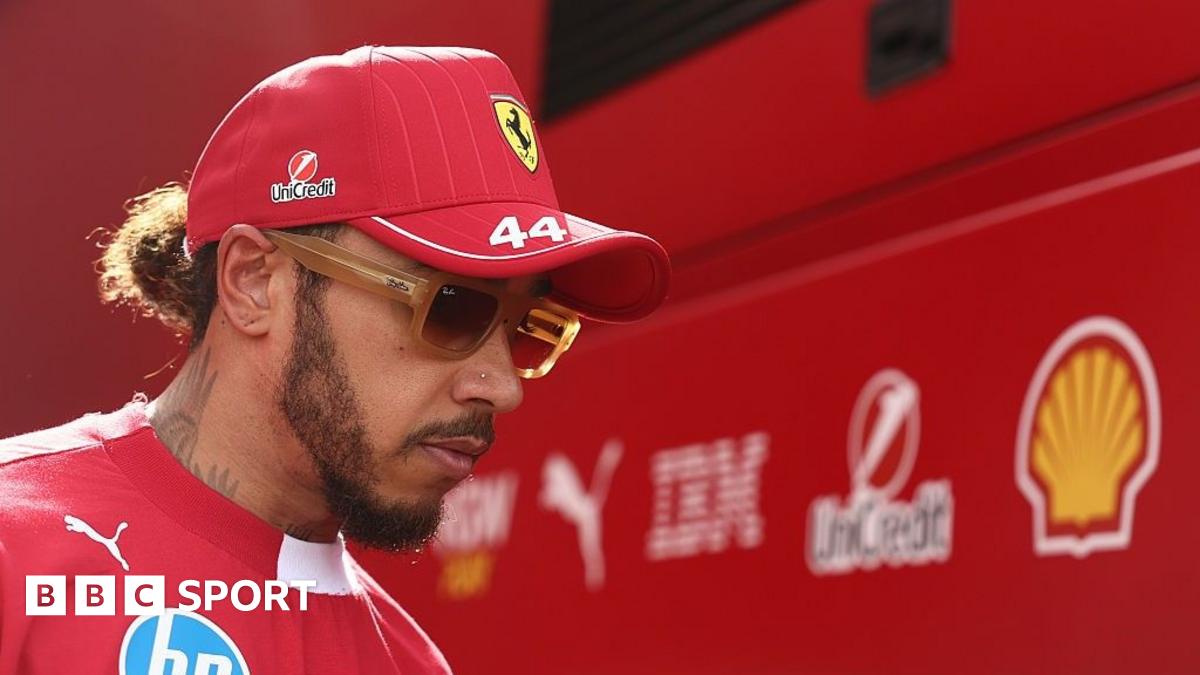
I made a mistake so I've got to look internal and I've got to apologise to my team because that is just unacceptable to be out in both Q1s,
Hamilton told Sky Sports F1 (motorsport.com). It's a very, very poor performance for myself.
Faced with a hopeless starting slot and desperate for raw pace to claw back into the points, Ferrari triggered an automatic parc ferme penalty by bolting a fresh power unit into Hamilton’s chassis ahead of Sunday's race, condemning him to a pit-lane start alongside fellow back-of-the-grid gamblers Kimi Antonelli and Fernando Alonso. What followed on Sunday afternoon, however, was a brilliant diagnostic drive. Armed with an overnight wet-weather setup adjustment, Hamilton sliced through the field, executing a timely switch to dry tyres and charging 11 places upward to claim seventh at the checkered flag, earning Driver of the Day honors.
Yet, a spirited recovery drive cannot mask the broader strategic crossroads facing the Scuderia. As McLaren sets the performance benchmark and Mercedes commands a formidable advantage on pure power-unit grunt through Spa's long straights, Ferrari's development trajectory for the remainder of 2025 has effectively hit a plateau. Upgrades have largely ceased as Maranello redirects its intellectual capital toward the sweeping regulatory reset arriving in 2026—the precise horizon Hamilton envisioned when he inked his blockbuster switch.
For a driver who openly admits he refuses
to join the lineage of world champions like Fernando Alonso and Sebastian Vettel who left Maranello empty-handed, Spa was a stark reminder of the cultural and mechanical mountain still left to climb. The documents have been sent, the structural debates have been held, and the engineering personnel have been reshuffled. Now, the countdown to 2026 is the only metric that truly matters.
Sources
These sources formed the evidence pack for this article. Links open the original publisher; inclusion does not imply endorsement.
- motorsport.com original
- skysports.com original
- Kieran Jackson Mon, Jul 28, 2025 · 6 min read original
- bbc.com original
- the-race.com original
- Daniel Moxon original
- Daniel Moxon original