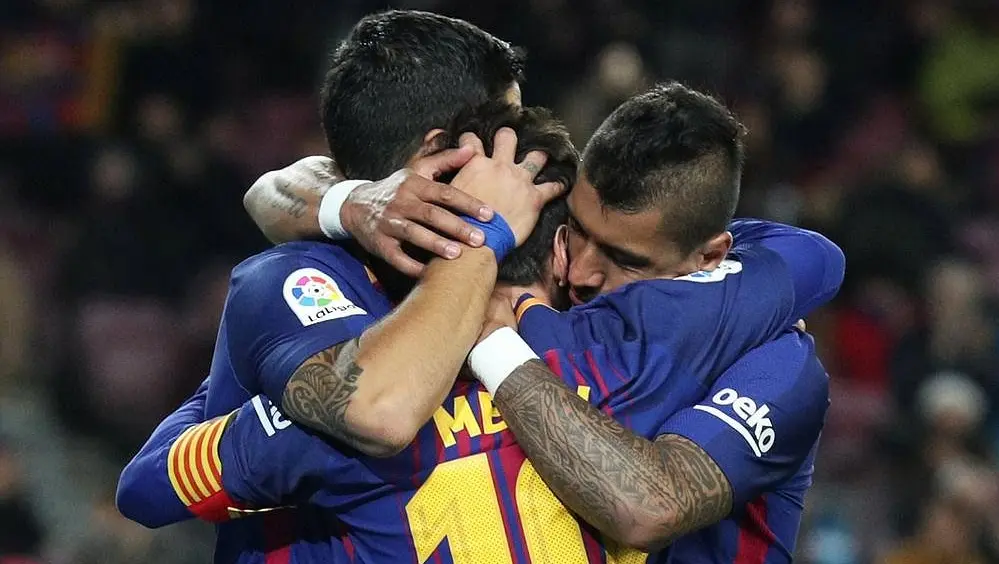
When the 2005-2006 Serie A season drew to a close, it brought down the final curtain on a twelve-year alliance between Opel and AC Milan. For more than a decade, the German automaker's blitz emblem adorned the jerseys of one of Italy's most storied clubs. Looking back at the culmination of that era, former Opel Italia CEO Massimo Berni captured the essence of the enterprise: Guardando all'esperienza di casa nostra posso dire che Opel era particolarmente interessante a sponsorizzare il Milan, non una squadra di calcio qualsiasi. La società rossonera è conosciuta ed apprezzata in tutto il mondo, ha un alto livello di esposizione ed un seguito considerevole anche in Estremo Oriente.
That liaison was never born of mere coincidence. Grounded in a corporate philosophy formulated in the early 1990s, the automaker recognized football as a mirror for industrial manufacturing. Executives frequently drew parallels between the pitch and the production floor, explaining that il calcio è come un gruppo di lavoro
—arguing that seamless coordination between players was identical to engineers, technicians, and specialists collaborating to secure success.
The Multi-Nation Footprint and International Stage
Opel's ambitions quickly expanded far beyond Italian borders. During the 1990s, the brand established a commanding presence across elite European football, simultaneously serving as main sponsor for a formidable roster of continental heavyweights:
- AC Milan in Italy
- Bayern Munich in Germany
- Paris Saint-Germain in France
- Standard Liège in Belgium
- Sparta Prague in the Czech Republic
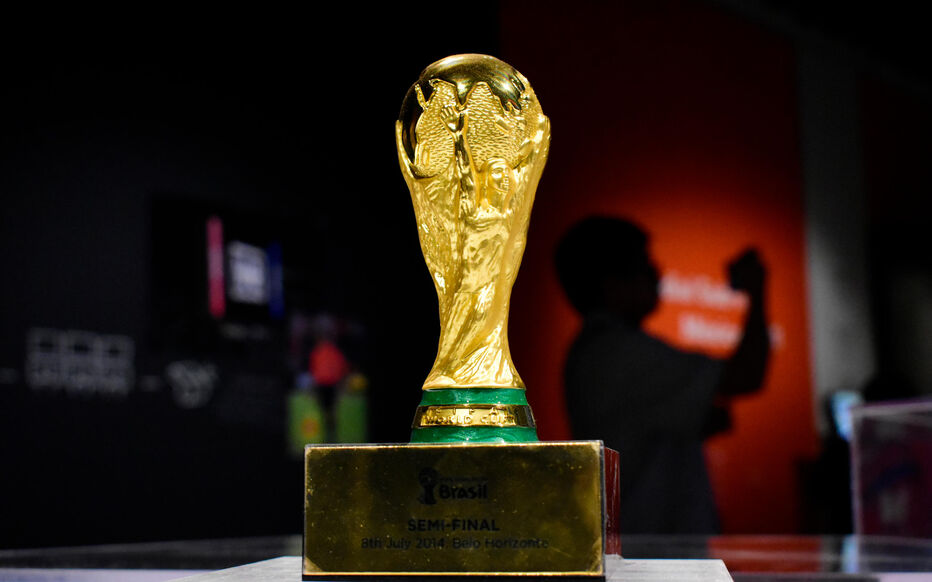
Beyond club sides, the manufacturer anchored itself to international showcases. Opel served as a principal sponsor and the official automobile supplier for the 1996 UEFA European Championship in England and the 1998 FIFA World Cup in France. These high-profile engagements built upon a legacy that already included tournament sponsorships for Euro 1988, Euro 1992, the 1986 World Cup in Mexico, and the 1994 World Cup in the United States, alongside backing for the national teams of Ireland and France.
Activation, Marketing, and the Milan Showcase
The activations went far beyond traditional perimeter boards. Opel Italy immersed guests in VIP hospitality experiences at San Siro, while legendary players stepped directly into promotional campaigns. Paolo Maldini famously featured in advertisements for the Opel Astra Station Wagon, and George Weah lent his star power to promote the Opel Tigra. Club directors and players alike drove company vehicles in their daily routines.
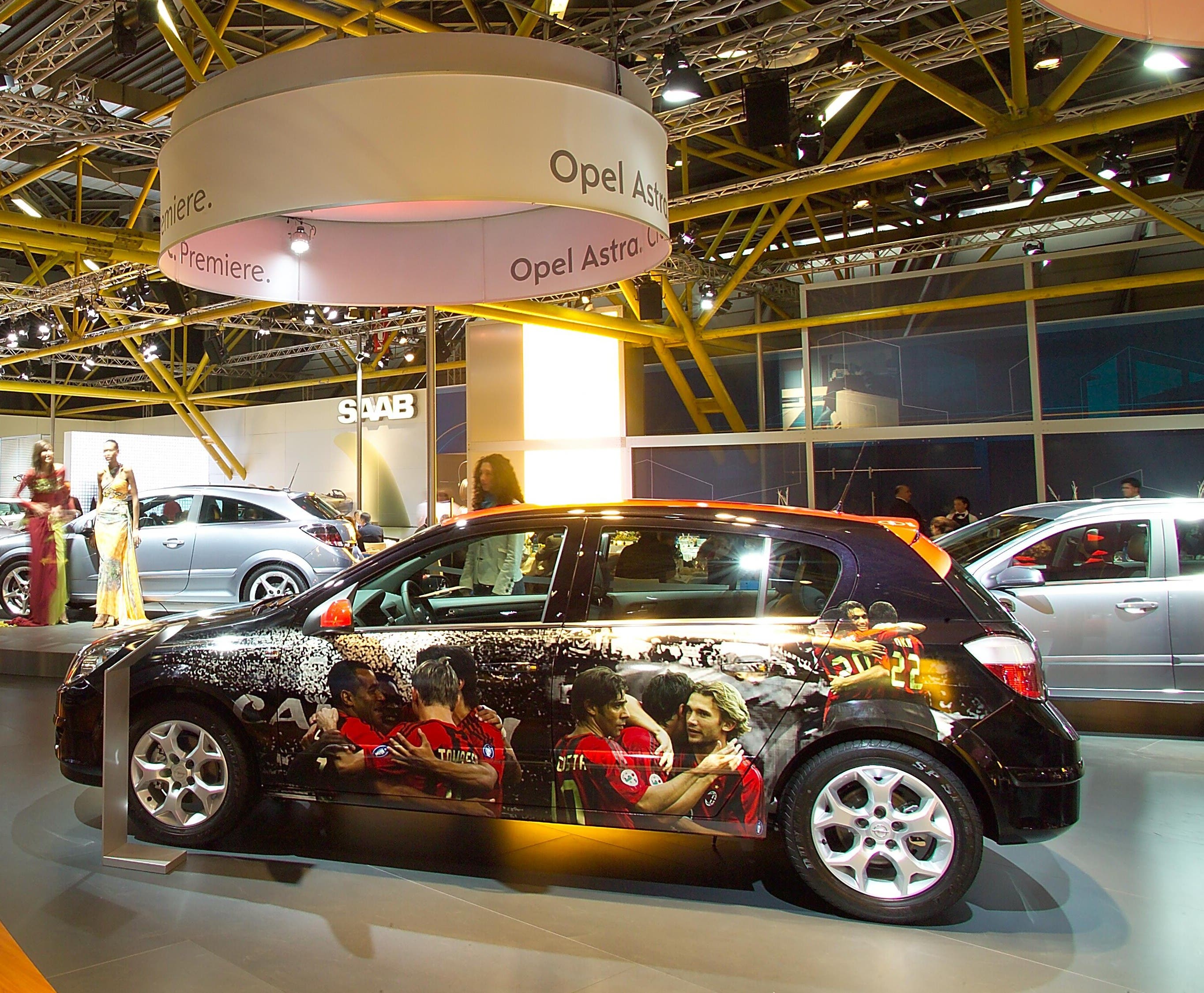
Perhaps the most creative crossover arrived at the 2004 Bologna Motor Show, where Opel exhibited a bespoke, one-off Opel Astra bearing the autographs and images of Milan's star players. The unique vehicle was subsequently auctioned off, with all proceeds channeled into the Fondazione Milan project supporting the De Marchi Clinic.
Sustaining the Playbook
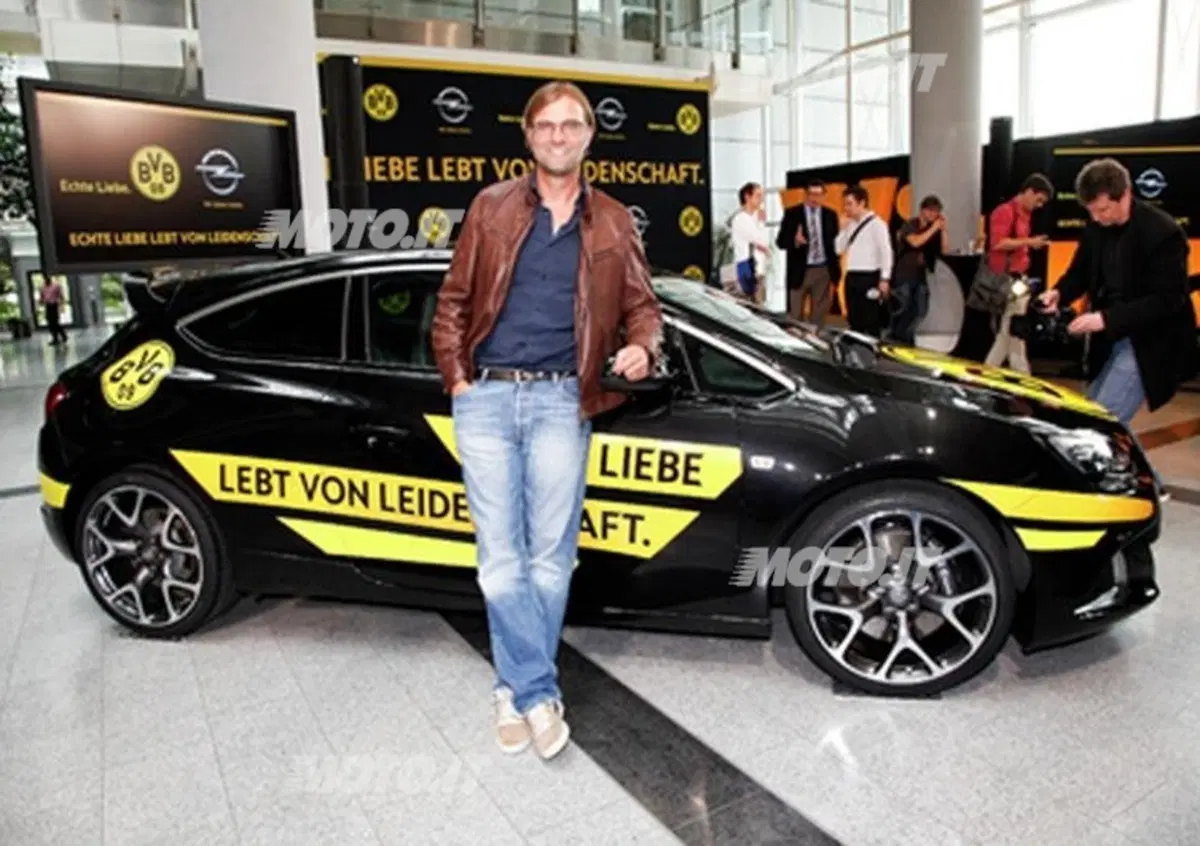
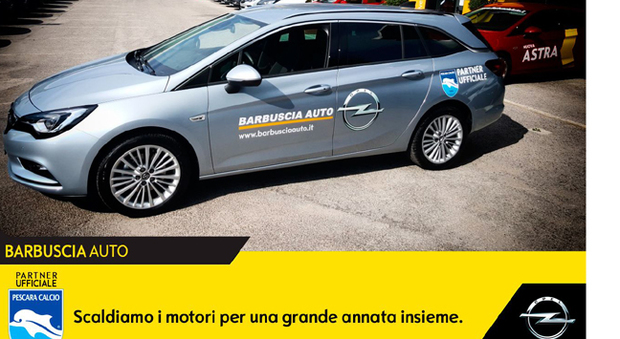
Though the marquee 12-year chapter with Milan concluded two decades ago, the foundational strategy of leveraging local and international football to drive market visibility endured. Subsequent chapters saw the brand forge alliances with clubs such as Borussia Dortmund—where charismatic manager Jürgen Klopp served as a brand ambassador—alongside regional partnerships with sides like Fortuna Düsseldorf, Bayer Leverkusen, SC Freiburg, FSV Mainz 05, Napoli, and Pescara.
Ultimately, as Massimo Berni and his contemporaries maintained, the exposure yielded a sharper, more dynamic brand image across competitive automotive markets. The strategy proved that when industry and athletics share a synchronized playbook, the resulting momentum carries long past the final whistle.
Sources
These sources formed the evidence pack for this article. Links open the original publisher; inclusion does not imply endorsement.
- automoto.it original
- media.stellantis.com original
- Rosario Scelsi original
- motori.ilmattino.it original