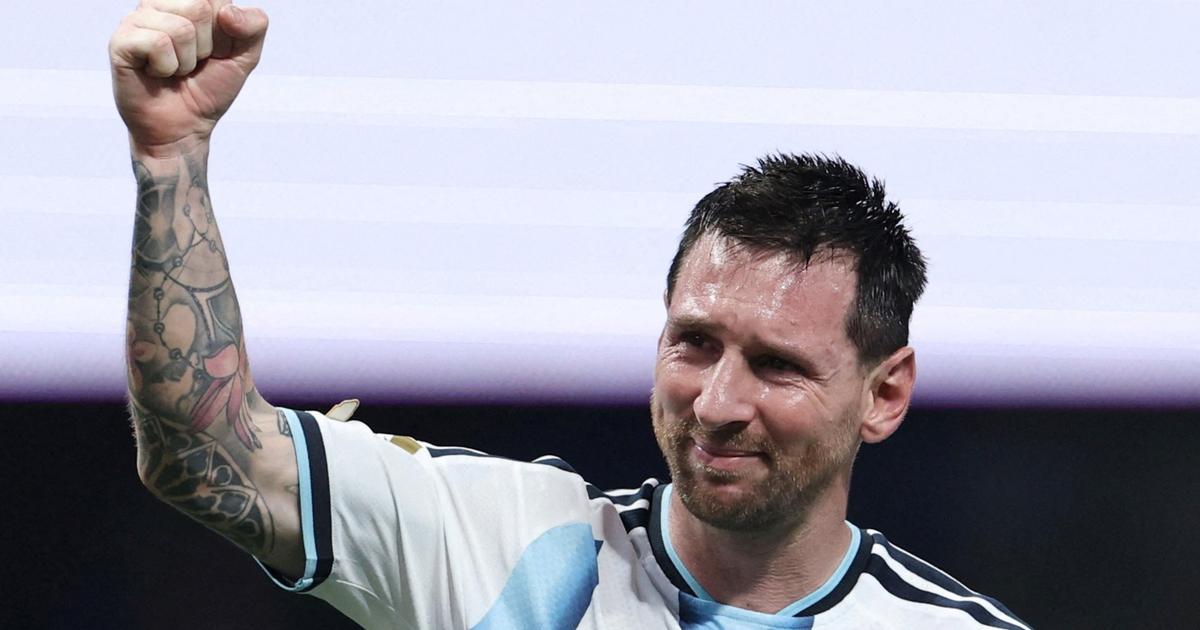
There is a specific silhouette that has become synonymous with Lionel Messi during this 2026 World Cup: a spectral, emaciated face at the end of a grueling match, a man who looks as though he has been through a war. But look closer at the data, and the image of the fading veteran dissolves. Instead, you find a biological anomaly.
While the natural order of football dictates that players lose 1% to 2% of their speed annually between the ages of 30 and 35, and an even steeper 1.5% to 3% after 35, Messi has effectively flipped the script. As Argentina navigates a high-stakes tournament, the narrative is no longer about how much longer he can play, but how he is managing to produce numbers that rival his earlier peak outputs.
The Statistical Defiance of Aging
The numbers provided by specialized sports data firms paint a picture of a player who has not merely slowed down, but has undergone a physical renaissance. According to nutrition specialist Ismael Galancho, the delta between Messi’s 2022 performance and his current output in North America offers a startling contradiction to standard physiological decline.
In the 2022 tournament, tracking data from Traclab showed Messi clocking a top speed of 29.38 km/h. In this 2026 campaign, Sofascore metrics indicate he has registered a maximum speed of 30.9 km/h. This 5% gain at the age of 39 challenges standard expectations of athletic aging, even if it falls short of the 32.5 to 33.5 km/h peaks he routinely hit between 2009 and 2015.
This physical edge has translated directly into decisive output on the pitch. Messi entered the closing stages of the tournament leading the Golden Boot race with eight goals in six matches. That tally includes a direct free kick against Jordan, an opener against Cape Verde, and an equalizer against Egypt during a frantic 3-2 comeback in the round of 16.
The Architecture of a Second Youth
This longevity is not an accident of nature; it is the result of a meticulously engineered lifestyle. The transformation began roughly fifteen years ago when Messi, then a frequent consumer of pizzas, red meats, and sodas, moved toward a strictly balanced diet under the guidance of Italian specialist Giuliano Poser. What began as a necessity to combat muscle injuries and gastric distress has evolved into a monastic routine prioritizing precision sleep, strength work, and muscular activation.
However, the final piece of the puzzle was the intensive preparation undertaken in the months leading up to the tournament. Recognizing the erratic rhythm of Major League Soccer, Messi and his Inter Miami teammate Rodrigo De Paul engaged in a grueling three-month regimen starting in February 2026. The duo doubled their training sessions, working alongside a personal physical trainer to adapt training loads specifically for World Cup intensity. The results were visible on the pitch in May, where Messi recorded five goals and seven assists in MLS play before experiencing a minor muscular overload scare at the end of the month.

Ten Soldiers and One Machine
Despite his physical surge, the tactical reality of Messi at 39 requires a specific symbiotic relationship with his teammates. He no longer possesses the engine for relentless pressing or constant sprinting. Instead, he operates with surgical economy, utilizing weak phases to conserve energy, only to explode into life when the danger is most acute.
Argentine manager Lionel Scaloni has noted that while Messi's running volume remains consistent with previous years, his decisiveness has spiked.
At the data level, I don't think there is a big difference. But what he does is more decisive,Lionel Scaloni
This efficiency was evident in the knockout rounds. During the dramatic encounter against Egypt and the subsequent matches, Messi's ability to orchestrate the final third became the team's primary offensive engine. In the semi-final victory over England, he recorded nine dribbles and two assists—becoming the first player to achieve such a feat in a World Cup knockout match since the inception of detailed tracking in 1966. His stoppage-time delivery to find Lautaro Martinez in the semi-finals underscored an enduring technical precision.
Yet, observers have noted the heavy reliance on a veteran squad. Zlatan Ibrahimovic offered a pointed assessment of the dynamic, noting that while Messi transformed into an unstoppable force when pushed to the brink, his teammates must shoulder a heavier burden to protect their captain.
The Final Act
As Argentina moves toward the tournament's climax, the question remains how much longer this biological defiance can continue. Messi has now amassed 21 World Cup goals, surpassing Miroslav Klose, and his international tally stands at 125 goals in 204 appearances. Whether this finely tuned routine can carry a weary Albiceleste through one final 90-minute battle remains the defining uncertainty of his storied career.
Sources
These sources formed the evidence pack for this article. Links open the original publisher; inclusion does not imply endorsement.
- lequipe.fr original
- Céline Chouard avec AFP original
- Lucas Michel original
- Khaled Mahmoud original
- europesays.com original