The International Cricket Council (ICC) has finalized the roadmap for the 2027 men’s Cricket World Cup, unveiling a 14-team format that seeks to balance broader global participation with the intense commercial demands of the sport's most significant matchups. Scheduled to take place across South Africa, Zimbabwe, and Namibia, the tournament will comprise 57 matches, beginning on October 4 and culminating in a final on November 21, 2027.
The tournament’s new architecture introduces a tiered entry system designed to ensure high-stakes competition from the opening days. The expansion begins with a "Super Series," a preliminary phase featuring the three lowest-ranked qualifying nations. Only one team from this group will secure advancement to the main event. Once the field is narrowed to 12 teams, they will be divided into two groups of six. The progression model then shifts to a "Super 7" phase—an all-plays-all round involving the top three teams from each group and the next highest-placed side. This phase will ultimately determine the four semi-finalists.
The Geopolitical Gravity of the Rivalry
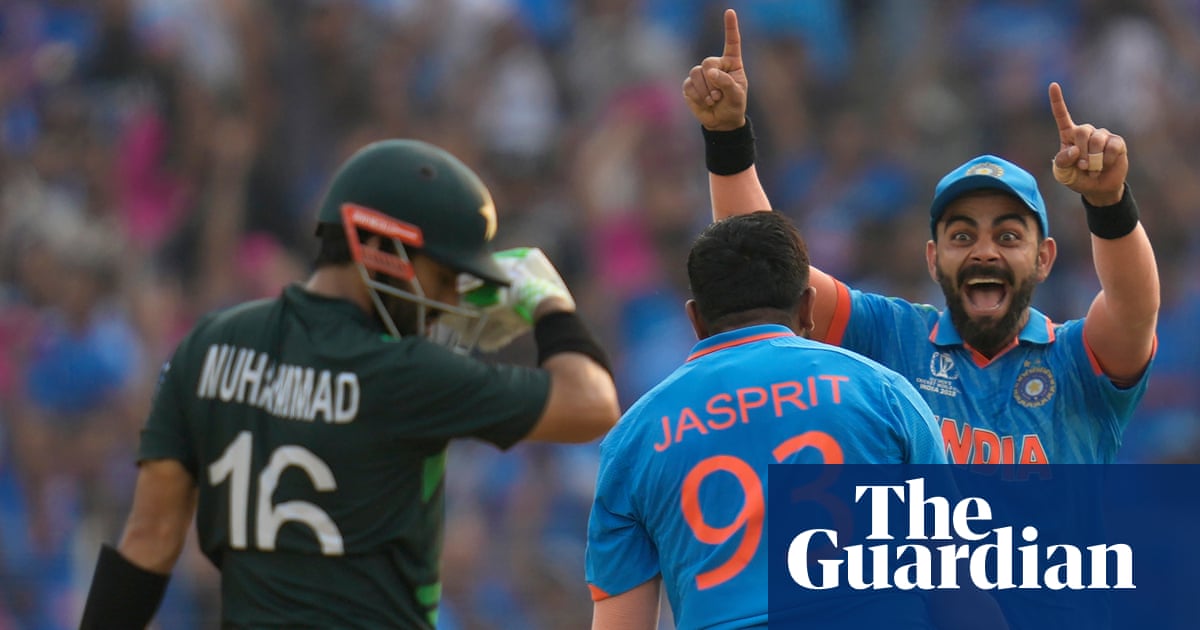
While the technical mechanics of the tournament are significant, the underlying driver for much of the ICC's structural planning is the enduring weight of the India-Pakistan fixture. This matchup, often described as the rivalry to end sporting rivalries, carries a complexity that extends far beyond runs and wickets. Because direct bilateral ties between the two nations remain virtually non-existent due to political friction and administrative impasses between the Board of Control for Cricket in India (BCCI) and the Pakistan Cricket Board (PCB), ICC-sanctioned tournaments serve as the primary, and sometimes only, mechanism for these two giants to meet on the pitch.
The necessity of neutral venues is driven by a history of tension rooted in the 1947 partition and ongoing disputes over the Kashmir region. These realities mean that the presence of an India-Pakistan clash in a global tournament is not just a sporting milestone, but a massive commercial engine for the governing body.

"The India-Pakistan relationship is so critical for cricket," noted former ICC chief executive David Richardson. "The fact that India and Pakistan can play each other in ICC events is a tremendous tool to make sure that things don’t get out of hand and that relationships are kept on an even keel."
The scale of interest is unparalleled. Steve Elworthy, a former managing director of the World Cup, has noted that the demand for these matches can reach levels that dwarf almost any other sporting event globally.
Historical Dominance and Competitive Volatility
Despite the immense passion and the potential for upsets, the historical record in 50-over World Cup encounters favors India. Currently, India holds an undefeated 7-0 record against Pakistan in the tournament. This dominance has persisted through various eras of cricketing evolution, including high-pressure semi-finals and group-stage clashes.
However, the rivalry is defined by its capacity for sudden shifts in momentum. Pakistan has demonstrated the ability to thrive in the face of heavy statistical disadvantage, most notably during the 2017 ICC Champions Trophy, where they secured a shock victory. This inherent unpredictability ensures that even as India remains a commercial and competitive powerhouse—bolstered by the immense wealth of the Indian Premier League—the competitive tension remains unresolved.

Sources
These sources formed the evidence pack for this article. Links open the original publisher; inclusion does not imply endorsement.
- cnn.com original
- nytimes.com original
- bbc.co.uk original
- theguardian.com original