The arithmetic of ASVEL's summer went sideways on a Thursday in mid-July. According to reporting from L'Équipe relayed by Sports.fr, the Villeurbanne club presented a budget of €24 million to the DNCCG — the French league's financial control body — rather than the €59 million figure that had underwritten its most ambitious offseason in memory. The difference, around €35 million, was supposed to be guaranteed by a new Asian partner whose financial assurances never arrived. Everything Tony Parker had been building since he took the bench as coach — every signature, every promise, every carefully constructed argument to convince a point guard that this was the place to be — was suddenly resting on a foundation that had shifted under the floorboards.
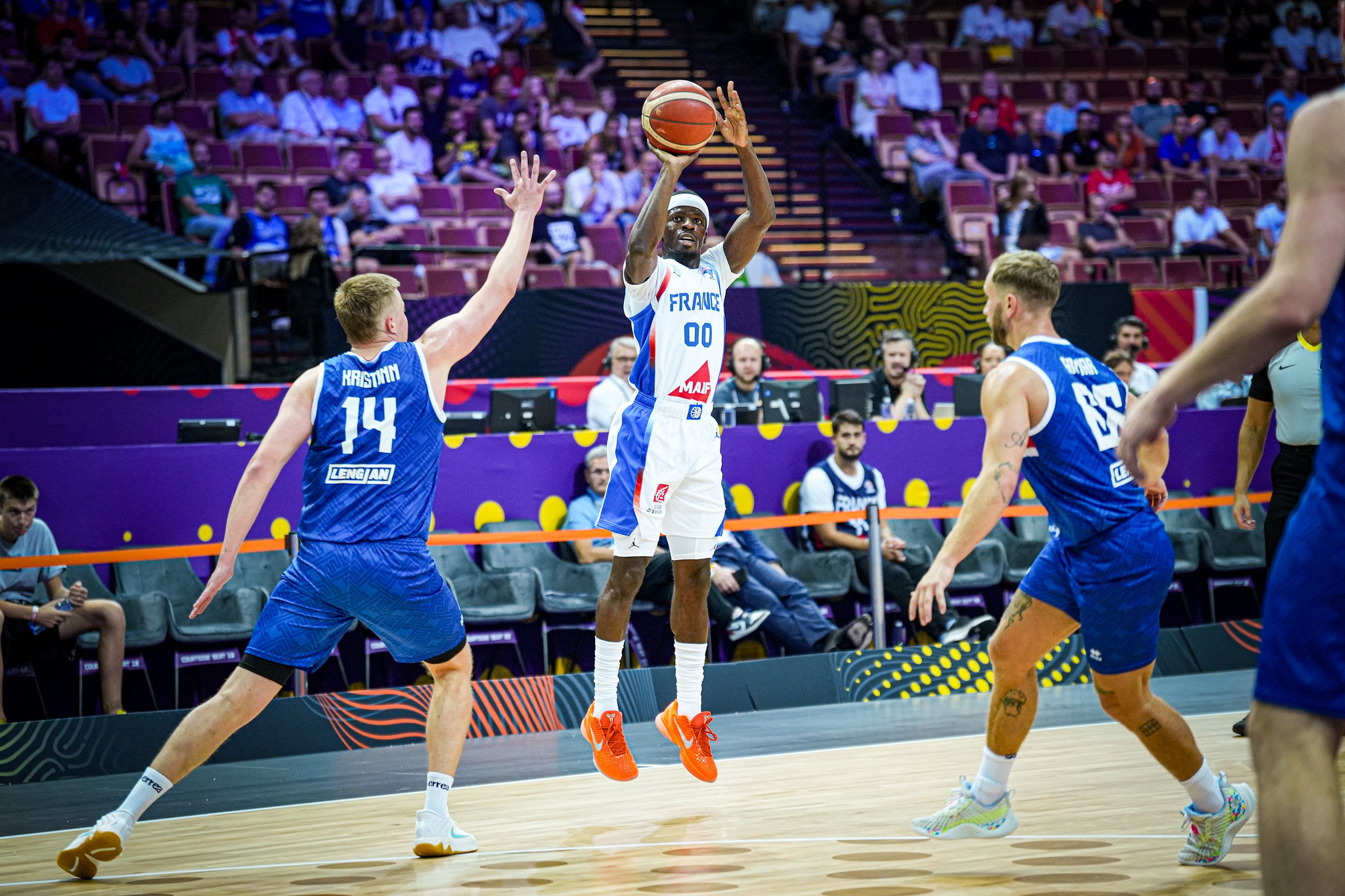
The most fragile of those signatures belonged to Sylvain Francisco. The 28-year-old, 1.85m French international had been the headline of Parker's rebuild, lured away from a season at Zalgiris Kaunas that ended with back-to-back Lithuanian titles and an All-EuroLeague First Team selection. Sources disagree on the precise structure of his deal — Sports.fr cites a total package of roughly €16 million across three years, while Orange estimates €4 million in year one stepping down to €2 million in year three — but every version of the figure arrives at the same conclusion: this is, by any account, the largest contract ever written in Betclic Elite history. Francisco did not come cheap, and he did not come quietly.

The franchise player and the project
Parker's pitch had been specific and personal. Speaking to L'Équipe, the club president turned coach framed the signing in terms that left little room for ambiguity: Je voulais un 'franchise player' et Sylvain Francisco était en haut de ma liste. Il a vraiment cet ADN français.
The phrasing was deliberate. ASVEL was not buying a backup plan. It was buying a face — a Créteil-born leader who had spent the previous season averaging 16.5 points and 6.5 assists (7th in scoring, 2nd in dimes) for Kaunas, finishing second to Sasha Vezenkov in the EuroLeague MVP vote and adding a captain's armband with the French national team during the February window. The supporting cast was curated to match the star: former NBA center Daniel Theis, plus perimeter help in Nick Weiler-Babb and Armoni Brooks, with Vincent Collet installed on staff.
The promised return was a Final Four tilt and the resurrection of a French flagship that had finished last in EuroLeague the previous season. The pace profile Parker was building leaned on Francisco's pick-and-roll command and downhill bursts — the kind of on-ball accelerator that turns a transition game from occasional into structural. Remove that fulcrum, and the rest of the architecture starts to creak.
Panathinaikos's French reading list
The interest out of Athens did not require a translation service. Panathinaikos, eliminated in the EuroLeague quarterfinals last spring, had already spent the summer collecting French passports: Guerschon Yabusele and Moustapha Fall were added to a roster that had included Mathias Lessort since 2023. According to Bebasket and Eurohoops, the Greens were now circling a third French international, with Francisco at the top of the list.
The fit is not difficult to see. Panathinaikos has the budget, the platform and, crucially, a continental trophy-or-bust mandate that ASVEL's suddenly austere spreadsheet can no longer match. For a player who spent the previous summer wandering from Levallois to Paris to Roanne to Manresa, Peristeri, Bayern Munich and finally Kaunas, the prospect of a stable EuroLeague contender willing to pay him as a top-of-rotation lead guard would once have been the dream scenario. Until the Villeurbanne offer arrived, it was.
The clause that won't sit still
What makes the saga genuinely live, rather than a slow-burn contract dispute, is a piece of fine print that has nothing to do with ASVEL or Panathinaikos at all. BeBasket, citing Donatas Urbonas, reports that Francisco's ASVEL deal still carries an NBA exit clause active until July 30 — a 30-day window in which the point guard can unilaterally reopen his American option. The clause is a relic of negotiations conducted before the French project took shape, but it remains live.
Francisco himself had telegraphed the priority when he signed. Oui, malgré tout, l'objectif principal est la NBA. Les choses peuvent changer, mais c'est l'endroit où je veux aller. Les cartes sont entre mes mains, je dois donc prendre mon temps.
The phrasing — the cards, the patience — reads rather differently now that the deck has been reshuffled. A three-year, €16 million French record-setting deal becomes a much less interesting proposition if the club behind it has just informed the regulator it will operate on €24 million. The NBA window, narrow as it is, may yet prove the cleanest exit of all, though BeBasket notes the financial sacrifice required to take it would be steep.
What the next eleven days actually contain
As of the July 18 reporting that triggered this chain, Francisco is, in Bebasket's reading, prepared to wait and let ASVEL attempt to solve its own crisis before entertaining alternatives. That is a defensible posture: his leverage only increases if the budget situation in Villeurbanne deteriorates further, and a dignified public patience costs him nothing. But the math is unforgiving. A €24 million operating budget cannot accommodate a player whose single contract consumes a meaningful slice of that envelope, cannot simultaneously fund Theis, Weiler-Babb and Brooks at their agreed terms, and cannot present a credible EuroLeague roster to a coach who just took the job promising a Final Four.
Standings pressure compounds the calculus. Betclic Elite is no longer a one-horse league — Monaco remains structurally uncertain, Paris Basketball is still searching for a head coach, and the gap between haves and have-nots is widening. If ASVEL are forced to offload Francisco to honor the salary structure, the ripple travels far beyond Villeurbanne: every EuroLeague club that planned around a budget-busted French contender recalibrates its own ambitions. Panathinaikos, in particular, would not be simply signing a point guard; it would be inheriting the offseason that ASVEL could no longer afford.
For now, the ledger is the only thing that has actually moved. Francisco's All-EuroLeague tape still plays the same way — that compact, sudden first step, the vision that made him the second-best passer in the league by assist average. Parker's ambition is unchanged. What changed is whether ASVEL can pay for the dream it sold him. If the DNCCG files eventually require a fire sale, the man at the center of it will not lack for suitors. The only question is which league gets him, and whether Villeurbanne's grand project survives long enough to find out.
Sources
These sources formed the evidence pack for this article. Links open the original publisher; inclusion does not imply endorsement.
- altzar.org original
- Aurelie SACCHELLI original
- Alessandro di Bari original
- Be_BasketFr original
- lequipe.fr original
- bebasket.fr original
- Media365 original