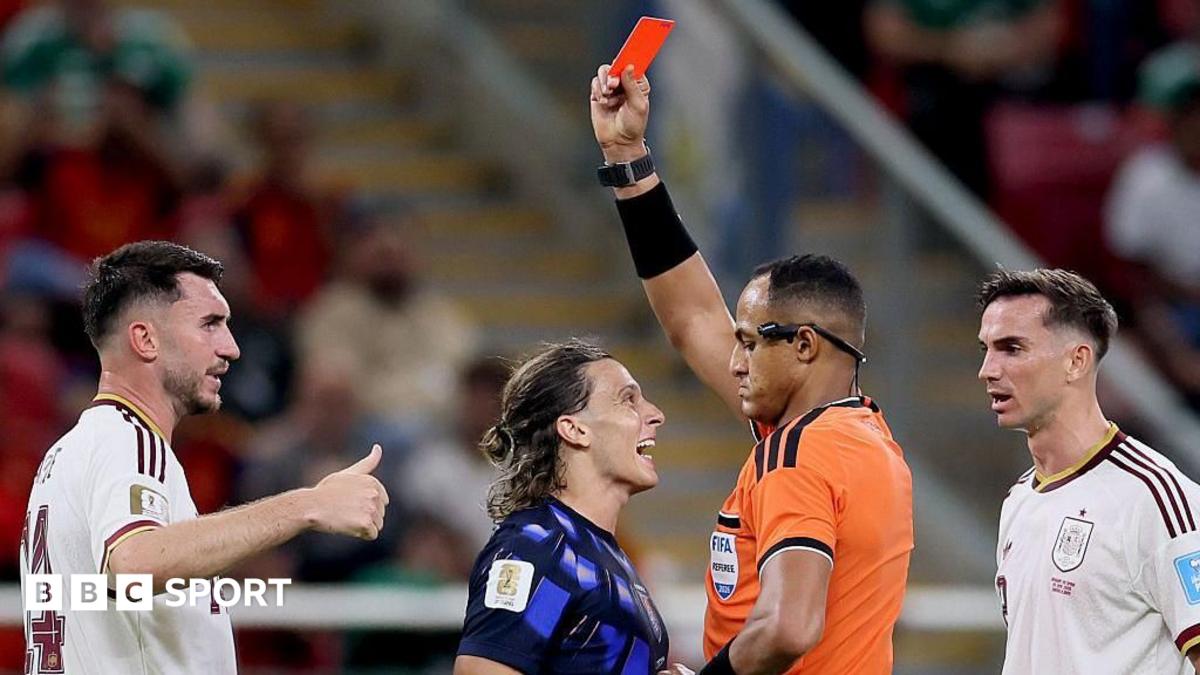
When 44-year-old Ismail Elfath steps onto the pitch in Atlanta for Wednesday's World Cup semi-final between England and Argentina, he brings a distinct refereeing footprint to one of international football's most volatile rivalries. Supported by American assistant referees Corey Parker and Kyle Atkins, alongside Italian fourth official Maurizio Mariani, Elfath's assignment underlines the intricate balancing act FIFA performs when managing elite match control, technological oversight, and strict political neutrality.
Geopolitical Exclusions and the Atlanta Assignment
FIFA's neutral appointment regulations have significantly narrowed the pool of eligible officials for the tournament's closing fixtures. English referees Michael Oliver and Anthony Taylor, as well as Argentine official Facundo Tello, were explicitly ruled out of contention for both the World Cup final and the third-place play-off. Beyond standard rules preventing officials from taking charge of games involving their home nations, FIFA guidelines restrict English and Argentine referees from officiating matches between the two countries due to political rivalries stemming from the 1982 Falklands conflict.
That policy cleared the way for Elfath, a two-time Major League Soccer Referee of the Year who moved to the United States from Morocco at age 18 through a diversity visa lottery. Having built his MLS career since 2012, Elfath is no stranger to high-intensity moments involving global stars. He served as the fourth official during Argentina's 2022 World Cup final triumph over France and refereed Lionel Messi's first trophy win with Inter Miami in the 2023 Leagues Cup final shootout against Nashville SC.
Inside Collina's Miami Nerve Center
While Elfath manages match flow on the field, overall officiating operations are orchestrated from FIFA's Technology Command Center in Miami. Led by Pierluigi Collina, chairman of FIFA's referees committee and six-time recipient of the world's best referee award, the Miami facility functions as the operational hub for a tournament spanning three host nations.
Unlike the 2022 World Cup in Qatar, where Collina and FIFA President Gianni Infantino watched all 64 matches together by switching venues at half-time, the expansive geography of this tournament requires heavy reliance on real-time monitoring technology. When controversial incidents arise, Collina relies on connected Lenovo workstations and multi-screen feeds to provide immediate context to Infantino.
blockquote>"Normally he says, 'What was that?’ I need to answer him, and I have to tell him,"
— Pierluigi Collina, Chairman of FIFA's Referees Committeeblockquote>The technical architecture behind modern officiating represents a dramatic departure from past tournaments. Preparing for the 2002 World Cup final involved reviewing single VHS tapes for an entire day; today, Collina's team utilizes Football AI Pro, a system developed with Lenovo that crunches more than 2,000 metrics per match across all 48 participating teams. Offside calls are verified using Hawk-Eye Innovations software running on Lenovo ThinkStation hardware, anchored by 3D player avatars generated from laser scans of over 1,200 players.
The Human Factor and Technology's Boundaries
Despite automated offside lines and Referee View bodycams—which adapt Formula 1 stabilization technology to reduce camera jitter by up to 60 percent—Collina maintains that technology cannot eliminate human judgment entirely. Addressing common fan critiques regarding Video Assistant Referee (VAR) checks interrupting goal celebrations, Collina rejects the notion that technology drains joy from the sport.
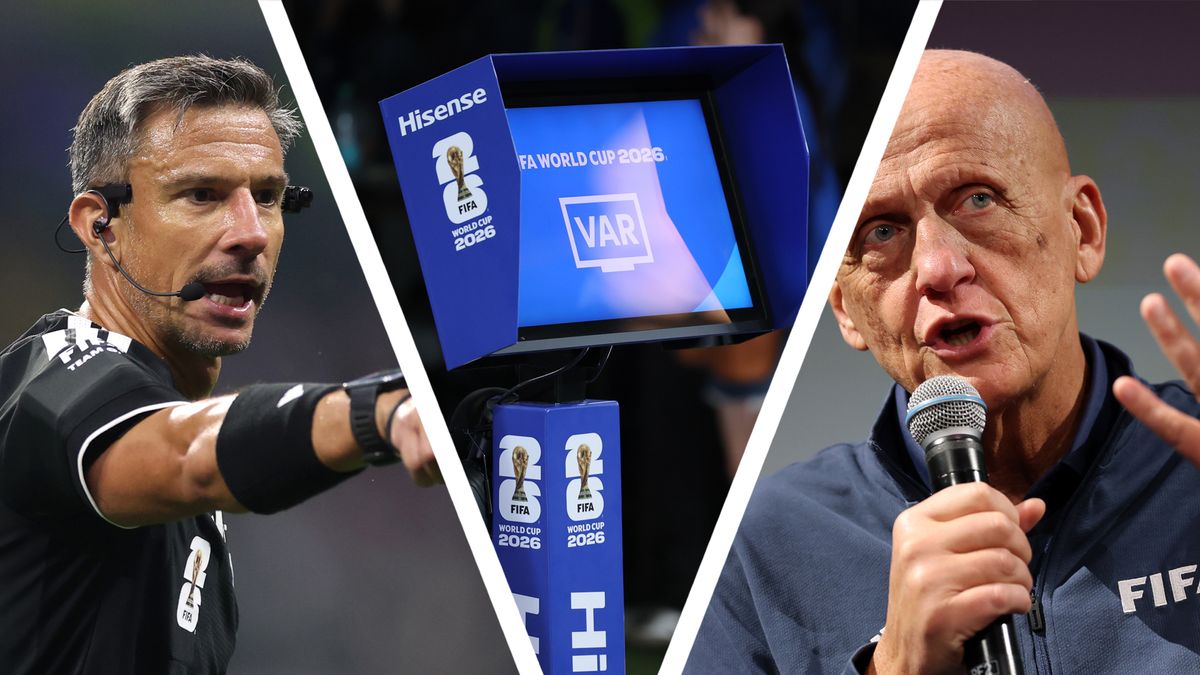
"The player immediately reacts and celebrates the goal. And then there is a moment of suspense, because there is a check. Goal is checked. And at the end, when the goal is confirmed, there is a second celebration. So basically, the emotion is doubled; it's not reduced."
— Pierluigi Collinablockquote>Crucially, Collina emphasizes that physical fouls remain firmly within the realm of human interpretation on the pitch.
blockquote>"Football is a sport of contact, and there is no technology that can assess something like pushing, pulling or so on. The misconception is we have the technology, and we can provide an answer to everything."
— Pierluigi Collinablockquote>Evidence-Led Forecast: Tactical Contact, Whistle Thresholds, and Match Management in Atlanta
Likely Tactical Pattern: High physical intensity across mid-block transitions with aggressive spatial pressing. Elfath's record—six yellow cards and one red across three matches—demonstrates a willingness to allow fluid physical play while enforcing strict boundaries when tackles turn dangerous.
Decisive Matchup: Aerial duels and high-boot contests during quick counter-attacks. Following his straight dismissal of Agustín Canobbio for a high challenge against Pau Cubarsi, players contesting loose balls in dynamic transition phases face immediate risk if studs are raised.
Strongest Counter-Case: Over-reliance on VAR intervention for penalty-box contact. Pierluigi Collina's explicit boundary regarding technology's inability to measure pushing and pulling means the on-field crew, supported by Italian fourth official Maurizio Mariani, will enforce a high threshold for penalty-box contact rather than stopping play for minimal contact.
What Would Change the Read: Early disciplinary escalation due to dissent. Canobbio's physical confrontation in the group stage demonstrated how fast emotional temperature can spike; an early booking for dissent from Elfath would force both benches and tactical setups to adopt a far more cautious approach to contact.
Sources
These sources formed the evidence pack for this article. Links open the original publisher; inclusion does not imply endorsement.
- knihobot.cz original
- techradar.com original
- bbc.co.uk original