For Mick Schumacher, the detour through the world of endurance racing was never about finding a new calling; it was about maintaining a presence while waiting for the right door to open. While his tenure with Alpine in the FIA World Endurance Championship (WEC) provided stability and three podium finishes, it lacked the singular, visceral focus of the open-wheel machines that define his pedigree. Now, the 26-year-old German has officially pivoted, trading the heavy prototypes of WEC for the high-intensity, high-contact environment of the NTT IndyCar Series.
The move is not merely a change of scenery; it is a calculated career restart. Schumacher has signed a full-time agreement with Rahal Letterman Lanigan Racing (RLL) to compete in the 2026 season, driving the No. 47 Honda. The decision follows a pivotal fall test at the Indianapolis Motor Speedway road course, a performance that solidified his intent to leave the endurance paddock behind in favor of the American open-wheel frontier.
The Monoposto Manifesto
Schumacher’s transition is driven by a sentiment he has expressed with increasing clarity: his heart remains in single-seaters. Despite the professional successes found in the WEC, he has been candid about the psychological pull of formula racing.

"One hundred percent—I have always wanted to race in monopostos. Endurance races are fun, but formula is what I long for and what I love. I look forward to returning to them."
This sentiment serves as the ideological foundation for his move to RLL. After a period spent as a reserve driver for Mercedes and McLaren—roles that kept him in the peripheral vision of Formula 1 but away from the heat of direct competition—the IndyCar series offers the one thing he has lacked for the past two seasons: a permanent seat in a premier open-wheel championship. The American series is renowned for its parity and its refusal to let drivers hide behind aerodynamic complexity, favoring instead raw skill and wheel-to-wheel combat.
A Career in Flux: The Statistical Path
Schumacher’s journey to the IndyCar grid is marked by rapid ascent and sudden plateaus. His resume remains one of the most decorated of his generation, boasting the 2018 FIA Formula 3 European Championship and the 2020 FIA Formula 2 Championship. However, the transition to the pinnacle of the sport has been a study in volatility.
- Formula 1 Era: Schumacher completed between 43 and 44 starts for the Haas F1 Team during the 2021 and 2022 seasons.
- The Reserve Years: Following his F1 stint, he served as a reserve driver for both Mercedes and McLaren, maintaining his technical relevance without a race seat.
- Endurance Chapter: His time with Alpine in WEC provided the podium experience necessary to prove his adaptability, but served as a bridge rather than a destination.
- The IndyCar Era: A full-time 2026 campaign with RLL, operating a Dallara-Honda chassis.
The slight discrepancy in his F1 start count—reported variously as 43 or 44—underscores a career that has been defined by searching for momentum in the margins of the sport’s elite tiers.
The American Crucible
The 2026 IndyCar calendar presents a stylistic gauntlet that will test every facet of Schumacher's driving repertoire. The season kicks off on March 1 in St. Petersburg, Florida, a street circuit that demands precision and immediate adaptation. From there, the series moves through 17 races across North America, spanning traditional road courses, tight urban environments, and the terrifyingly fast ovals that define American racing culture.
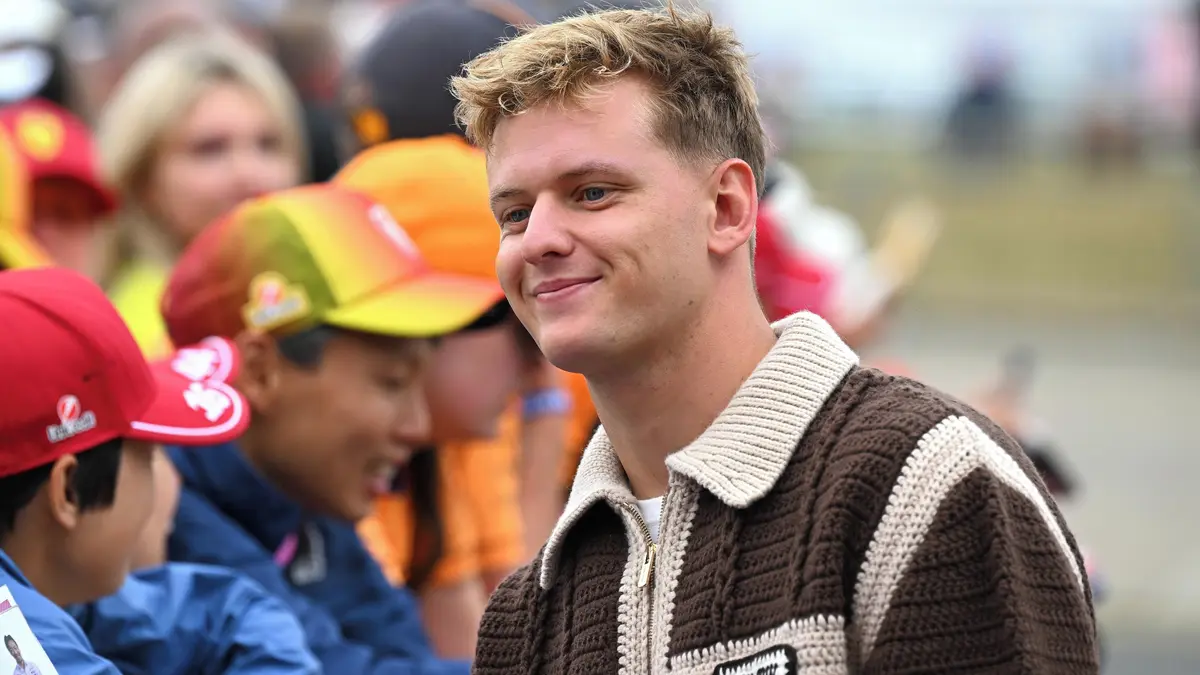
The undisputed centerpiece of this new chapter will be the Indianapolis 500 on May 24. For a driver whose name is synonymous with racing royalty, standing on the grid of the world’s most iconic oval race represents more than just a competition; it is a chance to carve out an identity independent of his father’s seven Formula 1 world titles.
Evidence-Led Forecast: The Tactical Transition
Likely Tactical Pattern: Schumacher’s primary challenge will be the transition from the high-downforce, multi-class management of WEC to the high-attrition, high-contact nature of IndyCar. Expect an initial learning curve on street circuits like St. Petersburg, where the margin for error is razor-thin compared to the wider lanes of WEC prototypes.
Decisive Matchup: The technical synergy between Schumacher’s feedback experience (honed as a Mercedes reserve) and RLL’s engineering staff. His ability to translate complex data into chassis adjustments will be critical in a series where the Dallara-Honda platform is notoriously sensitive to setup changes.
Strongest Counter-Case: The oval component. While Schumacher has proven his versatility, the unique aero-loading and high-G sustained cornering of an oval like Indianapolis represent a specialized discipline that even F1 veterans struggle to master quickly.
The X-Factor: Should the RLL Honda package show superior reliability in the early-season urban rounds, Schumacher’s experience in managing race pace could allow him to capitalize on the series' trademark parity, potentially positioning him as a consistent points contender early in the 2026 campaign.
Sources
These sources formed the evidence pack for this article. Links open the original publisher; inclusion does not imply endorsement.
- motormix.cz original
- lfreport.cz original
- sport.cz original
- indycar.com original