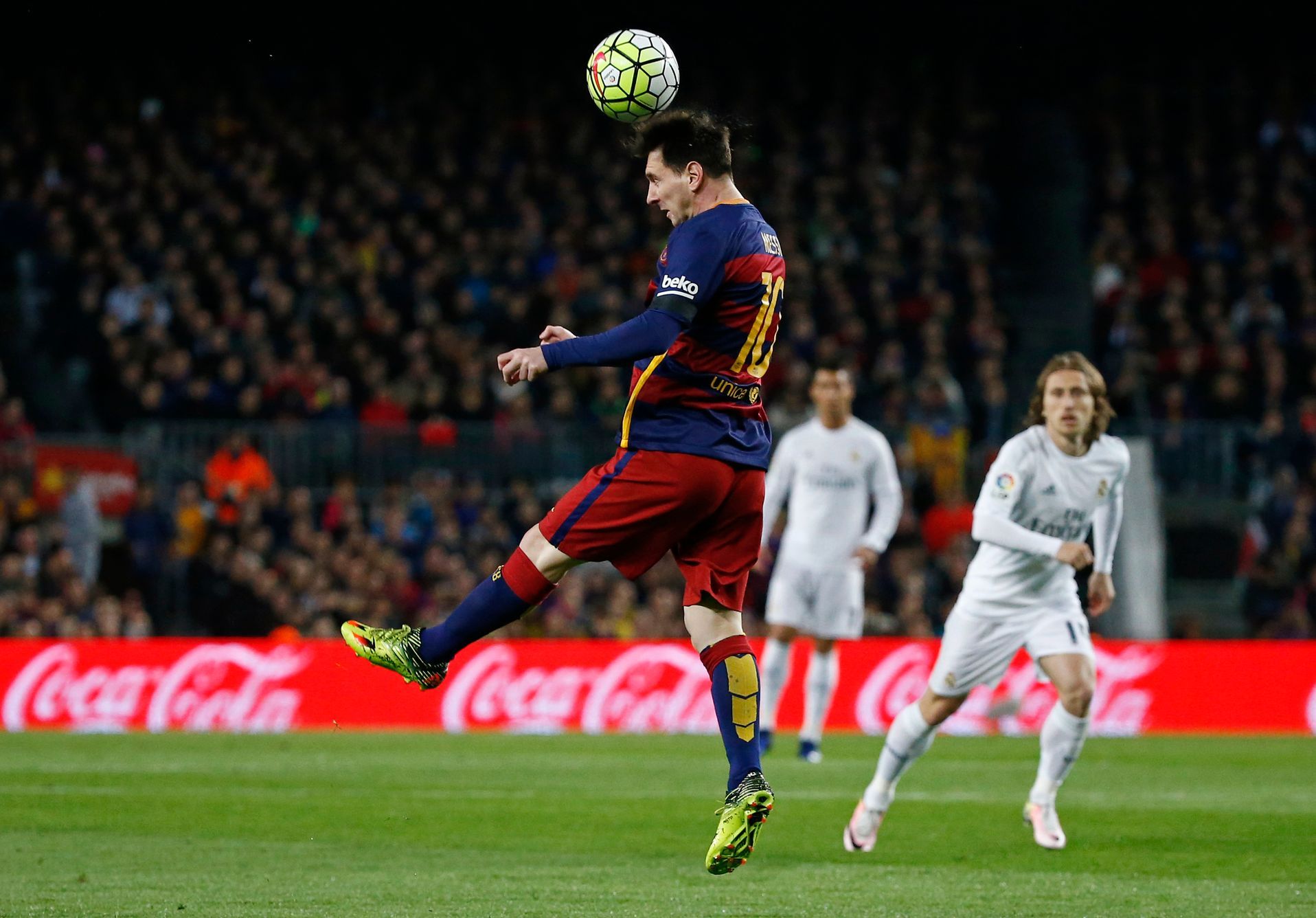
The footballing calendar in Spain is no longer measured by months, but by the gravitational pull of a single date: October 25. As the first Clásico of the season looms, the atmosphere is already thickening with the weight of historical precedent. This is not merely a fixture; it is a clash of diametrically opposed philosophies that has, in every recent iteration, teetered between total dominance and sudden, violent shifts in momentum.
The Architecture of Volatility
To understand the stakes of the upcoming encounter, one must look at the erratic rhythm of their recent battles. The Clásico rarely settles into a predictable groove. It is a match defined by its refusal to obey the statistical hierarchy. We have seen Barcelona unleash breathtaking displays of combination play, such as the 0:4 demolition of Real Madrid at the Santiago Bernabéu, where Luis Suárez's clinical finishing dismantled the Bílá balet.
Yet, the pendulum swings with terrifying speed. History shows that even when Barcelona holds a significant advantage—having once held a ten-point lead while chasing a title—Real Madrid possesses a unique capacity for psychological and tactical reclamation. This was most evident in the 1:1 stalemate where, despite Barcelona’s control, Sergio Ramos orchestrated a 90th-minute equalizer, preserving Real's momentum and extending a 26-match unbeaten streak.
This volatility is the hallmark of the rivalry. Whether it is a match ending in a scoreless draw after intense pressure or a high-scoring affair decided by a single moment of individual brilliance, the Clásico thrives on the razor's edge between perfection and collapse.
Dominance vs. Defensive Bastions
The tactical tension usually boils down to a singular question: can Real Madrid’s defensive structure withstand the suffocating possession of the Catalan giants?
In the women's landscape, this dynamic has reached a point of near-total hegemony for Barcelona. The Blaugrana have demonstrated a terrifying capacity for sustained pressure, currently boasting a 24-match unbeaten streak and a historical dominance that sees them winning 21 of their last 22 encounters against Real. However, even in these matchups, the blueprint for success remains consistent: Barcelona utilizes superior ball movement to tire the opposition, while Real Madrid relies on a disciplined, high-stakes defensive block to hunt for the narrowest of openings.
For the men's side, the precedent is similar. Barcelona’s strength lies in their ability to orchestrate play through the center, using rapid one-touch combinations to bypass defensive lines. Real Madrid, conversely, often finds its strength in the transition. They are masters of the 'survivalist' counter-attack, capable of scoring even when playing with a numerical disadvantage—a feat demonstrated when they secured a 2:1 lead despite playing a man down following a Ramos dismissal.
The Psychological Margin
Beyond the pitch, the Clásico is a battle of mental fortitude. For Real Madrid, every Clásico is framed as a mission of redemption. As captain Sergio Ramos has previously noted, the desire to 'avenge' heavy defeats becomes a driving force that can elevate a team's defensive intensity to uncomfortable levels. For Barcelona, the pressure is of a different kind: the burden of maintaining a legacy of excellence and the expectation to honor the tactical heritage that defines the club.

- The Possession Factor: Barcelona typically dictates the tempo, forcing opponents into deep, reactive defensive postures.
- The Counter-Strike: Real Madrid thrives on the chaos of the transition, looking to exploit the spaces left behind by an advancing Barcelona line.
- The Discipline Variable: High-intensity Clásicos frequently see red cards or crucial yellow cards, shifting the tactical landscape mid-game.
As the teams prepare for the October 25 kickoff, they are not just preparing for 90 minutes of football; they are preparing to manage a storm of tactical shifts and psychological pressures that have defined this rivalry for generations.
Evidence-Led Forecast
Tactical Pattern: Expect a classic 'Symmetry vs. Asymmetry' battle. Barcelona will likely attempt to impose a high-possession, high-line structure to pin Real Madrid into their own third, while Real will look to exploit the width through rapid vertical transitions.
Decisive Matchup: The battle in the central midfield will be the fulcrum. If Barcelona's ability to circulate the ball remains uninterrupted, Real's defensive block may eventually fracture. However, if Real can disrupt the rhythm through physical intervention and tactical fouls, they can force Barcelona into rushed, low-percentage decisions.
Strongest Counter-Case: Real Madrid’s ability to score while under extreme duress. If they can maintain their defensive discipline (historically evidenced by their ability to keep clean sheets in stretches) and strike on the break, they can neutralize Barcelona's possession advantage entirely.
What Would Change the Read: An early disciplinary action—specifically a red card or a series of early bookings for key central defenders—will immediately shift the match from a tactical chess game to a frantic battle of attrition, favoring the side more comfortable with defensive desperation.
Sources
These sources formed the evidence pack for this article. Links open the original publisher; inclusion does not imply endorsement.
- sport.aktualne.cz original
- fotbalzpravy.cz original
- ruik.cz original
- sport.ceskatelevize.cz original