The modern game of golf does not exist in a vacuum of manicured greens and quiet fairways. It is a massive, shifting landscape that connects the steel-producing roots of Pennsylvania to the windswept cliffs of the Scottish coast, and from high-stakes humanitarian scrambles in New Jersey to the emerging five-star hospitality hubs of Ireland.
The Palmer Paradigm: A Blueprint for the Modern Star
To understand how golf transitioned from a perceived "rich man’s game" to a mass-market phenomenon, one must look to the trajectory of Arnold Palmer. Born in Latrobe, Pennsylvania, Palmer's foundation was built at the Latrobe Country Club, where his father served as a greenskeeper. That early immersion in the rudiments of the game fueled a career that would fundamentally alter the sport's economic and cultural reach.
Palmer was not merely a competitor; he was a televised pioneer. His aggressive style and winning personality coincided with the dawn of golf's television era, creating a celebrity profile that transcended the sport. His dominance in the 1960 season—securing both the Masters and the U.S. Open—solidified a following known as "Arnie’s Army." This era also marked the birth of modern sports marketing through his partnership with Mark McCormack, whose firm, International Management Group, would become a global leader in sports agency.
The scale of Palmer's impact is quantifiable. He became the first professional golfer to earn $1 million from the game in 1967, and his career tally of 92 championships—including 62 on the PGA Tour—remains a benchmark of excellence. Beyond the scorecard, Palmer’s influence extended to the very architecture of the game, having founded the Arnold Palmer Design Company, which has produced over 300 courses across five continents.
Coastal Strategy: The Crucible of the East Lothian Links
While Palmer built the brand, the geography of the game provides its most rigorous testing grounds. In Scotland, the East Lothian region—often referred to as the "Golf Coast"—serves as a primary theater for world-class competition. The strategic placement of the Genesis Scottish Open in this region is no accident; held annually in July, the tournament acts as a vital precursor to The Open Championship, allowing the world's biggest stars to prepare for links-golf conditions.
The diversity of the East Lothian landscape offers a spectrum of tactical challenges:
- The Historic Anchors: Musselburgh Links, reputed to be the oldest golf links in the world, offers a 9-hole experience utilizing hickory clubs, while the 18-hole James Braid design (1938) provides a par 71 championship test.
- The Championship Standard: Muirfield, established in 1891, remains the "creme de la creme," having hosted multiple Open Championships. Nearby, Gullane Golf Club offers three distinct courses, including the scenic Course Number 1, which has hosted numerous international events.
- The Coastal Extremes: North Berwick Golf Club presents a unique tactical variable, with the sea playing into 6 of its holes, while the beach serves as a long, wet hazard during high tide.
- The Parkland Alternative: For those seeking a reprieve from the salt air, Royal Musselburgh provides a picturesque par 70 parkland experience.
This variety ensures that whether a player is navigating the cliff-top views of North Berwick or the inland parkland of Haddington, the terrain dictates the strategy.
Beyond the Scorecard: Humanitarianism in the Scramble
The complexity of the sport is further evidenced by its ability to mobilize communities for social good. In Pompton Plains, New Jersey, the intersection of sport and philanthropy was on full display during the annual golf outing hosted by the Chornomorska SITCH sports club and the Ukrainian American Cultural Center of New Jersey (UACCNJ).
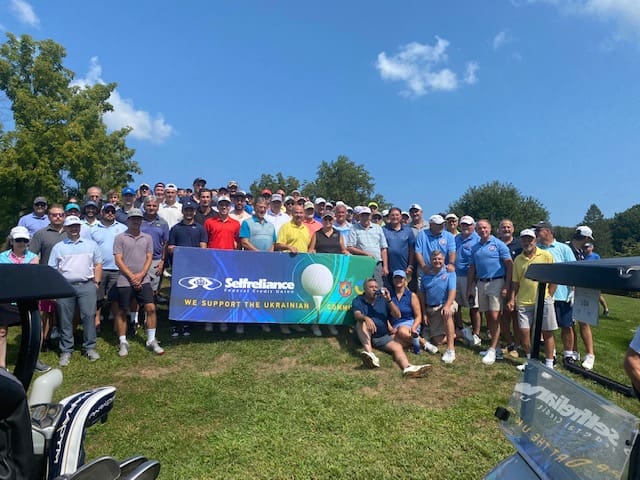
The event, a 4-man scramble (best ball) competition, demonstrated that competitive tension can coexist with humanitarian mission. The Open division saw a high level of play, with the team of Mike Zawadiwskyi, Mykola Zawadiswskyi, Danylo Holowaty, and Brian Lattanzio posting a -9 under par. The Senior division was equally intense, resulting in a tie at -6 under par between the team captained by Jarema Kochan and the squad featuring Roman Hirniak, Alex Popovich, Steve Nahorniak, and Nichola Salata.
The true metric of success, however, was found in the fundraising. Through memorabilia auctions and a 50/50 raffle—highlighted by Michael Zawadiwskyi's $500 donation—the proceeds were directed toward humanitarian aid and support for children in Ukraine.
The Hospitality Pivot: Redefining the Club Experience
As the game continues to evolve, the focus is shifting toward the integration of elite golf with high-end lifestyle experiences. The recent appointment of Dean Montgomery as Director of Golf at The Hawthorn by Galway Bay signals this professional trend. As the venue prepares for the opening of a new five-star hotel in late spring, the role of golf management is moving toward a holistic "experience" model, blending PGA-level professionalism with luxury hospitality to drive golf tourism.

From the legends who built the commercial foundation to the local clubs using the game to support international causes, golf remains a sport defined by its ability to adapt, expand, and impact the world far beyond the final putt.
Sources
These sources formed the evidence pack for this article. Links open the original publisher; inclusion does not imply endorsement.
- achievement.org original
- drummohr.co.uk original
- nashsport.org original
- linkedin.com original