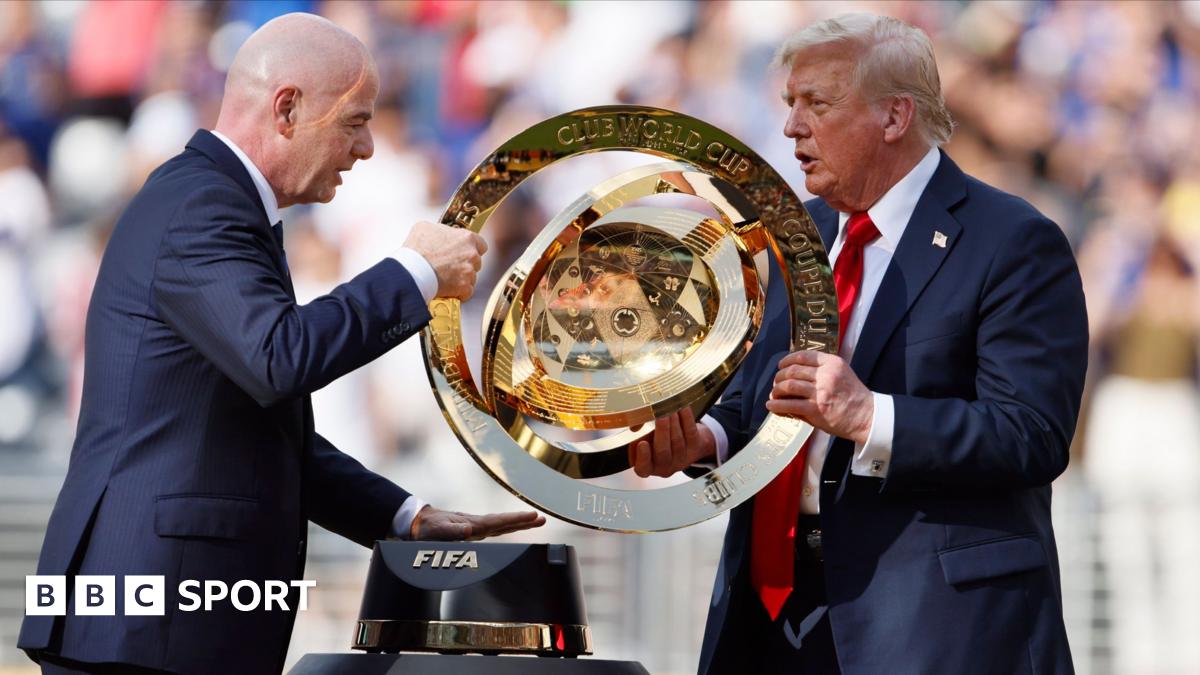
When Chelsea lifted the Club World Cup trophy after defeating Paris Saint-Germain 81,118 strong at MetLife Stadium, the tournament closed out a month of intense sporting action across the United States. Promoted widely as a high-stakes dress rehearsal for the upcoming 2026 World Cup across Mexico, Canada, and the United States, the past month exposed profound logistical realities for players, fans, and organizers.
Former Manchester City and Tottenham midfielder Michael Brown, who served as a co-commentator for DAZN across 10 games in five different cities, observed that the tournament served as an essential stress test. Yet that stress test laid bare severe challenges that extend far beyond normal competitive margins, touching directly on player welfare, stadium infrastructure, and spectator accessibility.
The Thermal Threshold and Lightning Delays
Extreme weather dominated the tournament narrative. Temperatures soared to 39°C in New York, with humidity driving the heat index past 50°C. Fifpro data indicates that nine of next year's 16 host cities carry "very high" or "extremely high" risk of heat stress injuries. The impact on squads was immediate and visible: ten Juventus players asked to be substituted during their defeat by Real Madrid, according to manager Igor Tudor. Borussia Dortmund substitutes were forced to watch the first half of a match from the changing room to escape the sun, while manager Niko Kovac described sweating as though he had just emerged from a sauna.
Rules regarding severe weather further disrupted competition. Under US regulations, play must halt immediately when lightning is recorded within a 10-mile radius, remaining suspended until 30 minutes after the final strike. Six matches suffered delays ranging from 40 minutes to two hours. Two separate Benfica fixtures—against Auckland and Chelsea—faced roughly 120-minute stoppages. Chelsea manager Enzo Maresca voiced fierce criticism of the disruptions:
It's not football. It's completely something new. I struggle to understand - if you suspend seven or eight games then it's probably not the right place to do the competition.Enzo Maresca
While FIFA's chief of global football development, Arsene Wenger, suggested that kickoff times could be adjusted and games shifted to stadiums featuring roofs, the sheer scale of the climate challenge remains a defining variable for next summer.
Infrastructure, Transit Bottlenecks, and Security Realities
The vast geographic footprint of the United States introduced major transit hurdles compared to compact tournaments like the 2022 World Cup in Qatar. At MetLife Stadium in New Jersey, the nearest train stop at Meadowlands Sports Complex required supporters to walk 20 to 30 minutes in searing heat to reach entry gates. During the semi-final between Real Madrid and PSG at the same venue, both teams found themselves trapped in gridlocked traffic.
Similarly, Miami's Hard Rock Stadium sits off a busy highway devoid of rail or metro connections. While early arrivals allowed Uber drivers to drop passengers close to the ground, post-match curfews prohibited vehicles within a set perimeter, forcing fans into a 20-minute walk to designated pick-up zones. Conversely, venues such as Philadelphia's Lincoln Financial Field and Atlanta's Mercedes-Benz Stadium benefited heavily from integrated metro systems and climate-controlled environments.
Security measures also scaled dramatically, culminating in heavy protection for the final at MetLife Stadium—held exactly one year after the assassination attempt on Donald Trump in Pennsylvania. United States Secret Service agents, armed personnel, and rooftop snipers operated alongside local counter-terrorism police units, setting a precedent for high-profile fixtures.
Pitch Surfaces, Dynamic Pricing, and Attendance Disparities
Transitioning multi-use venues from American football artificial turf to natural grass left limited preparation windows, generating complaints from prominent players like England internationals Jude Bellingham and Reece James. Borussia Dortmund manager Kovac criticized the surface consistency at MetLife Stadium:
This pitch and the pitches we've played on in Cincinnati and also in Atlanta, the grass quality is different in the stadiums. It's more a golf green. You can putt here. It's very short. This is not the grass we are used to playing on in the Bundesliga and also the other stadiums. The watering wasn't good enough, I'd say, because you don't have the licence for that. For high-speed football, you need good conditions and you need also a good pitch, the right pitch. When it's too dry, it's unbelievable, it's sticky.Niko Kovac
Ticket sales and attendance figures experienced stark polarization. While marquee matchups involving Real Madrid and PSG drew massive crowds, weekday afternoon kickoffs suffered drastically; four matches failed to attract 10,000 spectators, anchored by a low of 3,412 for Mamelodi Sundowns against Ulsan HD. Controversial dynamic pricing saw elite tickets plummet in value days before kickoff—Chelsea semi-final seats dropped from nearly £350 to under £10—leaving early purchasers frustrated.
As FIFA reviews transport plans, scheduling adjustments, and pitch cultivation timelines ahead of 2026, the lessons drawn from this summer's testing ground will dictate whether global football can successfully navigate the American landscape.
Sources
These sources formed the evidence pack for this article. Links open the original publisher; inclusion does not imply endorsement.
- bbc.co.uk original
- linkedin.com original
- apple.com original