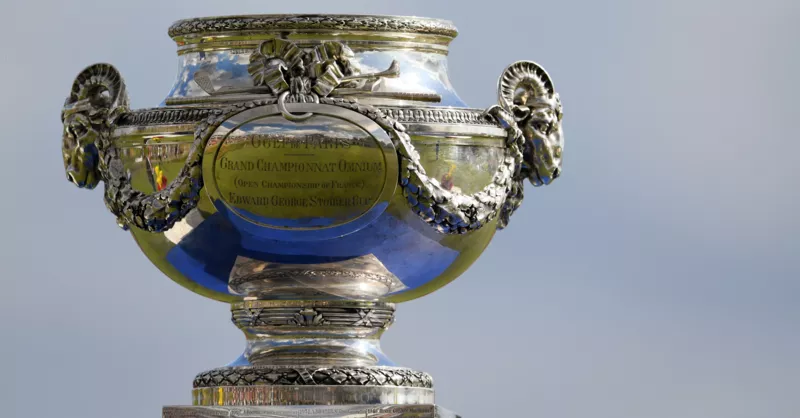
In the long, storied lineage of continental European golf, few milestones carry the weight of the year 2026. It is not merely another stop on the DP World Tour calendar; it is the 120th anniversary of the Open de France, a tournament that has evolved from a localized competition into a global benchmark of excellence. As the circuit moves from the 2025 staging at Saint-Nom-la-Bretèche, the championship is making a symbolic homecoming to Le Golf National.
This return to the Albatros course is more than a logistical shift. It is a reconnection with a venue that has become synonymous with the highest echelons of the sport—from the electric tension of the 2018 Ryder Cup to the precision required by the world's best during the 2024 Paris Olympic Games.
The Pedigree of a Continental Titan
To understand the stakes of the 2026 edition, one must look at the names etched into the trophy. The Open de France has long served as a proving ground for those who transcend standard tour wins to become global icons. The tournament’s prestige is perhaps best illustrated by the caliber of its champions, including a concentrated group of Ryder Cup legends who used this victory to cement their status.
The tournament's record books are a "who's who" of golfing immortality. Legends such as Severiano Ballesteros, Nick Faldo, and Bernhard Langer—all titans of the Ryder Cup—have hoisted the Open de France trophy. Ballesteros, in particular, left an indelible mark on the event, securing victories in 1977, 1982, 1985, and 1986, effectively initiating a fifteen-year era of dominance by world-class talent.
This pattern of attracting greatness is not a modern phenomenon but a structural constant. Whether it was the early dominance of British players like John Henry Taylor in 1908 or the modern era of Rolex Series brilliance from players like Tommy Fleetwood and Alex Norén, the Open de France has consistently demanded that a winner be more than just a tour professional; they must be a champion of the highest order.
The Albatros Crucible: A Venue of Giants
The decision to return the 120th anniversary to Le Golf National is a recognition of the Albatros course's unique identity. Since 1991, this venue has anchored the tournament, providing a championship-caliber layout that is as demanding as it is prestigious.
The course has a proven track record of handling extreme sporting pressure:
- The Ryder Cup (2018): Le Golf National became the epicenter of the golfing world, hosting over 270,000 spectators. It was here that Team Europe delivered a commanding 17.5–10.5 victory over a formidable American side, fueled by the atmosphere of the Albatros course.
- The Paris Olympics (2024): The course served as the stage for the world's premier amateur and professional talent, witnessing Scottie Scheffler claim gold in the men's event and Lydia Ko take the title in the women's.
- The World Amateur Team Championships (2022): The Albatros layout's dramatic finishing holes provided the backdrop for international amateur glory, with Italy claiming the Eisenhower Trophy.
For the players competing in 2026, the Albatros course represents a psychological and physical hurdle. It is a course that does not merely reward skill but tests mental fortitude under the gaze of a tournament with over a century of expectation.
From La Boulie to the Global Stage
The journey of the Open de France is a mirror of the sport's expansion. Born in 1906 at La Boulie under the leadership of Pierre Deschamps, the tournament was inspired by its elder, the British Open. Its first winner, the Basque professional Arnaud Massy, set a precedent for international competition by successfully competing against the era's best British talent.
Massy’s legacy was one of bridge-building; his ability to rival the best in the world paved the way for the tournament to become the second most prestigious event in Europe. From the early 20th-century dominance of players like Aubrey Boomer to the mid-century internationalization featuring South African Sid Brews and Argentinian Martín Pose, the Open de France has always been a crossroads of global talent.
The modern era, beginning with the formal inclusion of the tournament in the European Tour (now DP World Tour) calendar in 1972, has only heightened this international character. The tournament has transitioned from the era of the "Grand Championnat Omnium" to a flagship event sponsored by logistics giant FedEx, ensuring its place in the modern professional landscape.
Timeline of Excellence: Key Eras of the Open de France
| Era | Defining Characteristics | Notable Figures |
|---|---|---|
| The Formative Years (1906–1930s) | Establishment of the national open; British influence; early internationalization. | Arnaud Massy, John Henry Taylor, Aubrey Boomer |
| The Global Expansion (1940s–1970s) | Emergence of players from South Africa, South America, and Asia. | Roberto De Vicenzo, Bobby Locke, Lu Liang-Huan |
| The Professional Era (1972–Present) | Integration into the European Tour; era of Ryder Cup legends. | Seve Ballesteros, Nick Faldo, Bernhard Langer, Greg Norman |
As the 2026 edition approaches, the tournament stands at the intersection of this deep history and its high-octane future. Returning to Le Golf National for its 120th year is a statement of intent: the Open de France remains a premier destination for those seeking to join the ranks of the greats.
Evidence-Led Forecast: The Albatros Factor
Tactical Pattern: Expect the 2026 contest to be defined by precision over raw power. Given the Albatros course's history as a championship venue for the Olympics and the Ryder Cup, the winning pattern will likely involve high-accuracy approach play to navigate its demanding layout.
Decisive Matchup: The battle between long-drive specialists and technical masters of course management. The Albatros course has historically rewarded those who can manage the dramatic finishing holes without succumbing to the pressure of a major-caliber venue.
Strongest Counter-Case: A modern, aggressive game characterized by high-risk, high-reward driving could potentially overpower the course, provided the player maintains exceptional control under the psychological weight of the 120th-anniversary atmosphere.
What Would Change the Read: Any significant shift in course setup or weather patterns that heavily penalizes the technical precision typically required for the Albatros layout.
Sources
These sources formed the evidence pack for this article. Links open the original publisher; inclusion does not imply endorsement.
- ffgolf.org original
- golf-national.com original
- capgemini.com original