When tennis expands beyond traditional club gates into accessible public spaces and high-altitude alpine retreats, it highlights a broader transformation in how the sport is practiced, taught, and analyzed. Driven by an unprecedented wave of early-career success and technological adaptations on the court, tennis is adapting to diverse physical environments—from local courts to alpine plateaus situated 1,200 meters above sea level.
Thin-Air Aerodynamics: How 1,200-Meter Altitude Re-Engineers the Court
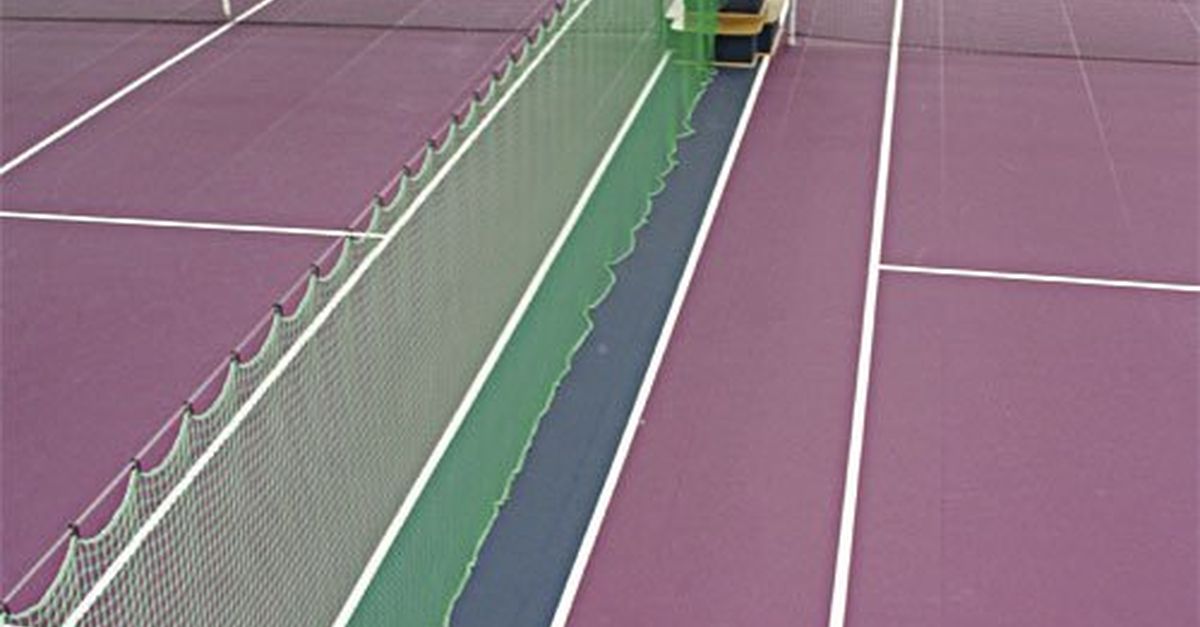
Playing tennis in elevated settings introduces distinct mechanical variables. On synthetic grass courts located at 1,200 meters altitude on the Renon plateau overlooking Lake Costalovara in South Tyrol, lower atmospheric pressure fundamentally alters how the ball travels. Reduced air density creates less drag, allowing tennis balls to cut through the air faster while shifting topspin responses and rebound trajectories.
For players accustomed to sea-level resistance, high-altitude tennis demands prompt tactical adjustments. Groundstrokes travel with extra velocity, requiring faster reaction times, precise footwork, and calibrated backswings to handle a quicker exchange rhythm. Set against alpine forests and the Dolomites, synthetic grass courts at altitude reward crisp baseline contact and rapid ball pickup, turning standard rallies into tests of timing and spatial awareness.
The Sinner Effect and the Early-Peak Phenomenon Across Modern Sport
Interest in modern tennis is heavily energized by the rise of South Tyrol's own Jannik Sinner. Sinner's ascent to the upper echelon of world tennis has drawn notice from iconic figures across the sport. After battling Sinner on court, Rafael Nadal publicly remarked that Italy had found its tennis phenomenon. Champions Boris Becker and John McEnroe offered similar praise, recognizing a generational shift in real time.
Sinner's rise reflects a widespread pattern across elite sports, where young athletes are claiming major titles at increasingly early ages:
- Cycling: Tadej Pogacar captured the Tour de France at just 21 years old after a dramatic final time trial, following Egan Bernal, who secured yellow at 22.
- Motorsports and Basketball: Marc Marquez in MotoGP, Max Verstappen in Formula 1, and Luka Doncic in the NBA established dominance well before their mid-twenties, alongside Ferrari's Charles Leclerc and track star Filippo Ganna.
- Multi-Sport Phenoms: Footballers Kylian Mbappe, Ansu Fati, and Matthijs De Ligt, sprinter Filippo Tortu, and volleyball stars Simone Giannelli and Paola Egonu have all accelerated athletic expectations.
Italy has found a tennis phenomenon.
Historically, athletes reached their physical and tactical peak closer to age 30. Today, early breakthroughs are compressing competitive lifecycles. As fearless prodigies take over early, established veterans face earlier competitive headwinds—a dynamic seen in road cycling with the rapid eclipse of decorated champions like Peter Sagan at 30 and Elia Viviani at 31. While general careers extend working lifespans in the broader economy, elite sports are shifting toward an era where top-level breakthroughs belong to the very young.
Repetition Mechanics and Tactical Recovery on the Renon Plateau
To match the speed of today's game, training methods have moved well beyond traditional wall drills. Modern facilities on the Renon plateau integrate automated ball launchers like the Pongbot system, which delivers balls with high velocity and constant cadence to replicate the tempo seen in televised professional matches. These automated tools give players the ability to perform solo repetition drills, sharpening racquet-head speed and footwork against relentless feeds.
Paired with high-quality racquets and instruction from local professional coaches, automated feeding lets players at various skill levels adjust to fast-paced ball delivery. Furthermore, training at 1,200 meters creates unique recovery requirements. Utilizing thermal recovery amenities at lakeside facilities—such as lake saunas, steam baths, cold water lake immersion, and regional South Tyrolean cuisine—helps athletes manage muscle fatigue and maintain physical output across consecutive sessions on court.
Sources
These sources formed the evidence pack for this article. Links open the original publisher; inclusion does not imply endorsement.
- periodicoliberopensiero.it original
- weihrerhof.com original
- vitesseonline.it original
- robadamagazine.com original