Related coverage
View the Instagram post
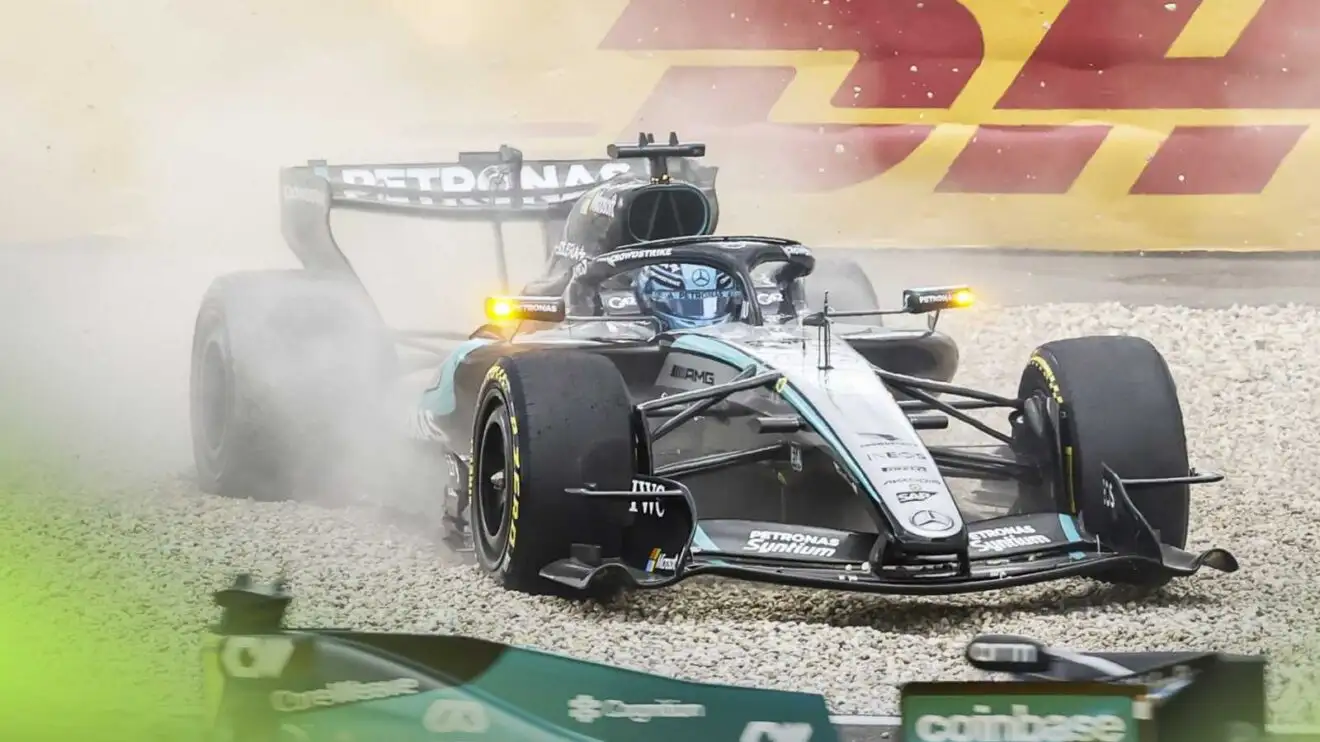
The most striking image from Spa-Francorchamps on Sunday wasn't George Russell's W17 spinning into the gravel at Les Combes. It was the British driver, minutes later, defending the man who put him there.
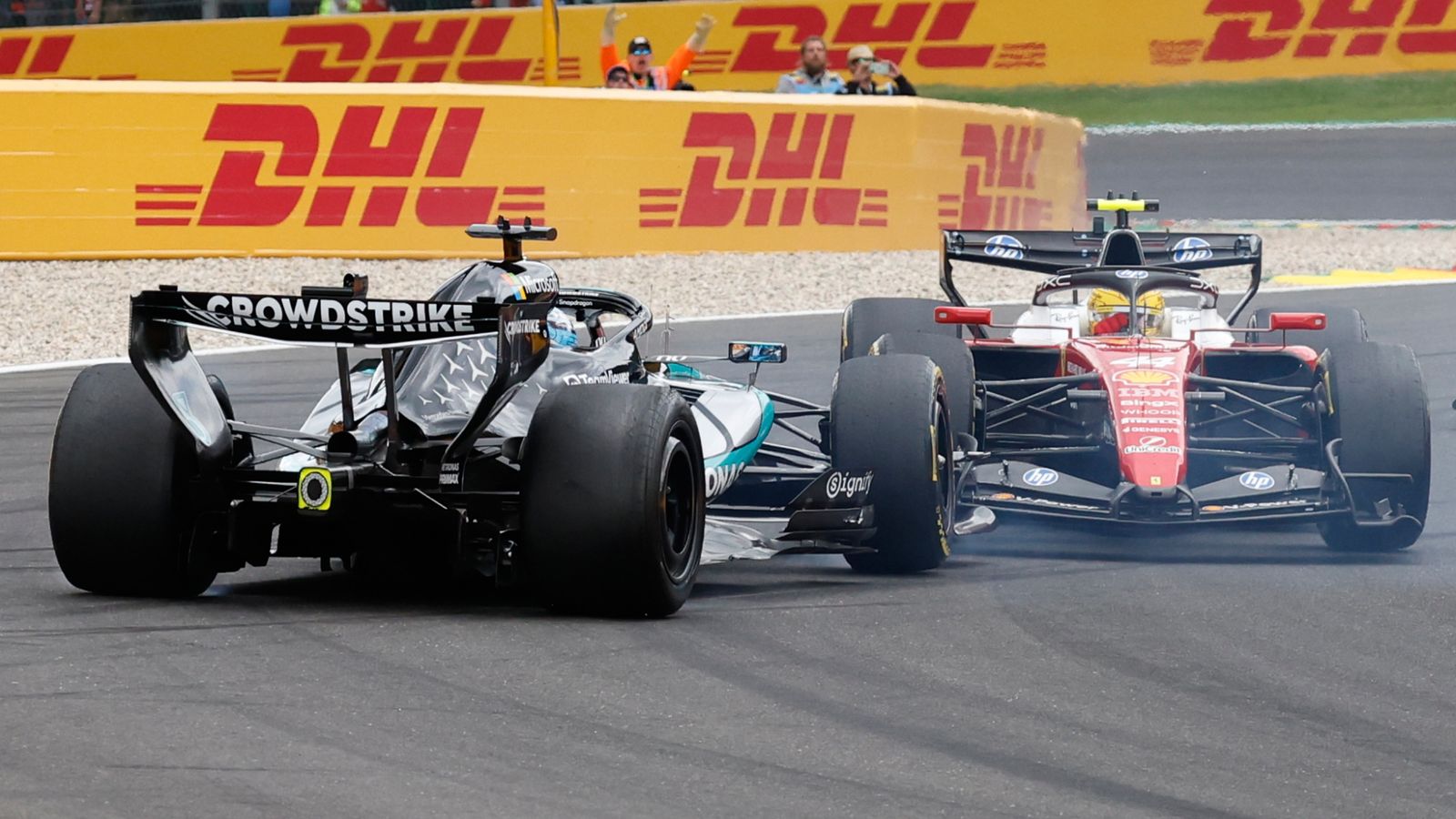
Lewis Hamilton clipped Russell into retirement on the opening lap of the Belgian Grand Prix, a collision the stewards deemed worthy of a five-second penalty. Russell, to his credit, called it a racing incident and absolved his former Mercedes teammate. His real fury was reserved for the black car he had been sitting in.
"I don't care much about the accident," Russell said on Canal+. "At the first corner, I had no battery, no power. It was clearly dangerous. I arrived at the top of the Raidillon without battery, I was less quick than an F2 and was passed by three drivers. That's what makes me angry."
The sentence is more damning than anything he could have said about Hamilton. The 2026 power unit regulations have made electrical deployment the lifeblood of a Formula 1 car, and Russell's W17 essentially flatlined between La Source and the Kemmel Straight. He had been the one driver on the grid with something to prove after a qualifying session in which he finished more than half a second off pole-sitter Kimi Antonelli, his own teammate. A strong start from third on the grid hinted at a recovery. Then the battery decided otherwise.
The minute the race ended
Russell has walked through the sequence several times since Sunday, and the clarity of his diagnosis is what makes the situation so uncomfortable for Mercedes. He made a strong launch. He tucked in behind Max Verstappen through La Source. And then, for reasons the team is still unpacking, the energy recovery system simply did not engage.
"I went around the first corner, the battery didn't charge, and I exited the first corner 35% down," Russell told Sky Sports F1. "Because it didn't charge, I also had a boost problem; the turbo didn't sort itself out, so I had no power. I got to the top of Eau Rouge with 0% on the battery."
That is a complete technical collapse over a sequence that takes the best part of fifteen seconds at full throttle. The cascade is brutal in its logic: no charge at La Source means no deployment for the Raidillon climb, no deployment for the Kemmel Straight, no boost, no defence, no race. Spa, with its long flat-out run from Eau Rouge through to Les Combes, is the worst possible venue for such a failure, because the energy demands of the lap concentrate precisely in the section where Russell had nothing left to give. The FIA's revised energy rules for the Belgian round had already pushed MGU-K management to the front of every engineering meeting, and the W17 walked straight into the trap.
Three cars drove past him on the Kemmel. Russell braked late into Les Combes, attempted to hold position around the outside, and made contact with Hamilton, who had himself arrived at the corner carrying far more energy than the W17. Hamilton's snap of oversteer closed the door. Russell's race ended in the gravel before the first lap was complete.
"I got to the top of Eau Rouge with the battery at zero per cent. Frankly, it was dangerous. Three cars overtook me. I should never have been in that situation, and that is what makes me most angry."
George Russell, post-race
The decision to defend Hamilton
Russell could have used the stewards' ruling as cover. Hamilton was sanctioned, after all, and the five-second penalty was a tacit admission of fault. Instead, the Mercedes driver insisted on something more interesting: that the entire sequence was a consequence of his own car's failure, not the Ferrari's aggression.
"Lewis didn't do it on purpose," Russell said. "He had more responsibility than I did, but he did nothing reckless. Perhaps I could have opened my line a little more, and perhaps he could have braked slightly earlier, but that incident should never have happened if I had possessed the necessary straight-line speed. I am really very disappointed."
Hamilton, for his part, agreed with the diagnosis more than the sanction. Speaking to media after recovering to fourth place, he said Russell "obviously looked like he lost power, and then he swooped around the outside and just had a small coming together." Hamilton added: "I think it was a racing incident, so I didn't think there should be a penalty for that." Ferrari team principal Fred Vasseur backed that read, calling the call "a bit harsh" and "more a racing incident for me."
The unusual alignment of two drivers and a team principal on the same side of the stewards is its own kind of evidence. Everyone in the paddock could see the same sequence. The stewards saw a collision to be punished. The drivers saw a car that left Russell defenceless and a corner that swallowed him as a result. That gap between the rulebook and the cockpit is going to keep coming up under the 2026 regulations.

The championship arithmetic, written in gravel
Russell left Spa-Francorchamps with zero points and a 50-point deficit to Antonelli, who had just won his sixth race of the season. He had been closing the gap in recent rounds; he arrived in Belgium 25 points adrift. In the time it took to crawl back to the paddock, that number doubled. This was Russell's third race without points in his last six, and the timing could hardly be worse, with the summer break looming a week after Hungary.
The deeper issue, though, is not the points gap alone. It is the pattern. Russell has spent the season openly puzzled by the gap to his teammate, publicly reviewing his driving style on Thursday at Spa before reversing course the next day and concluding the issue was not him. Sunday's race provided the kind of data point that ends those internal debates. Something in the W17's energy package is betraying him at the worst moments, and "we don't really know" the cause, as he admitted to the media.
Mercedes team principal Toto Wolff later described the situation as "100% on us," a more honest framing than a driver can offer in the heat of a retirement. That admission will need to be matched by a fix in Budapest, where the next race weekend begins on Friday and where Russell cannot afford another Lap 1 problem with the championship already tilted against him.
What Hungary is really asking
The 2026 regulations have been a season-long story of energy harvest, deployment strategy and a new vocabulary of compromise. Drivers have spent the year complaining about the cars in unusually direct terms. Carlos Sainz called them "not good enough" at Spa. Max Verstappen described the track as "not very exciting to drive" and likened the cars to a "Formula 3." Hamilton himself had already questioned the battery-driven nature of overtaking under the new rules before Sunday's race even started.
Russell's retirement crystallised the concern in a single image: a championship contender going from a position to fight for the lead at Turn 1 to a stationary car in the gravel at Turn 5, with nothing in between but a dead battery. The 2026 rules have not just changed how Formula 1 races. They have changed what can end a race without a mechanical warning, and the margin between a routine deployment quirk and a terminal failure is thinner than anyone in the paddock wants to admit.
For Russell personally, the next week is about triage. Hungary, with its twisty middle sector and the long straight down to Turn 1, places different demands on energy management than Spa, but the underlying risk is the same: if the W17's recovery system is fragile at full deployment, the Hungaroring's flat-out sections are not safe harbour. The collision with Hamilton will be forgotten inside a fortnight. The battery that caused it will not be.
"Numb to the disappointment now, so you know when it happens so often, you just get used to it," Russell said after climbing out of the cockpit. The line carries the kind of resignation that only comes from a season of one disappointment layering on top of another. Budapest, with its long summer break afterwards, is the last chance to reset the trend before the championship math hardens into a verdict.
Sources
These sources formed the evidence pack for this article. Links open the original publisher; inclusion does not imply endorsement.
- Zoé Ledent-Mouret original
- fr.motorsport.com original
- David Carter original
- Henry Valantine original
- gpblog.com original
- Charlie Malam original
- skysports.com original