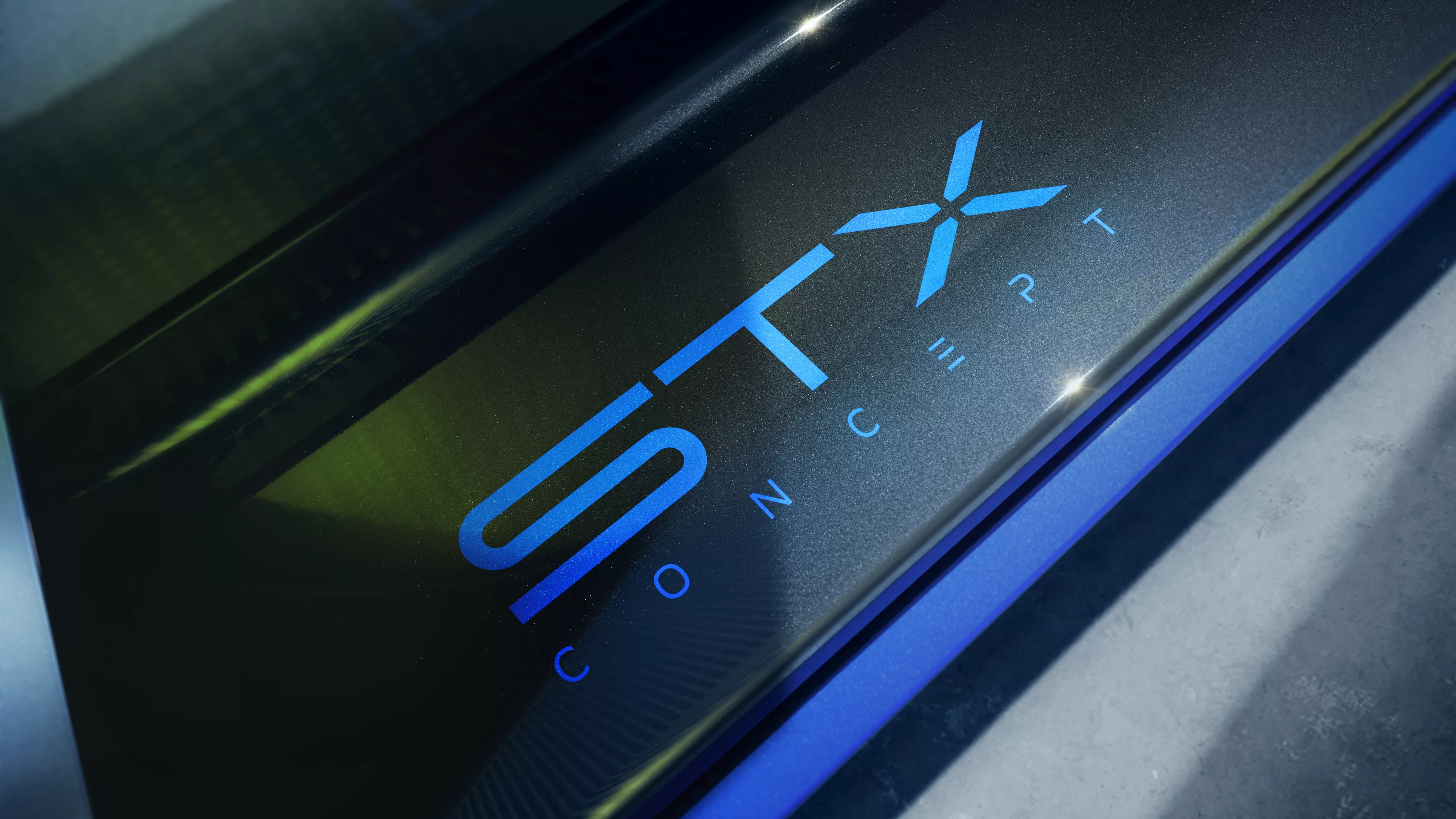
At a time when European electric vehicle lineups are flooded with high-riding crossovers, Opel is making a calculated counter-statement ahead of the 2026 Paris Motor Show. Unveiling initial imagery and details of the STX Concept—short for Sports Tourer eXperimental—Chief Executive Officer Florian Huettl is positioning low-slung aerodynamic efficiency as the true frontier of range extension. Scheduled for its physical world premiere on Monday, October 12, at 11:40 AM CET at Porte de Versailles (Hall 4, Stand A42), the STX Concept does not merely showcase a sleek silhouette; it anchors Opel’s next-generation design language while defending a 73-year station wagon heritage.
The Physics of Efficiency: Low Silhouettes over Crossover Frontage
The engineering rationale behind the STX Concept highlights a fundamental tradeoff in modern battery electric design. While high-riding SUVs require larger battery packs or exceptional drag coefficients to overcome elevated frontal surface area at highway speeds, a lower station wagon body inherently reduces aerodynamic drag. By pushing air around a reduced frontal profile, low-slung tourers manage high-speed energy consumption far more effectively without adding heavy, expensive battery weight.
Where premium rivals have deployed low-drag wagons in upper market tiers—such as the Volkswagen ID.7 Tourer, BMW i5 Touring, and Audi A6 Avant e-tron—Opel’s exploration of the STX Concept signals an ambition to bring low-slung electric efficiency into high-volume European segments. The concept builds directly upon the groundwork laid by the 2023 Opel Experimental concept, which introduced the refined Vizor front fascia, the illuminated Blitz logo, and the signature Compass alignment lines. The STX applies that bold, pure philosophy to an extended family silhouette, targeting enhanced aerodynamic penetration without sacrificing utilitarian cabin volume.
Seven Decades of Wagon Evolution
Opel’s commitment to the station wagon format rests on a lineage that pioneered the European market long before crossovers existed. The historical progression traces from utility origins to modern zero-emission tourers:
| Model / Milestone | Era | Key Structural & Operational Features |
|---|---|---|
| Olympia Rekord Caravan | 1953 | First mass-produced German station wagon; coined "Caravan" (car + van) to bridge personal and commercial utility. |
| Kadett Caravan | 1963 | Democratized the station wagon format within the European compact segment. |
| Astra Sports Tourer (Current) | 2026 Production | 4,642 mm length; 1,634L maximum volume (40/20/40 seat fold); 54 kWh battery, 115 kW motor, >400 km WLTP range. |
| STX Concept | 2026 Paris Concept | "Sports Tourer eXperimental"; previews next-gen design, enhanced aero efficiency, and low-drag EV proportions. |
While the present production Astra Sports Tourer already delivers practical electric transport with its 54 kWh battery and 115 kW powertrain, the STX Concept moves past incremental updates. Unconstrained by current assembly tooling, the experimental study demonstrates how clean body surfacing and an elongated roofline can maximize aerodynamic range gains.

GSE Track Heritage: Formula E GEN4 and the Corsa GSE
Opel’s Paris display is explicitly built around performance and electrification, sharing the stage in Hall 4 with high-output machinery under the GSE label. Huettl, alongside Vice President of Marketing Rebecca Reinermann and Vice President of Design Mark Adams, will present the STX Concept alongside the brand's new motorsport flagship: the Opel GSE 27FE.
Designed for the 2026/2027 ABB FIA Formula E World Championship, the GEN4 single-seater delivers staggering technical benchmarks tested extensively in the wind tunnel. Built with permanent all-wheel drive and generating over 800 horsepower (800 ch), the GSE 27FE can harvest up to 700 kW of regenerative braking energy under deceleration. Opel has already locked in its marquee talent for the campaign, naming Théo Pourchaire as its first primary race driver.
Connecting the track program to the street is the production Corsa GSE. Priced at €39,900, the electric hot hatch features a 207 kW (281 hp) motor pushing 345 Nm of torque through a mechanical Torsen limited-slip differential. Capable of sprinting from 0 to 100 km/h in 5.5 seconds with a 374 km range, it stands as the fastest road-going production vehicle in Opel's lineup, illustrating how motorsport energy management translates directly into serial performance.
Strategic Stakes in Paris
The Paris Motor Show framing reflects a broader strategic push across Stellantis and global markets. As brands like BMW and Mini skip the event while newcomers like Chery make their debut and Citroën showcases its electric 2 CV, Opel is seizing the spotlight to project both German engineering lineage and aggressive electric growth—a narrative Huettl recently reinforced while advocating for the brand's manufacturing expansion project in Algiers.
Although exact powertrain specifications, battery dimensions, and drag coefficients for the STX Concept remain under lock until October 12, its role as a design manifesto is clear. As Huettl noted regarding the project: Comme son nom l'indique, l'Opel STX Concept donnera notre vision de l'avenir d'un break aérodynamique et efficient, un type de carrosserie qu'Opel a contribué à établir en pionnier en Europe. Il montre notre prochaine génération de langage stylistique et présente des éléments que vous verrez sur de futurs modèles de série
.
Evidence-Led Forecast: Formula E Track Transfer & Aero Design Integration
Likely Tactical Pattern: During the 2026/2027 ABB FIA Formula E Championship debut, expect Opel to leverage the GSE 27FE’s 700 kW regenerative braking system and AWD traction dynamics to optimize thermal management during heavy race acceleration phases. On the consumer side, the aerodynamic principles validated in the wind tunnel for the GEN4 race car will directly feed into the STX Concept's low-drag body panel surfacing, establishing a clear efficiency baseline for future production models.
Decisive Matchup: The primary test lies in how effectively Opel transfers high-efficiency wind tunnel findings into production tooling. In Formula E, Pourchaire’s ability to manage 700 kW energy recovery will determine race pace against entrenched electric manufacturers. On street vehicles, the challenge is balancing the lower frontal area required for highway efficiency with cabin headspace and cargo volume in C-segment proportions.
Strongest Counter-Case: The primary vulnerability is consumer inertia toward crossovers. If European buyer preferences remain firmly anchored to elevated driving positions and SUV styling, the aerodynamic advantages of a low-slung Sports Tourer may remain restricted to a niche enthusiast segment, limiting full-scale production adoption across the broader Astra family.
What Would Change the Read: An official disclosure at the October 12 press conference revealing an ultra-low drag coefficient alongside concrete production commitments for a C-segment Sports Tourer platform would confirm that the STX is more than a design study, signaling a definitive structural shift away from crossover dominance in Opel's EV roadmap.
Sources
These sources formed the evidence pack for this article. Links open the original publisher; inclusion does not imply endorsement.
- motorsactu.com original
- auto.pub original
- autoplus.fr original
- actu-automobile.com original

