In the architecture of knockout football, the margin for error is non-existent. There is no second leg to rectify a tactical lapse or a moment of individual indiscretion. For Racing de Santander, the upcoming Copa del Rey tie against FC Barcelona is a pure survival test: survive and advance, or slip once and face immediate elimination.
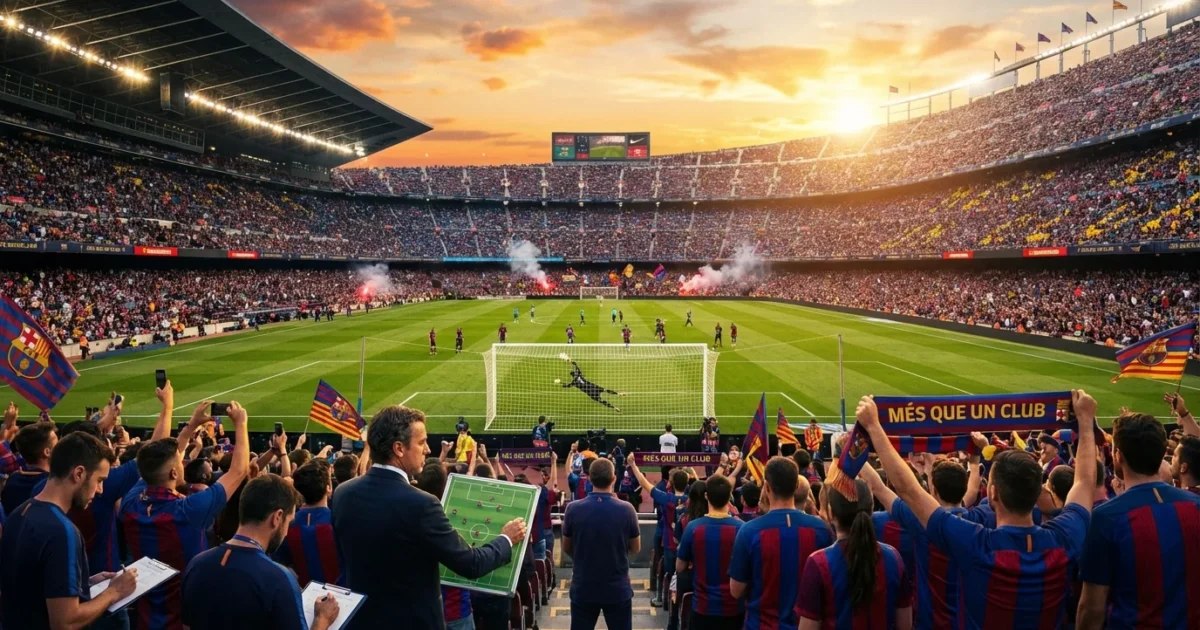
This isn't just a clash of clubs; it is a clash of identities. On one side stands FC Barcelona, a global powerhouse synonymous with technical excellence and a relentless footballing identity. On the other, Racing de Santander represents the grit of the Cantabria region—a club built on tradition, resilience, and a proud fan base that can turn a home stadium into a pressure cooker.
Tactical Identities: Compact Blocks vs. Technical Dominance
The tactical blueprint for this encounter is written in the tension between Racing’s defensive organization and Barcelona’s possession-based philosophy. Historically, while Barcelona has dominated the head-to-head record, particularly in La Liga, the scorelines have often been deceptive. Racing has a history of using disciplined defensive displays and clinical finishing to stun the giants, proving that tactical organization can, at times, negate raw talent.
Racing is expected to deploy a shape that prioritizes narrow lines—likely a 4-4-2 or 4-2-3-1. Their objective is clear: limit the space between lines and force Barcelona into wide areas. They will not wait for Barcelona to dictate the tempo; instead, they will hunt for specific triggers, such as a slow back pass or a loose touch near the touchline, to launch waves of pressure.

The Midfield Variable: Pivots and Runners
The battle for the center of the pitch will likely be decided by how the coaching staffs configure their midfield engines. This is where the game’s rhythm will be established. There are two primary tactical paths for the midfield setup:
- The Conservative Approach: Two deep-lying passers who prioritize tempo control and patient buildup. This would signal a more cautious, structural game.
- The Aggressive Approach: Pairing one defensive holder with two "number eight" runners. This configuration would favor quicker combinations, third-man runs, and high-intensity transitions.
For Barcelona, the goal is to own the ball while simultaneously protecting their rest defense. They cannot afford to be caught in transition, as Racing’s ability to play direct when they win the ball could exploit any lack of concentration in the Barça spine.
The Flank Battle: Stretching the Block
A critical tactical sub-plot involves the left flank. If Barcelona’s fullback overlaps aggressively while the winger drives inside, it forces Racing’s right side to stretch. This movement is designed to create gaps in the half-space, allowing for devastating cutbacks. Racing’s counter-strategy must involve pinning that side to prevent the overload, forcing Barcelona to switch play early and often to find a rhythm.
The Five-Second Rule and Set-Piece Chaos
In modern high-press systems, the first five seconds after losing possession are the most dangerous. Barcelona’s ability to win the ball back immediately after a turnover will determine whether they can maintain control or if they will be forced into a reactive, defensive posture. If they lose those duels, Racing will have the opportunity to run directly into the space left behind.
Furthermore, set pieces remain a high-probability source of drama. Racing will likely load the six-yard box, targeting second balls and late far-post runs. For Barcelona, the directive is simple but difficult: win first contact and maintain discipline within a packed zone to avoid conceding near-post curls that could undo an entire match of dominance.
Evidence-Led Forecast
Likely Tactical Pattern: Expect a game of sustained possession from Barcelona met by a disciplined, low-block defensive structure from Racing. Racing will look to bypass the midfield through direct play, targeting the space behind Barcelona's advancing fullbacks.
Decisive Matchup: The battle on the left flank. The efficiency of Barcelona’s overlapping movement versus Racing’s ability to maintain narrowness on the right will dictate the opening of the game.
Strongest Counter-Case: If Racing successfully triggers their press in the opening twenty minutes and scores first, Barcelona may struggle to break down a heavily reinforced block, potentially forcing the giants into uncharacteristic, rushed decision-making.
The Variable: Midfield rotation. If the coaching staff opts for a high-intensity "one holder, two runners" setup, the game will move much faster than a traditional possession-based tie, increasing the likelihood of fatigue-driven mistakes in stoppage time.
Sources
These sources formed the evidence pack for this article. Links open the original publisher; inclusion does not imply endorsement.
- edvigo.com original
- idnes.cz original
- currentojas.com original
- sazkaradar.cz original