Strategic competition, whether on an international stadium floor or across continental industrial supply lines, ultimately collapses into a single operational reality: capital allocation under pressure. On March 25, 2026, during a National Assembly debate on Middle East security, French Prime Minister Sébastien Lecornu laid bare the sheer scale of France’s military recalibration, announcing an additional €8.5 billion in munitions orders between 2026 and 2030. That sum sits on top of the €16.5 billion already earmarked in the 2023 Military Programming Law (LPM 2024-30), forming the centerpiece of a broader €36 billion effort unveiled by President Emmanuel Macron in January—a push designed to ensure operational credibility against potential major engagements within three to four years.
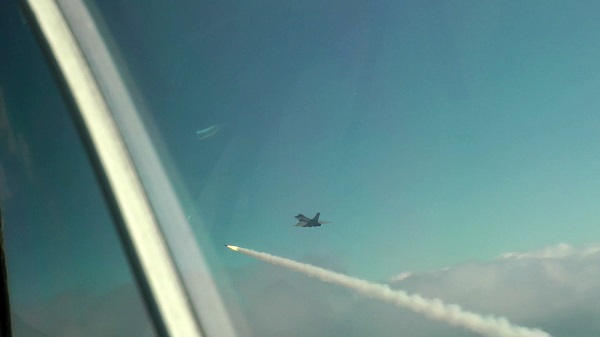
The financial shift reflects severe real-world operational consumption. Since February 28, 2026, French Rafale fighters deployed to protect the United Arab Emirates following Operation "Epic Fury" have intercepted dozens of drones and missiles in UAE airspace, expending significant volumes of MICA air-to-air missiles. When cheap loitering assets force defense networks to expend high-end interceptors, the economic equation breaks down. Lecornu captured this tactical imbalance directly at the podium: Quand un drone à quelques milliers d’euros mobilise un missile à plusieurs millions, c’est toute notre conception de l’armement qu’il faut repenser.
Capital Reallocation and the Math of Asymmetric Defense
The revised LPM 2024-30, set for presentation to the Cabinet on April 8, represents a fundamental pivot toward mass and sustainability. Munitions alone account for roughly 25 percent of the additional €36 billion top-up (which starts with a €3.5 billion installment in 2026). Yet the government acknowledges that systemic risks, particularly energy inflation and rising hydrocarbon costs, threaten to erode purchasing power. To contextualize the surge, Lecornu noted that total funding dedicated to munitions across this cycle is four times greater than in the previous law.
Sébastien Lecornu, Prime Minister of France« C’est indispensable et je veux que chacun s’en rende compte : c’est colossal. Au total, c’est comme si le budget annuel des armées au début des années 2000 avait été exclusivement consacré à l’achat des seules munitions. »
The updated roadmap forces a dual strategy: stockpiling saturation munitions while preserving high-tech decision-making capabilities. This encompasses long-range cruise missiles, surface-to-air and air-to-air interceptors, anti-ship weaponry, and anti-tank systems, alongside upgraded ground-air protection centered on the SAMP/T NG system. To shorten production cycles for 155mm artillery shells, MISTRAL, ASTER, and Akeron MP missiles, the government is leaning aggressively into a "war economy" industrial cadence.
Dual-Use Tech and Private Capital: The 'France Munitions' Blueprint
Accelerating industrial output requires structural innovations beyond defense ministry balance sheets. France is backing a €300 million dual-use industry plan to help civilian manufacturers transition into defense production, alongside targeted measures to repatriate and modernize critical component supply chains. Crucially, the government is adopting a proposal championed by LR Deputy Jean-Louis Thiériot: the creation of "France Munitions."
Operating as a central wholesaler, France Munitions will aggregate purchase orders for both the French armed forces and international allies, utilizing a Special Purpose Vehicle (SPV) structure to draw in private institutional capital.
| Strategic Focus | Financial / Operational Scope | Primary Objective | tbody>trAdditional Munitions Orders (2026–2030) | €8.5 Billion (on top of €16.5B baseline) | Replenish stocks; sustain high-intensity operations | trTotal LPM Top-Up (Macron Jan Plan) | €36 Billion (€3.5B in 2026) | Operational readiness for major engagements by 2029–2030 | trDual-Industry Transition Plan | €300 Million | Adapt civilian supply lines for defense components | trFrance Munitions Platform | State + Private SPV Capital | Massify orders, reduce lead times, act as ally wholesaler | trOperational Trigger (UAE Airspace) | Interception of dozens of drones/missiles since Feb 28 | Protect partners; address MICA missile depletion | tbody>
|---|
By scaling order volume through a unified platform, France aims to compress unit costs and resolve production bottlenecks for loitering munitions and interceptor drones, establishing a sustainable framework where low-cost threats are met with cost-appropriate countermeasures.
Software Autonomy and Multipliers Across European Infrastructure
The drive for hardware sovereignty mirrors parallel economic dynamics in European digital infrastructure. Findings published by the European Commission demonstrate that institutional open-source strategy yields massive macroeconomic leverage. In 2018, EU-based businesses invested approximately €1 billion in open-source software, generating an estimated positive impact of €65 billion to €95 billion on the European economy.

The Commission’s study projects that a 10 percent increase in open-source code contributions across the bloc would boost annual EU GDP by 0.4% to 0.6% while cultivating over 600 new ICT startups. Public sector procurement of open-source solutions over proprietary stacks reduces total cost of ownership (TCO), prevents vendor lock-in, and bolsters digital autonomy—a priority reinforced by the Commission's 2020-2023 Open Source Strategy focused on code sharing and cross-border knowledge reuse.
Whether evaluating long-term infrastructure ROI, open-source economic multipliers, or sovereign defense stockpiles, the underlying equation remains identical: operational success demands balancing raw mass with high-precision efficiency. As France moves to formalize its updated LPM on April 8, the focus shifts to execution—translating capital allocations into rapid, sustainable capability on the ground.
Sources
These sources formed the evidence pack for this article. Links open the original publisher; inclusion does not imply endorsement.
- opex360.com original
- digital-strategy.ec.europa.eu original
- commission.europa.eu original