When Formula 1 slammed the door on the ground-effect era and welcomed the dramatically reshaped technical regulations of 2026, the entire paddock braced for structural upheaval. For Lewis Hamilton, turning the page on a disastrous 2015 debut year with Ferrari—where he infamously failed to secure a single Grand Prix podium—demanded a brutal physical and mental reset. Yet, stepping into the cockpit of the SF-26 has not yielded a straightforward march back to the front. Instead, the seven-time world champion has found himself navigating a machine that behaves in entirely unfamiliar ways, oscillating between breathtaking highs and nervous, unpredictable race stints.
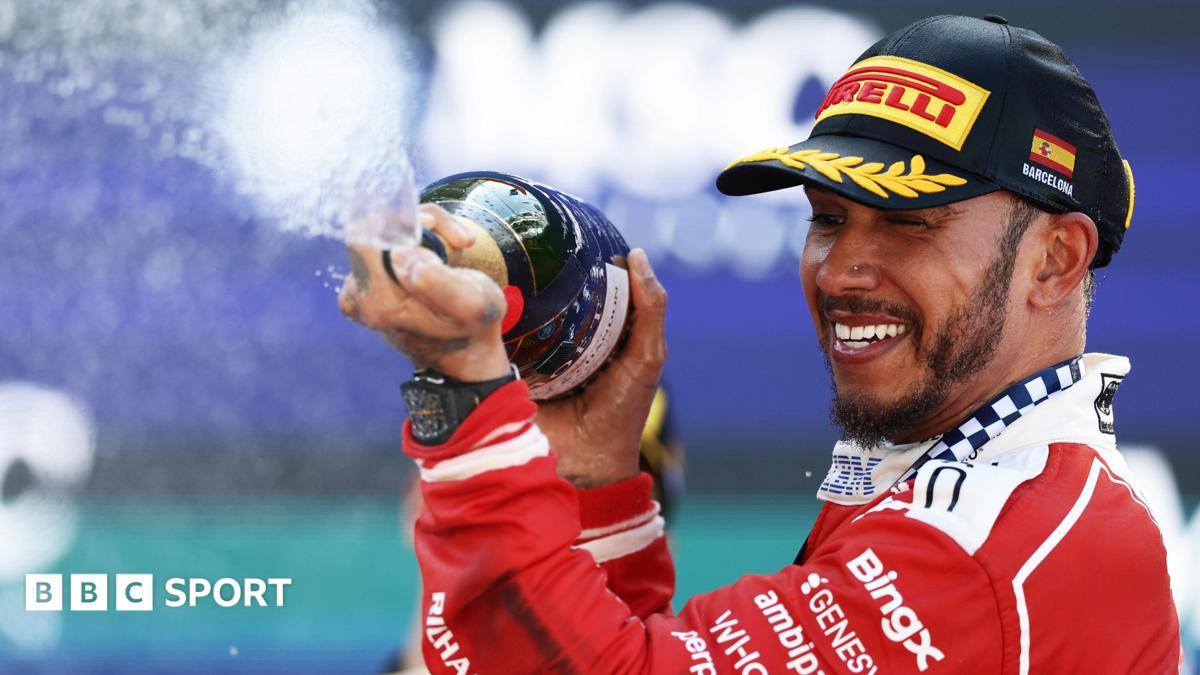
The contrast between the previous generation of ground-effect cars and the current technical paradigm is at the heart of Hamilton’s fluctuating fortunes. During his final years at Mercedes and through his difficult first campaign in red, the heavily stiffened, bouncing, ground-effect chassis required an aggressive driving style that often clashed with Hamilton's natural instincts. Team principal Toto Wolff noted that the 2026 machines have returned to more conventional aerodynamics and vehicle dynamics, shedding the violent bouncing that plagued the prior four years. Yet, while the removal of those stiffness hurdles has allowed Hamilton to rebuild his confidence—culminating in a tearful, strategic masterclass victory at the Barcelona-Catalunya Grand Prix—the underlying traits of the SF-26 remain a moving target.
Following a strong winter training regimen designed to shed the lingering effects of an early-season injury from the prior year, Hamilton arrived in 2026 with renewed purpose. Early pre-season testing showed genuine promise, backed by a solid fourth place in Melbourne and a breakthrough podium in China. But the engineering realities of the new V6 turbo hybrid power units have created persistent strategic trade-offs for Maranello. While the Ferrari chassis often matches or bests its rivals through the apexes of slow and medium-speed corners, the power unit has lagged behind the benchmark set by Mercedes and Red Bull. On power-dependent circuits, that deficit forces Ferrari into aggressive tactical gambits, such as the three-stop strategy deployed when Hamilton slipped to fifth after struggling to match the race pace of Max Verstappen and the leading Silver Arrows.
Ferrari's second major upgrade package of the year, introduced at Barcelona, proved pivotal by capitalising on a track where pure engine power dictates less of the lap time. Benefiting from a timely Virtual Safety Car that yielded a cheap pit stop for hard tires, Hamilton executed a flawless run to the chequered flag, reminding the grid of his peerless race craft. Yet, as the championship heads toward high-speed venues like Silverstone, the engineering trade-offs return to the fore. Drivers have openly remarked that the heavy electrical deployment demands of the 2026 power units make circuits with long straights feel like completely different tracks, transforming energy management into a frantic, battery-juggling exercise.
For Hamilton, who has famously stepped back from excessive simulator preparation in favour of raw on-track feel and instinct, the challenge is as much psychological as it is mechanical. Having absorbed the external criticism of his scoreless 2025 campaign and weaponised it into a rigorous off-season physical rebuild, his intra-team battle with Charles Leclerc has tightened dramatically. Where Leclerc held a clear qualifying advantage a year ago, the intra-team qualifying head-to-head sits at a balanced 6-4, with average single-lap pace dead even. Hamilton's vocal, relentless demand for structural improvements within Maranello has introduced a sharp shock to the team's internal culture, aligning with Frederic Vasseur's ongoing efforts to streamline operations.
Sources
These sources formed the evidence pack for this article. Links open the original publisher; inclusion does not imply endorsement.
- gpblog.com original
- bbc.com original
- nytimes.com original
- dailymail.com original