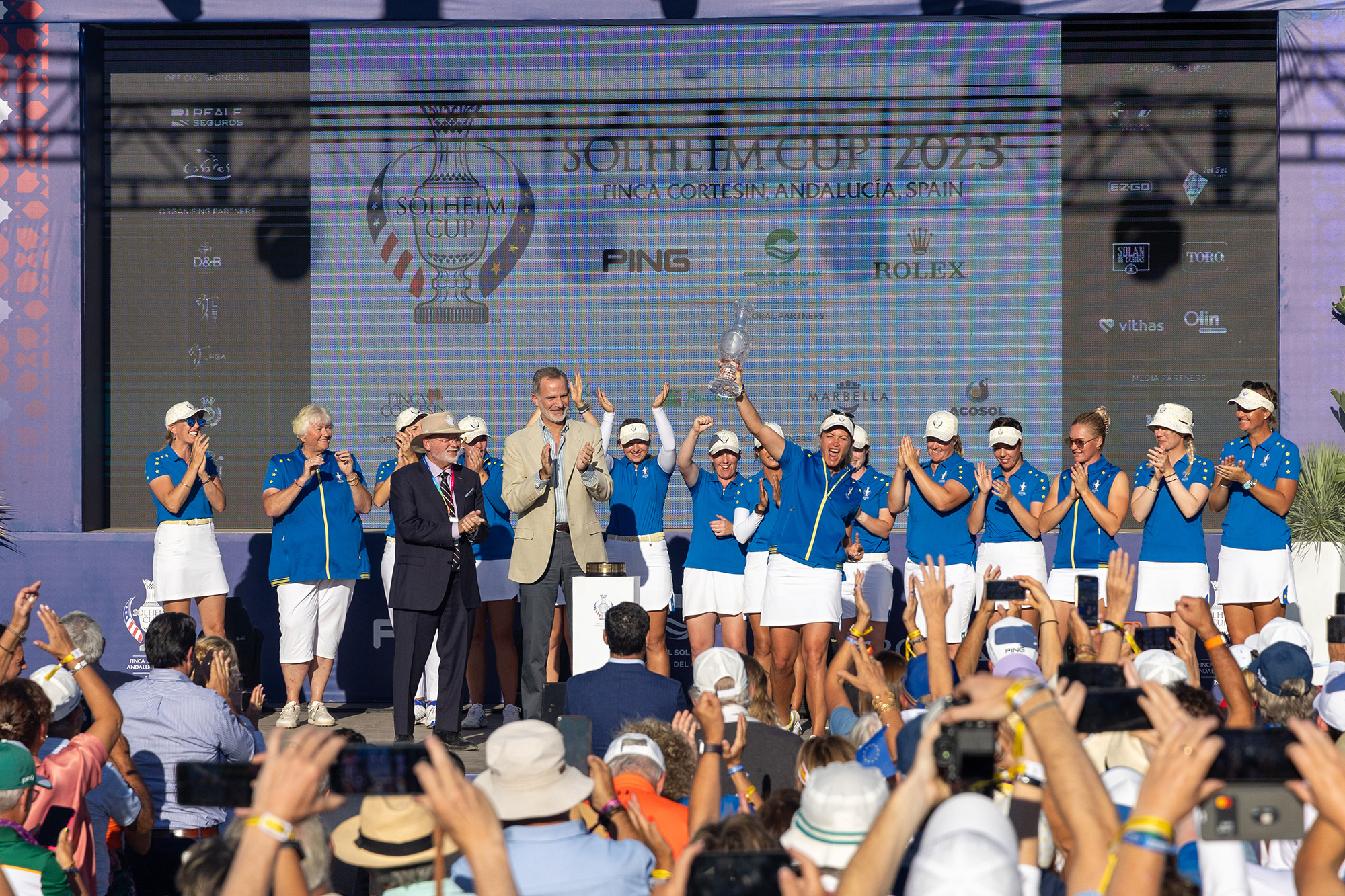
In the professional golf circuit, prestige is usually measured by the size of the purse. The Majors are defined by millions in prize money and massive sponsorship deals that drive the sport's commercial engine. But when the Solheim Cup arrives, the economic calculus of the LPGA and LET is stripped away. Here, there is no prize money to be won. There is only the trophy, the honor, and the intense, biennial struggle for transatlantic supremacy.
The Shadow of the Nine-to-Five
For the European contingent, the Solheim Cup is more than just a tournament; it is a quest to dismantle a historical hierarchy. The data tells a story of American dominance that the European team is desperate to rewrite. To date, the United States has held a firm grip on the competition, leading the historical tally with nine victories to Europe's five.
This 9-5 record creates a specific psychological landscape. The American side, composed of the elite stars from the Ladies Professional Golf Association (LPGA) Tour, enters the fray as the "success-accustomed" powerhouse. Conversely, the European side, representing the Ladies European Tour (LET), carries the weight of the underdog, fighting to prove that their regional strength can overcome the concentrated talent of the American powerhouse.
The Matchplay Crucible
To understand the tension of the Solheim Cup, one must look past the traditional stroke-play format that governs the rest of the golf world. While the Majors reward the lowest cumulative score over 72 holes, the Solheim Cup is a battle of attrition fought through matchplay. This fundamental shift in rules changes everything from strategy to temperament.

In this format, players are not merely competing against the course; they are competing directly against an opponent. Every hole is a discrete battle. Success is measured in "Up" increments—winning a hole grants a point, while a tie results in a halved hole. This creates a volatile, momentum-driven environment where a single bad stretch can evaporate a lead, and a sudden burst of brilliance can swing the entire energy of a team.
The tactical complexity is further heightened by the specific formats used within the matches:
- Foursomes: A grueling test of synergy where two players from a team share a single ball, alternating shots. It demands precise coordination and a deep understanding of a partner's tendencies.
- Fourballs: A more expansive contest where each player plays their own ball, but only the best score among the pair counts toward the team total. This format allows for more aggressive, individualistic play while still requiring team cohesion to secure the point.
The Clash of the Tours
The Solheim Cup serves as the ultimate collision point for the two most significant governing bodies in women's golf. It is the LPGA versus the LET. This isn't just a match between twelve individuals; it is a clash of two distinct golfing cultures and professional ecosystems.
The American team brings the concentrated depth of the LPGA, arguably the most competitive professional tour in the world. Their players are seasoned by a relentless schedule of high-pressure tournaments. The European team, drawn from the LET, relies on a different kind of strength—a shared identity and the fierce pride of a collective representing a diverse continent. When these two forces meet, the technical skill of the individual is often secondary to the collective spirit of the twelve-woman squad.
As the biennial cycle continues, the Solheim Cup remains the most coveted trophy in the women's game. Whether the Americans extend their nine-to-five lead or Europe manages to tip the scales, the tournament remains a singular event where the scoreboard matters far less than the pride of the continent represented.
Sources
These sources formed the evidence pack for this article. Links open the original publisher; inclusion does not imply endorsement.
- golfwettanbieter.com original
- golfsportwetten.com original
- golfclub-wuerzburg.de original
- golfsportmagazin.de original