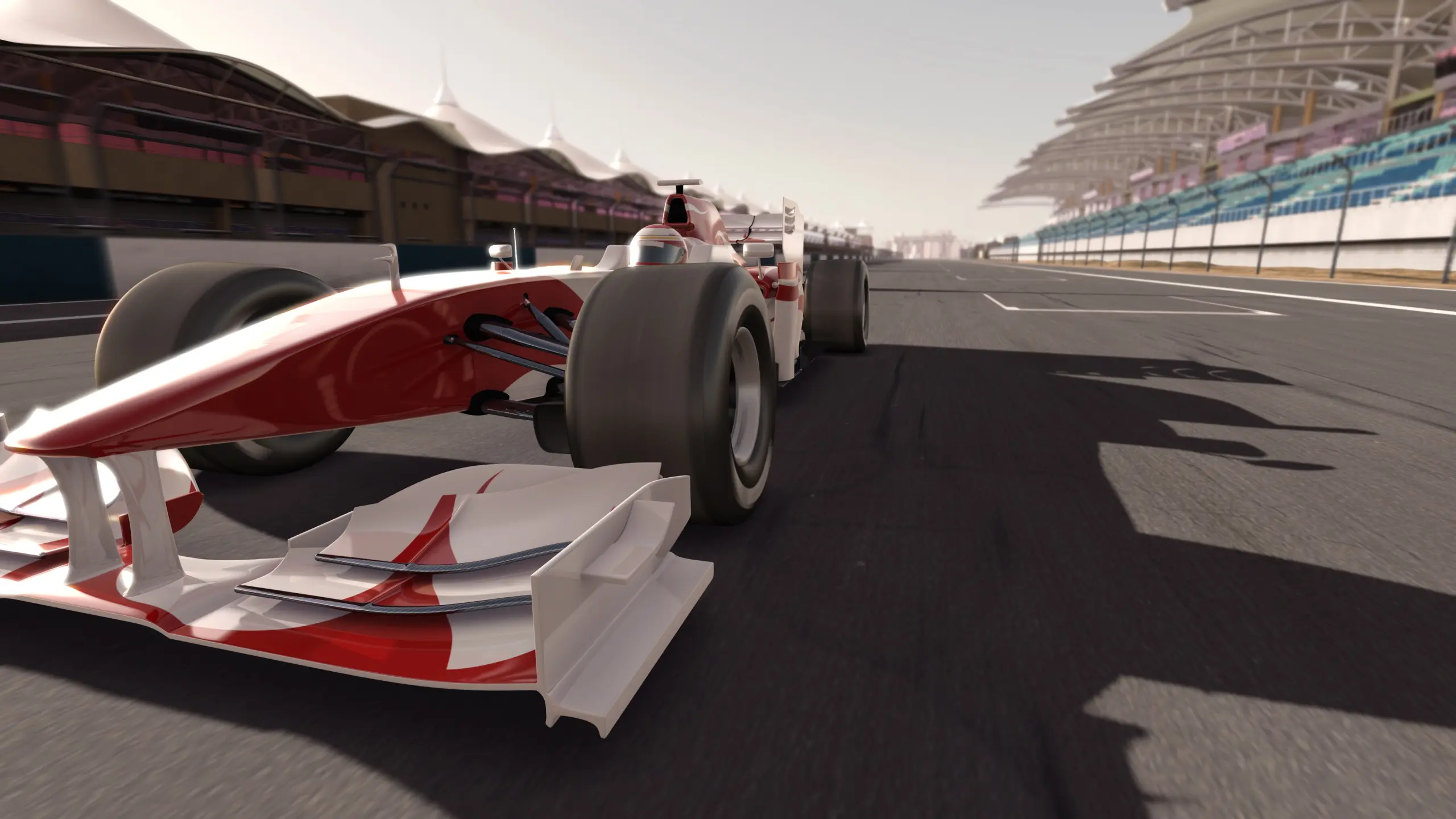
Formula 1 CEO Stefano Domenicali’s confirmation to financial analysts that the sport will expand its sprint race footprint past the current six-event threshold marks a decisive commercial pivot for Grand Prix racing. Driven by Friday and weekend audience metrics that spike whenever competitive track action replaces processional practice, Liberty Media is preparing to reshape the weekend format. The move comes on the heels of Liberty Media’s second-quarter 2026 financial report, which logged a 38 percent drop in quarterly revenue to $764 million—a slump directly attributable to four fewer races taking place within that three-month window compared to the prior year. Counterbalancing that temporary drop, F1’s broadcasting arrangement with Apple in the United States yielded a 13 percent surge in viewership and total hours watched, validating the commercial urge to convert quiet Friday sessions into high-stakes track battles.
Liberty’s Commercial Calculus and the 24-Sprint Extremum
The push for short-format racing has found its most vocal champion in Alpine advisor Flavio Briatore. Speaking to reporters, the veteran team chief argued that Formula 1’s traditional three-practice framework fails to deliver entertainment value on track.
blockquote>I would do that at every race. We have to offer the spectators a bit more. Because we do nothing for the spectators,Briatore stated, calling for a total overhaul of the schedule.
At the sprint race, there are at least two races, two starts, and the driver is driving for something. He isn't just driving for the sake of technology... For me, it's 24 races, 24 sprint races.
While Domenicali has not committed to a 24-sprint calendar, the commercial mechanics make an expansion beyond six events inevitable. Sprints alter the fundamental economics of a Grand Prix weekend by transforming Friday afternoon into a meaningful competitive session. Under the sprint schedule, drivers get just a single 60-minute practice session on Friday morning before heading directly into Friday afternoon qualifying for Sunday’s Grand Prix. Saturday then operates as a self-contained sprint showcase featuring Sprint Qualifying and the sprint race itself before Sunday's headline event.
The Tactical Reality of 100 Kilometers Without Pit Stops
From an engineering and operational perspective, a sprint race is not merely a truncated Grand Prix—it is an entirely distinct discipline. Running over roughly one-third of a full Grand Prix distance (typically 17 to 24 laps), sprint races do not feature mandatory pit stops. Teams almost universally run the entire distance on a single set of tyres, eliminating multi-stop undercut opportunities, pit-crew execution variables, and complex mid-race tyre management strategies.
This lack of strategic fluidity makes starting position the overwhelming predictor of success. Historical telemetry across recent sprint seasons highlights a striking pattern:
- Front-Row Domination: Approximately 75 percent of all sprint race winners start from the front row (P1 or P2).
- Top-Four Stranglehold: Over 90 percent of sprint victories are secured by drivers starting within the top four grid positions.
- Low Variance Factors: The remaining 10 percent of non-top-four victories stem almost exclusively from chaotic wet-weather starts or first-lap collisions.
Because setup choices are locked in after Friday’s single practice session, teams are forced into a delicate compromise. A car optimized strictly for one-lap qualifying speed and rapid sprint pace may suffer severe thermal tyre degradation over a 57-lap Grand Prix on Sunday. Conversely, a team setting up a car for race-long tyre care on Sunday can find itself trapped in P7 or P8 during Saturday’s sprint, virtually guaranteeing a modest points return.
Championship Consequences and Drivers' Market Dynamics
The strategic importance of short-format racing was highlighted during Lando Norris's 2025 World Championship victory, where consistent top-tier sprint results provided the point buffer needed in a tight three-way title fight that went down to the final race of the season. With eight points awarded to the sprint winner down to one point for eighth place, a six-sprint season offers up to 48 additional championship points—the equivalent of nearly two full Grand Prix victories.
That tally becomes even more critical amid intra-team dynamics. At Ferrari, where Lewis Hamilton partners Charles Leclerc, intra-team qualifying pace directly dictates track position in mandatory single-stint sprints. Leclerc, who amassed a string of pole positions between 2022 and 2024 that often outstripped his Sunday win count, possesses the single-lap machinery extraction that flourishes under sprint conditions. Meanwhile, Red Bull's driver dynamic—whether featuring Max Verstappen alongside Sergio Pérez or Isack Hadjar—faces similar pressure, as Verstappen proved in 2024 by repeatedly converting P3 or P4 sprint starts into wins through aggressive opening-lap passes.
| Metric / Variable | Full Grand Prix | Sprint Race |
|---|---|---|
| Race Distance | Full distance (~300 km / ~50-70 laps) | One-third distance (17–24 laps / ~100 km) |
| Mandatory Pit Stops | Yes (Minimum 1 compound change) | None (Single tyre set standard) |
| Practice Sessions | Three 60-minute sessions (Standard) | One 60-minute session (Friday FP1) |
| Points Allocation | 25-18-15-12-10-8-6-4-2-1 | 8-7-6-5-4-3-2-1 (Top 8 only) |
| Front-Row Win Rate | Variable (Strategy & Safety Cars) | ~75% Historical Conversion |
Evidence-Led Forecast: Sprint Expansion Impact on the 2027 Title Race
Likely Tactical Pattern: As Stefano Domenicali increases the sprint schedule for upcoming seasons, top-tier constructors (McLaren, Red Bull, Ferrari, and Mercedes) will increasingly tailor their aerodynamic development toward single-lap tyre switch-on and clean-air speed. Expect front-running teams to sacrifice marginal long-run compliance on Sunday in exchange for securing front-row grid spots on Friday and Saturday, minimizing the risk of getting trapped in turbulent wake without pit-stop recourse.
Decisive Matchup: The head-to-head battle between rapid single-lap qualifiers and race-pace specialists within elite teams will decide intra-team hierarchies. At Ferrari, Leclerc’s single-lap qualifying record will clash directly with Hamilton’s Sunday stint management; in sprints, Leclerc's grid position advantage will prove decisive unless Hamilton can execute first-lap overtakes before tyre pressures stabilize.
Strongest Counter-Case: The primary risk to an aggressive sprint setup strategy is reliability and early-lap attrition. With an average of two to three retirements per Grand Prix stemming from technical failures or accidents, teams that over-index on raw qualifying performance risk mechanical failures or wing damage during wheel-to-wheel sprint battles, compromising their chassis and spare parts pool for Sunday's higher-paying Grand Prix.
What Would Change the Read: If the FIA introduces mandatory tyre swaps or reverse-grid elements into future sprint iterations, the ~75% front-row conversion rate would collapse. Until such regulatory shifts occur, single-lap qualifying performance remains the ultimate lever in Formula 1's expanding short-format future.
Sources
These sources formed the evidence pack for this article. Links open the original publisher; inclusion does not imply endorsement.
- formel1wett-tipps.com original
- formel-1wette.com original
- t-online.de original