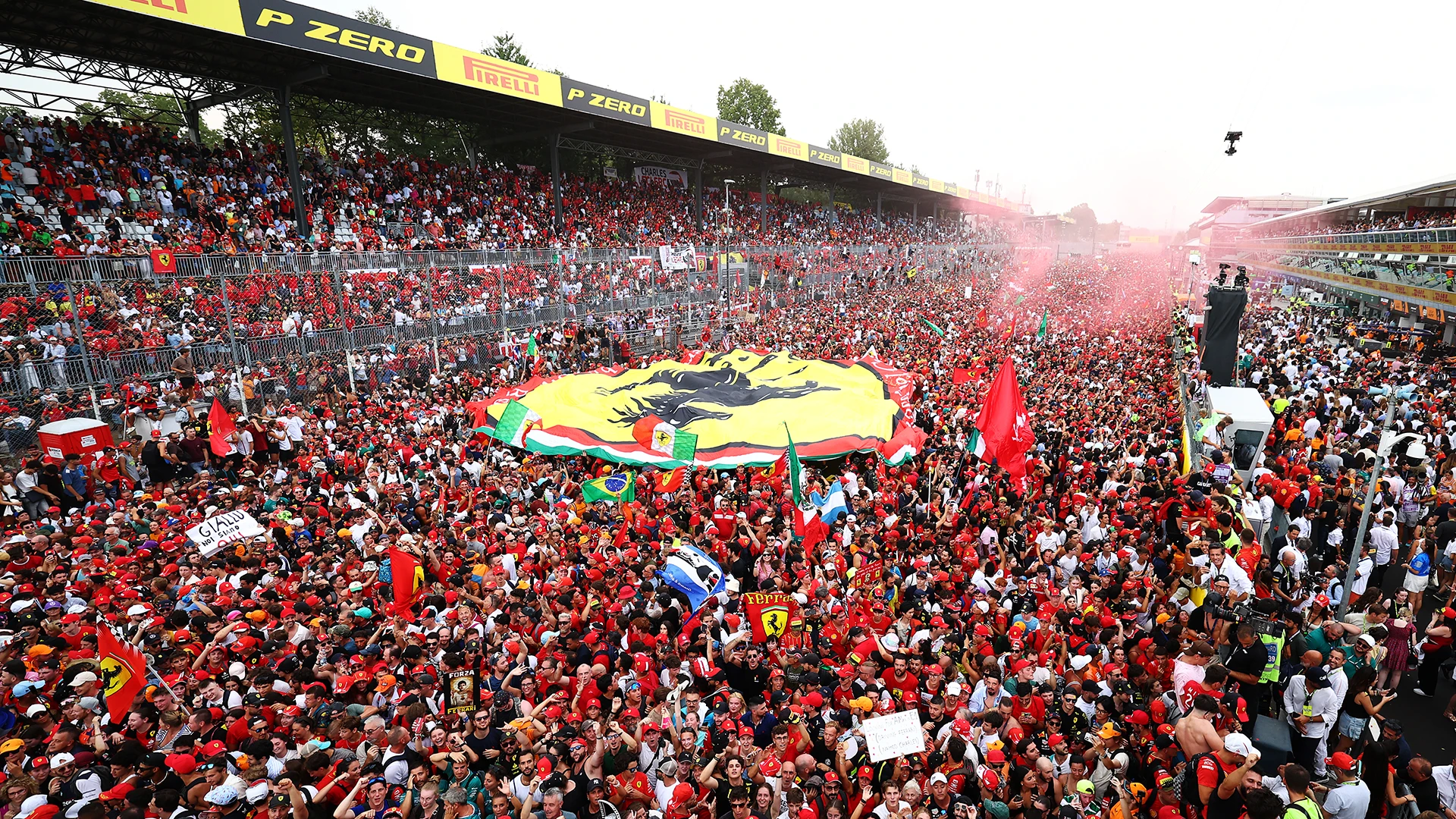
When Formula 1 machinery arrives in the lush parklands north-east of Milan for the 2026 Italian Grand Prix, engineers face an engineering puzzle unique to the calendar. Autodromo Nazionale Monza—universally dubbed the 'Temple of Speed' and known locally as 'La Pista Magica'—demands a trim that strips away drag at the expense of cornering stability. Drivers spend approximately 80 percent of the 5.79-kilometer lap on full throttle, relying on razor-thin wing profiles to maximize terminal velocity down the main straight before standing on the brake pedal for brutal chicane entry points.
The benchmark for raw velocity at the circuit was vividly demonstrated during Lando Norris's 2024 pole position lap, where the McLaren driver posted an astonishing average speed of 263 km/h. That staggering figure underscores why Monza remains the ultimate litmus test for power unit deployment, aero efficiency, and thermal management under sustained heavy load.
h2>The 1.1-Kilometer Launchpad and Heavy Deceleration DemandsThe defining physical challenge of Monza unfolds along its 1.1-kilometer start/finish straight. Cars hit their absolute top speed (Vmax) on this stretch before encountering the ultimate test of brake material efficiency at the Variante del Rettifilo. Here, drivers must anchor the car down from roughly 350 km/h to just 70 km/h in a matter of meters to negotiate the tight right-left chicane.
This severe deceleration zone serves as both the circuit's primary overtaking theater and a notorious focal point for opening-lap incidents. The balance required to scrub off nearly 280 km/h without locking an inside front wheel or destabilizing the rear platform demands absolute precision in brake bias configuration. A slight miscalculation into Rettifilo compromises not only the chicane apex but severely penalizes acceleration down the subsequent sweep through Curva Biassono.
h2>Chicane Violence and Sector DynamicsBeyond the opening turn, the circuit demands rapid transitions between top-tier straight-line speed and precision direction changes over aggressive curb profiles.
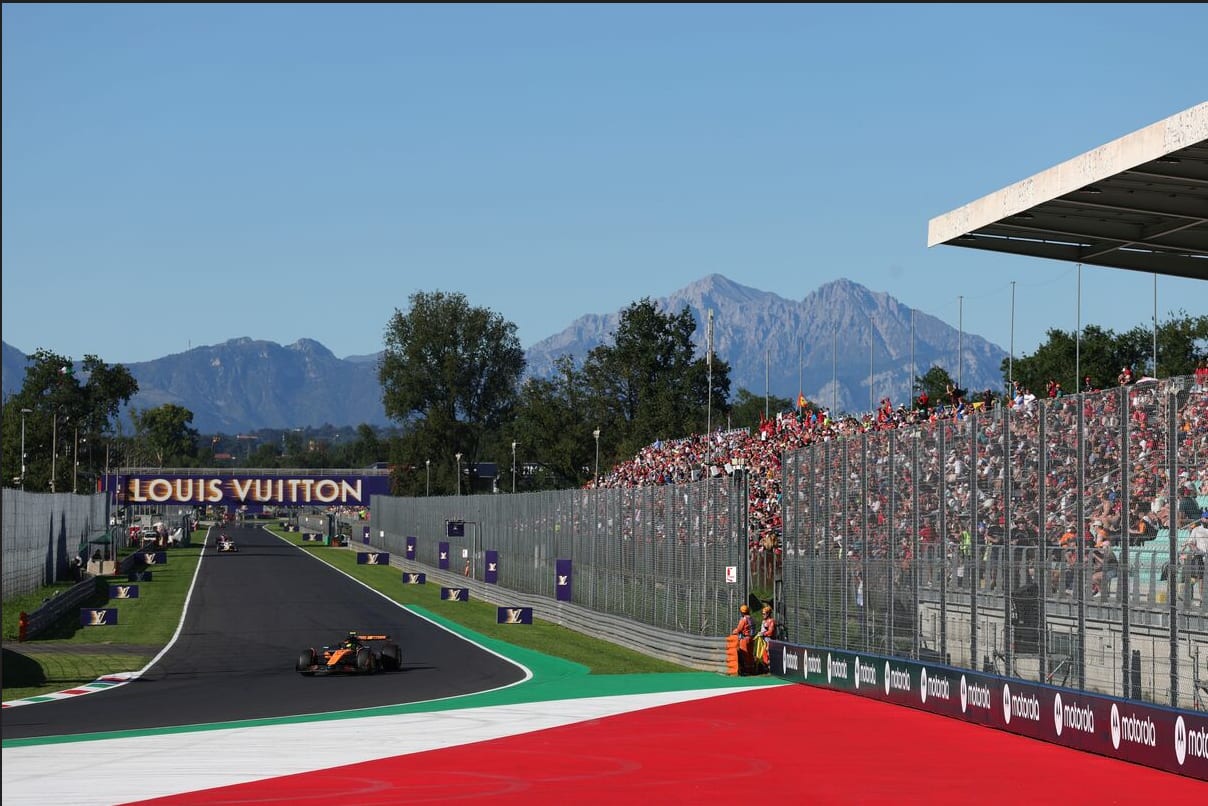
Constructed in just 110 days in 1922, Autodromo Nazionale Monza stands as the world’s third purpose-built motor racing venue, following Brooklands in the United Kingdom and Indianapolis in the United States. Opening its gates on September 3, 1922—just a week prior to hosting that year's Italian Grand Prix—the circuit became a core pillar of international motorsport. When the official Formula 1 World Championship was inaugurated in 1950, Monza was on the calendar and has held the Italian Grand Prix in every single season since, with only one solitary exception.
h2>Calendar Context and Autumn TransitionScheduled for September 4–6, 2026, the Italian Grand Prix marks a critical operational threshold on the Formula 1 schedule. Positioned as the final European contest of the late-summer stretch, the Monza weekend acts as the launching pad for an intense sequence of global flyaway events.
| Grand Prix Event | Scheduled Dates | Circuit Character |
|---|---|---|
| Italian Grand Prix (Monza) | 04 – 06 Sep 2026 | Ultra-low downforce, high Vmax, heavy braking chicanes |
| Spanish Grand Prix | 11 – 13 Sep 2026 | High-speed aerodynamic balance test |
| Azerbaijan Grand Prix (Baku) | 24 – 26 Sep 2026 | Long street straights and 90-degree urban turns |
| Bahrain GP in Malaysia | 02 – 04 Oct 2026 | Thermal management and high-energy cornering |
| Singapore Grand Prix | 09 – 11 Oct 2026 | High-downforce street circuit torture test |
As the championship transitions from Monza into Spain, Azerbaijan, and beyond, the setups shifted dramatically from low-drag configurations to high-downforce street layouts. Yet, no matter how technical modern aerodynamics become, the pure strain on engines, brakes, and driver focus at 350 km/h ensures that Monza's historic layout remains one of the ultimate tests on the F1 calendar.
Sources
These sources formed the evidence pack for this article. Links open the original publisher; inclusion does not imply endorsement.
- tickets.formula1.com original
- spectatetravel.co.uk original
- formula1.com original