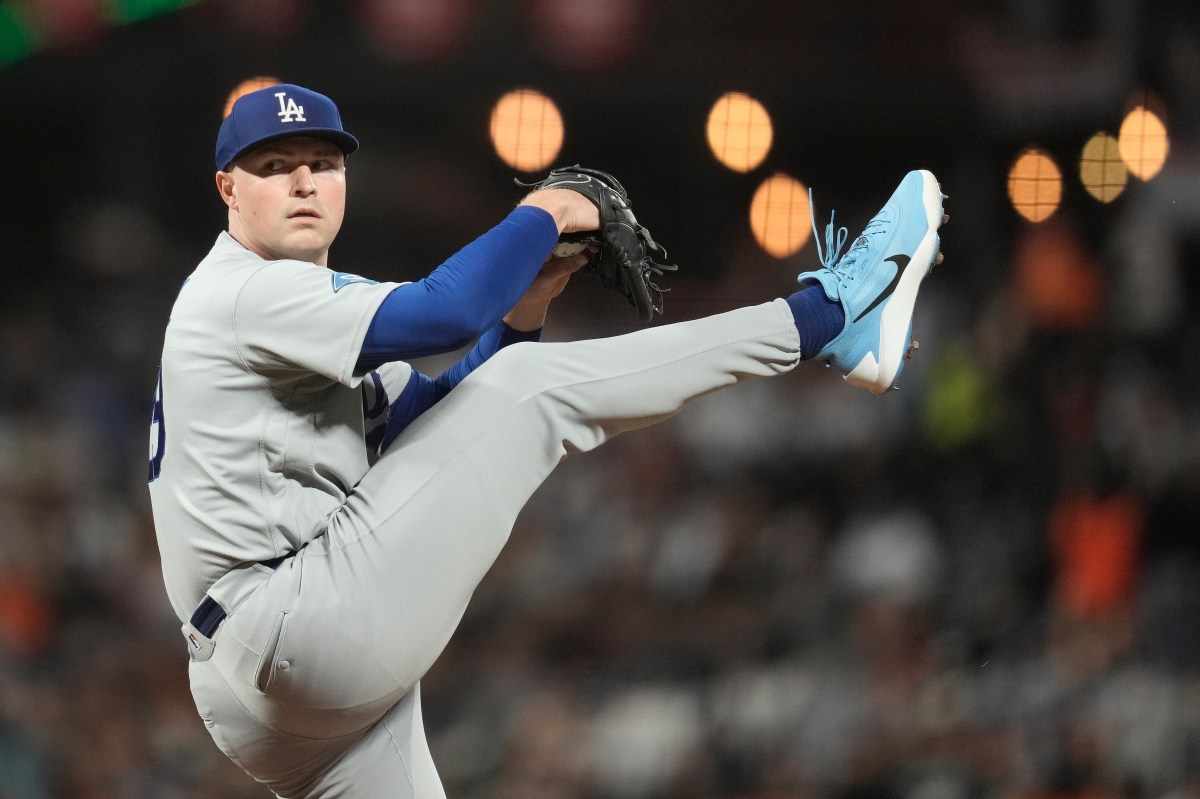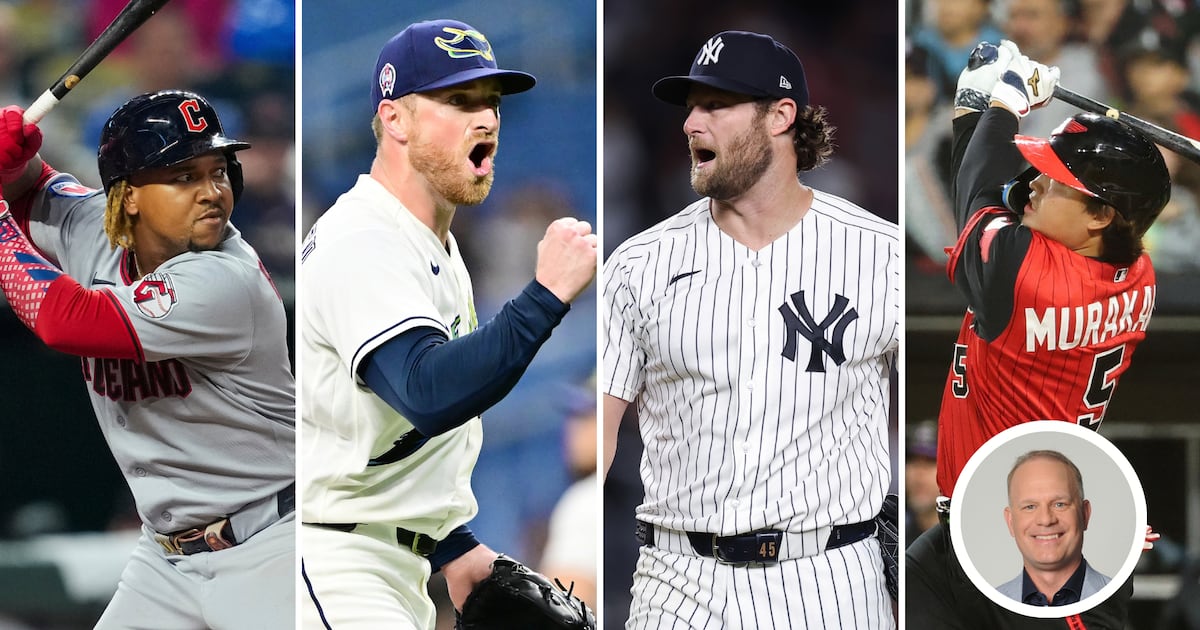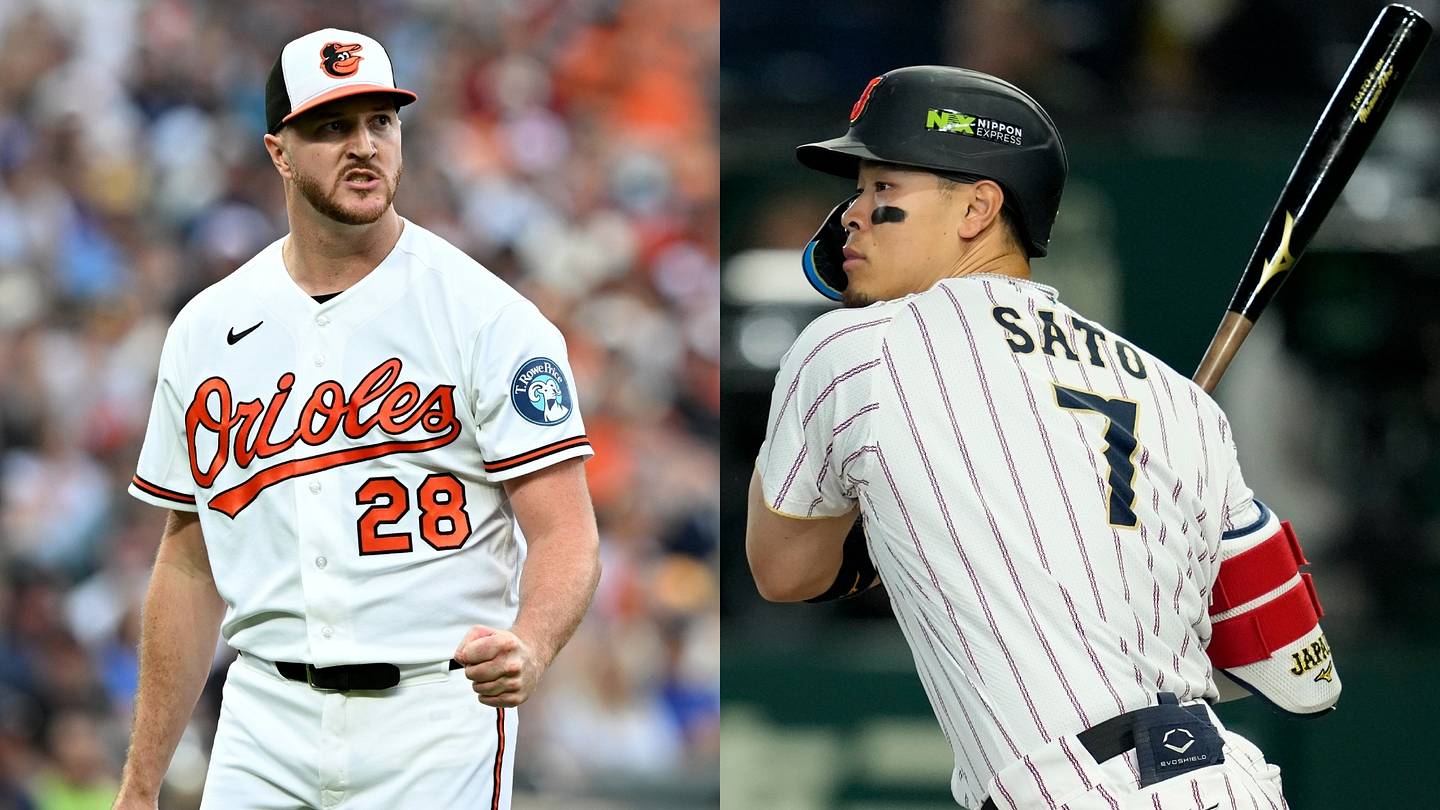
The Cubs didn't wait for the market to settle. They didn't flinch at projections. In a 12-hour span starting late Monday night, Chicago committed $240 million to two players — Teruaki Sato and Trevor Rogers — who entered the winter ranked third and seventh on Sports Illustrated's free-agent board but carried enough question marks that industry expectations topped out at roughly $100 million and $92 million respectively.
The message was unmistakable: after watching the Brewers hoist a World Series trophy, the Cubs decided price was no longer the primary filter. "They clearly weren't interested in letting either player slip away over a difference in price," SI's Will Laws wrote. The deals vault both players into the top eight contracts in franchise history.
The Bat: Sato's Triple Crown, the Murakami Precedent, and a Corner-Outfield Hole
Sato, 27, just authored one of the most dominant offensive seasons in recent NPB history: .306/.383/.624 with 39 home runs and 106 RBI, good for the 2026 Central League Triple Crown and his second MVP award in two years. He's a left-handed hitter with power to all fields, and the Cubs view him as the best bat on a market that included Randy Arozarena and Seiya Suzuki — both in their 30s.
"It's, to me, the best bat on the market because of the age and also, let's not forget, I think the industry kind of missed the boat on Munetaka Murakami last year,"
Tom Verducci, MLB Network
Verducci's reference to Murakami is the analytical anchor for Sato's case. Scouts questioned whether Murakami's swing-and-miss would translate to MLB velocity; he answered by hitting 31 homers with a .256/.363/.504 line for the Mets in 2025. Sato's profile is different — more contact, slightly less raw power — but the comp gives front offices a framework: elite NPB production at 27 can translate immediately.
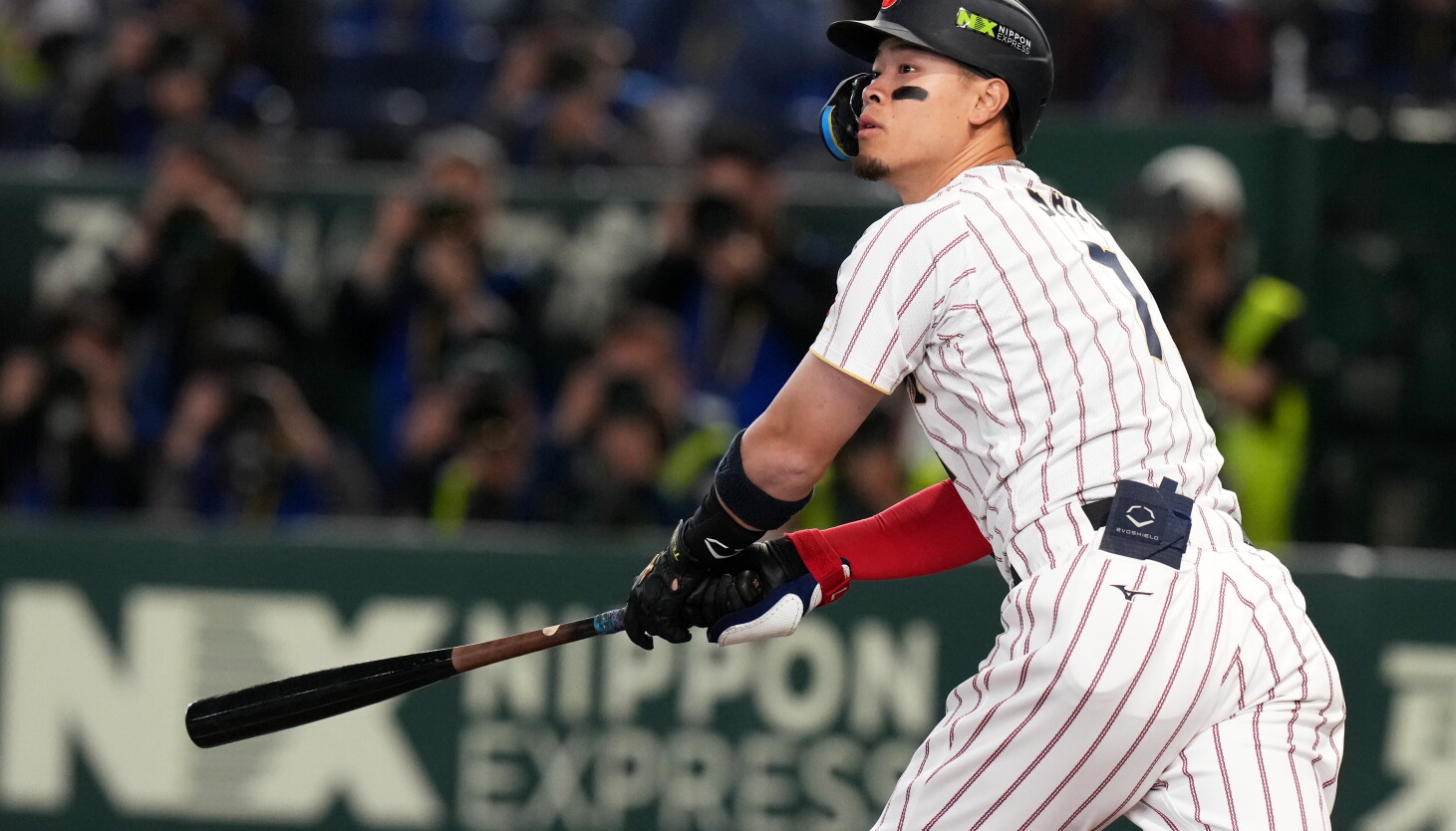
The positional fit is cleaner than it first appears. Alex Bregman, signed to a $175 million deal last winter, locks down third base. ESPN's Jeff Passan reports Sato will slide into a corner-outfield spot, with the DH slot available for matchup management. That solves the vacancy created by Suzuki's likely departure (the Cubs extended a qualifying offer he rejected, netting a 2027 draft pick if he signs elsewhere) and reduces the burden on Matt Shaw and Pedro Ramirez, both infielders by trade who were being prepped for outfield conversions.
The Arm: Rogers's 1.81 ERA Mirage and the Qualifying-Offer Tax
Rogers, who turned 29 this month, is the harder projection. His 2025 season — 1.81 ERA across 18 starts for Baltimore — looks like a Cy Young fragment. His 2024 season — 4.03 ERA in 30 starts — looks like his career baseline (career 4.11 ERA entering 2025). The Cubs are betting on the former, or at least a midpoint that profiles as a legitimate No. 2 starter behind Shota Imanaga.
The cost extended beyond money. Because Rogers rejected the Orioles' qualifying offer, Chicago forfeits its second- and fifth-highest picks in the 2027 draft and loses $1 million from its international bonus pool. The Athletic reported the Cubs "never seriously pursued" Tarik Skubal, who commanded a record $450 million from the Mets, and instead zeroed in on Rogers as the best available starter once Skubal's market cleared.
"The Cubs never seriously pursued Skubal, knowing he would land the type of contract they don't hand out. But Rogers, a pitcher who some in the industry believe was the second-best starter available, quickly became their priority."
The Athletic
That framing — "second-best starter available" — is doing heavy lifting. The free-agent pitching class thinned rapidly after Skubal, Corbin Burnes, and Max Fried. Rogers's 2025 breakout coincided perfectly with his walk year, and the Cubs paid the premium for a 100-inning sample they hope represents a true talent shift rather than a contract-year spike.
The Division Context: Milwaukee's Shadow and the Draft-Capital Trade
Neither signing happens in a vacuum. The Brewers' first World Series title — built on homegrown pitching, aggressive development, and a payroll that ranked 22nd in baseball — forced Chicago's hand. The Cubs' lineup led MLB in runs scored in 2026 and still flamed out in the playoffs. Their rotation, even with Imanaga, lacked a second reliable October starter. Losing Suzuki, Ian Happ, and potentially four starting pitchers to free agency created a roster crunch that Jed Hoyer's front office answered with velocity: two major additions in half a day.

The draft-pick forfeiture for Rogers is the silent budget item. Chicago's farm system, restocked via the 2023-24 sell-offs, now absorbs a hit at the top of the 2027 class. The international pool reduction further constrains amateur talent acquisition. For a franchise that has positioned itself as development-first under Hoyer, the willingness to spend both cash and future equity signals a compressed championship window.
What Comes Next: The Remaining Holes and the Skubal Regret Test
Verducci and former MLB executive Jim Duquette both emphasized the same point: two needs filled, several remaining. The Cubs still need at least one more rotation piece, a left-field solution if Happ departs, and bullpen depth. The $240 million spent on Sato and Rogers doesn't preclude further spending — Bregman's contract proved ownership will greenlight nine-figure deals — but it raises the bar for return on investment.
The most honest assessment came from Duquette on MLB Network Radio: "He's a high-profile player. He's been a really good player in the NPB. So for the Cubs to go that aggressive, yeah, two guys, they filled two needs, and they have a lot more needs to fill, but those are two major signings for them."
If Sato replicates 80% of his NPB production and Rogers settles as a 3.50-ERA, 170-inning starter, the Cubs have bought a division-winning core. If Sato struggles with MLB velocity and Rogers reverts to his 4.00-ERA mean, Chicago has committed $240 million and premium draft capital to average production — the exact outcome that keeps front offices awake in November. The Brewers, meanwhile, won a title without signing a single nine-figure free agent. That contrast will define the NL Central narrative until the games render a verdict.
Sources
These sources formed the evidence pack for this article. Links open the original publisher; inclusion does not imply endorsement.
- si.com original
- chicago.suntimes.com original
- sports.yahoo.com original
- heavy.com original