CHICAGO — The Cubs' offseason shopping spree has produced its headline acquisition. Chicago has agreed to a six-year, $120 million contract with Japanese slugger Teruaki Sato, according to ESPN's Jeff Passan, adding a 27-year-old who just won the 2026 Nippon Professional Baseball Central League Triple Crown.
The timing is notable. The deal came together Tuesday morning, mere hours after the Cubs reportedly reached an agreement on a five-year, $120 million contract with former Baltimore Orioles left-hander Trevor Rogers. The matching eight-figure figures underline a front office uninterested in subtlety this winter.
Sato enters MLB after six seasons with the Hanshin Tigers, spanning 2021 through 2026, and he brings two Central League MVP awards to go with his latest crown. Across the past two NPB seasons, he averaged 39.5 home runs, 104 RBIs and a .594 slugging percentage per year. He also represented Japan in the 2026 World Baseball Classic.
The Cubs are expected to deploy him in a corner outfield spot — left or right — even though he has primarily played third base in Japan. That positional shift is where the signing gets complicated.
Chicago finished 89-73 in 2026, second in the National League Central behind the World Series champion Milwaukee Brewers, and its postseason ended abruptly with a Wild Card sweep at the hands of the San Diego Padres. A power bat was the obvious priority, and Sato fits that description on paper. But the Cubs already have Seiya Suzuki and Ian Happ among their current outfield free agents, along with outfielders currently on the roster. Adding another corner bat means someone's playing time gets squeezed, and Sato's defensive reputation does not precede him as a plus gloveman.

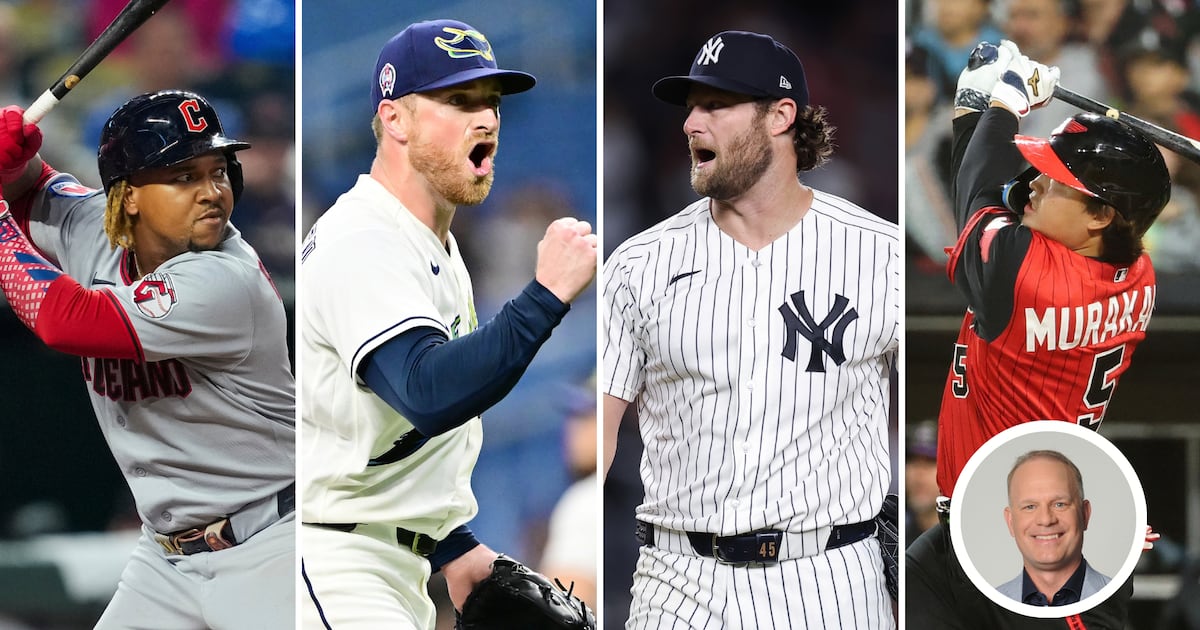
Market context makes the price worth scrutinizing. Ken Rosenthal, speaking on "Foul Territory" on Nov. 23, suggested Sato could sign well before Thanksgiving and floated the possibility of a $100 million contract. Jon Heyman of the New York Post had previously projected a deal starting at four years and $80 million and compared Sato to White Sox slugger Munetaka Murakami, calling Sato more versatile defensively. The Cubs ultimately cleared both benchmarks with a six-year, $120 million pact.
The Phillies were also reportedly in the mix, with Rosenthal noting they viewed Sato as an outfielder and could theoretically slot him in right field while moving Bryce Harper back to first base. The Cubs simply outbid or outmaneuvered that field.
What Chicago is really buying is translation risk. Murakami came over and finished fourth in American League Rookie of the Year balloting with 35 home runs and an OPS over .800, but Rosenthal noted that he faded over the final two months, with strikeouts climbing and average and OPS falling. Sato is a left-handed hitter with the same positional questions and the same swing-and-miss concerns. Rosenthal expects him to slug like Murakami because of the demand and the raw power profile, but he also cautioned that pitchers might figure him out the second time around.
There is a deadline pressure baked into this market, too. Rosenthal cited the current collective bargaining agreement expiring at 11:59 p.m. ET on Dec. 1, after which owners are expected to impose a lockout. Signing Sato now beats the clock, but it also commits the Cubs to roughly $20 million annually through age 32 for a player who has never taken an MLB at-bat.

The roster math is already tight. The Cubs' current free agents include starting pitchers Shota Imanaga, Matthew Boyd, Clay Holmes and Kevin Gausman, plus outfielders Seiya Suzuki and Ian Happ. Committing $120 million to Sato and $120 million to Rogers before addressing that group means Chicago is betting its core can absorb both additions without sacrificing depth elsewhere.
Analysis: The Cubs are acquiring projection, not production. Sato's .306 average, 39 home runs and 106 RBIs in 2026 are NPB accomplishments, and corner outfielders in MLB must hit to justify playing time. If his power translates even partially, Chicago has a middle-of-the-order bat under club control through his age-32 season. If the strikeout issues Rosenthal flagged surface in the National League, the Cubs will have an expensive corner outfielder on a roster that still needs pitching answers. The Trevor Rogers signing hours earlier suggests Chicago is willing to stack risk on risk this offseason.
The deadline clock is still ticking. With a potential lockout looming Dec. 1, more movement is expected before the winter meetings effectively freeze. For now, the Cubs have their superstar, their spending headline, and a first baseman-sized question about where everyone fits.
Sources
These sources formed the evidence pack for this article. Links open the original publisher; inclusion does not imply endorsement.
- si.com original
- sports.yahoo.com original
- thebiglead.com original
- foxsports.com original