When the Formula 1 circus descended on Spa-Francorchamps for the Belgian Grand Prix, the margins between triumph and disaster proved razor-thin. For Lewis Hamilton, the weekend delivered a masterclass in pace undermined by self-inflicted wounds, cascading technical failures, and a controversial stewards' intervention that robbed the seven-time world champion of a probable podium finish.
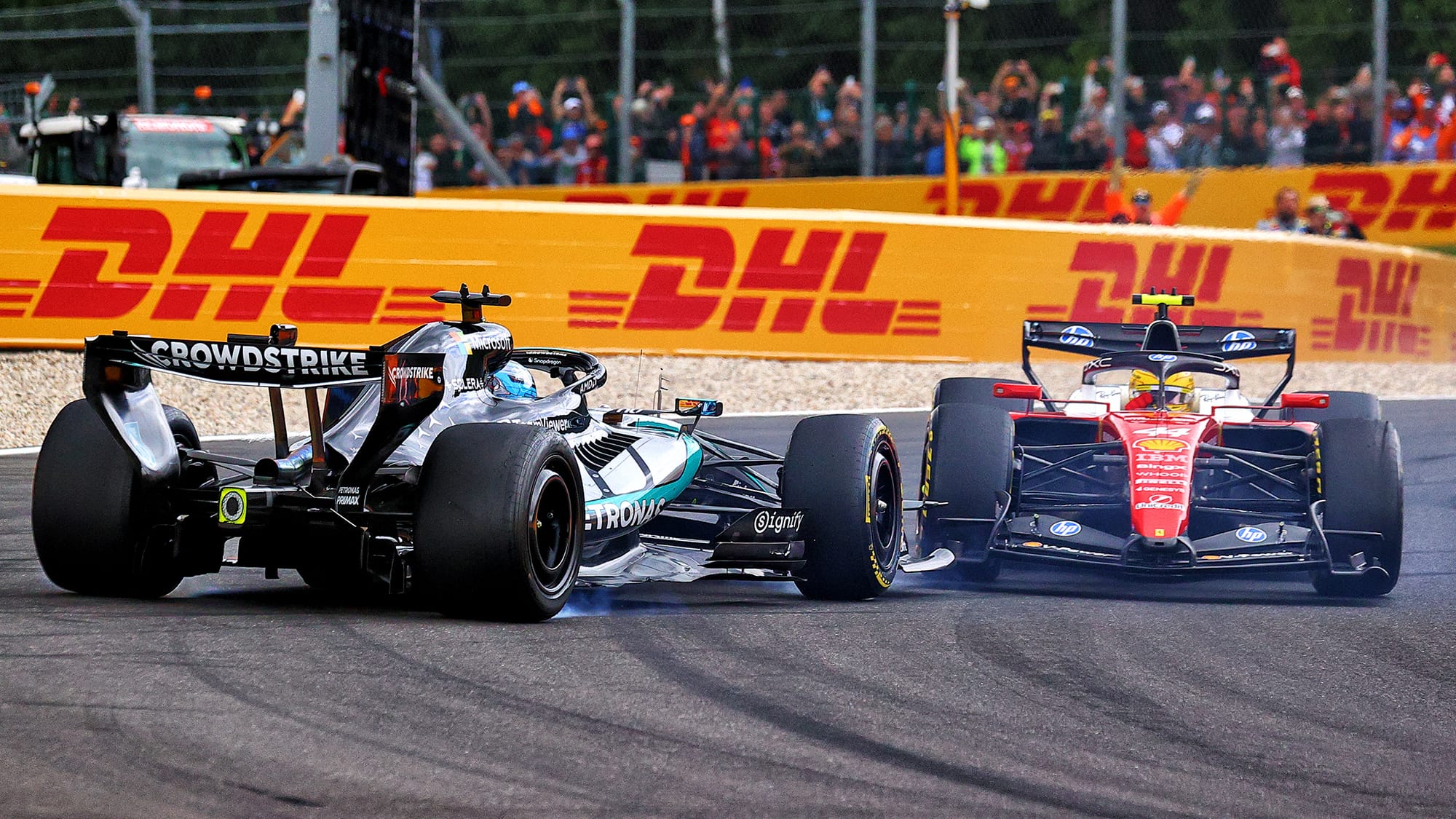
The catalyst for the afternoon's chaos arrived on the opening lap. Mercedes encountered severe Antriebs-Software (powertrain software) glitches off the line, resulting in a critical loss of electrical power during those vital initial meters. As the field compressed violently along the long Kemmel straight, George Russell found himself squeezed in a high-stakes drag race. Hamilton, holding the inside line for the Les-Combes chicane, was caught unawares by his former teammate's late braking maneuver. At the apex, Hamilton's left front wheel clipped Russell's right rear, pitching the Mercedes into a race-ending spin and into the gravel trap.
The stewards slapped Hamilton with a five-second time penalty, ruling that his Ferrari had drifted into the Mercedes understeer. Yet the paddock was far from united on the verdict. Even the victim offered diplomatic perspective. It was eher ein normaler Rennunfall. Vielleicht hätte ich eine etwas weitere Linie fahren können, er vielleicht etwas stärker bremsen können
(George Russell), noted the Mercedes driver, deflecting blame away from his compatriot and focusing his frustration squarely on the powertrain unit. Ferrari Team Principal Frédéric Vasseur was significantly more blunt, labeling the sanction Müll
and pointing out that similar first-lap scuffles routinely pass without official censure.
Mitigating factors did little to restore Hamilton's afternoon. The contact tore away vital underbody guide elements—costing the Ferrari between five and ten points of crucial downforce. Hamilton admitted the downward spiral originated earlier: Ich denke immer noch an meinen Crash im dritten Training gestern. Bei der Reparatur wurde bei der Aufhängung etwas übersehen. Deshalb hat die Balance im Qualifying nicht gepasst. Das hat zwei, drei Zehntel gekostet. Durch den schlechten Startplatz kam es dann zum Zwischenfall in der ersten Runde
(Lewis Hamilton).
Compounding the aerodynamic deficit, a far more alarming incident occurred during Hamilton's pit stop. Desperate to rectify an understeering balance, the crew attempted a front-wing adjustment. Miscommunication on the pit wall saw the traffic light turn prematurely while the mechanics were still engaged. Hamilton accelerated, striking a crew member with his right front wheel. Fortunately, the mechanic escaped serious injury, answering Hamilton's immediate radio inquiry with a reassuring update. But the balance handicap remained.
Despite a broken floor, a five-second penalty, and a pit-lane hazard, Hamilton’s raw race pace remained terrifyingly quick. He hunted down Oscar Piastri in the closing stages and finished just 5.7 seconds behind race winner Max Verstappen—a gap that would easily have vanished without the stewards' intervention. At the front, Kimi Antonelli drove a sublime race to secure a dominant victory for Mercedes, while Charles Leclerc maximized Ferrari's strategy during a Virtual Safety Car period to finish second.
As the championship battle intensifies, the intersection of team operations, software reliability, and internal hierarchy at Maranello remains under intense scrutiny. With the season hitting its stride, the question for Ferrari is not merely whether they can match the pace of Mercedes and Red Bull, but whether they can eliminate the operational friction threatening to derail their campaign.
Sources
These sources formed the evidence pack for this article. Links open the original publisher; inclusion does not imply endorsement.
- raceland.de original
- watson.de original
- auto-motor-und-sport.de original
- bild.de original