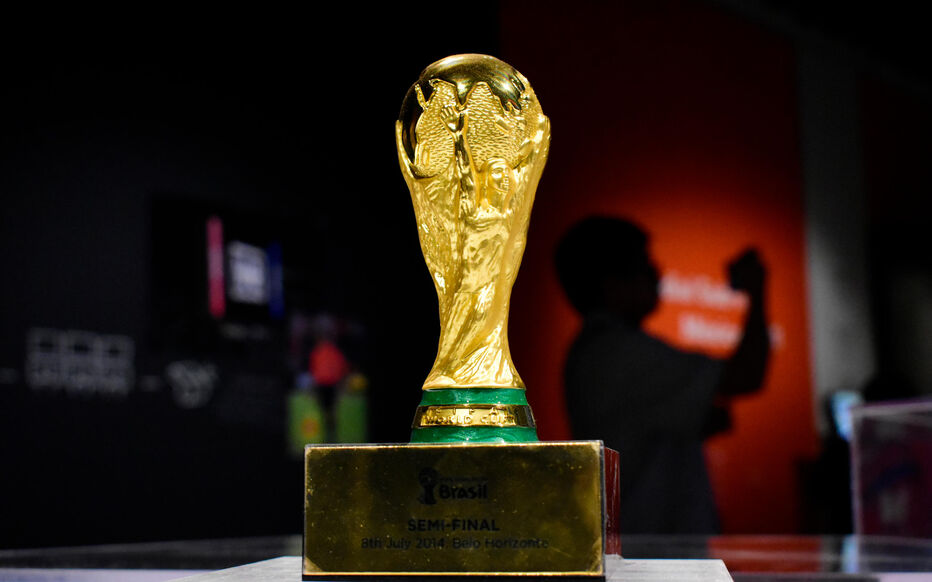
When political authority intersects with athletic pageantry, the stakes of the calendar year are immediately underlined. Federal Chancellor Friedrich Merz’s appearance at the World Cup opening ceremonies in Berlin on Friday signals more than standard civic patronage; it marks the official domestic curtain-raiser for a sporting landscape currently undergoing seismic shifts from the pitch to the offshore waves.
While the capital gathers for the global showcase, the domestic machinery continues to grind through high-stakes roster construction and continental adjustments. The late-summer closure of the transfer window left data analysts across Lower Saxony and beyond parsing the final moves of clubs like Wolfsburg, St. Pauli, Hannover, Kiel, Braunschweig, and Osnabrück. GSN data analysts are currently dissecting whether the frantic Deadline Day activity actually upgraded club depth or merely papered over systemic squad deficiencies.
Nowhere is squad pressure more visceral than in international competition. The VfL Wolfsburg women's side discovered the unforgiving nature of continental tournaments this week, squandering a 2:0 first-leg lead against Inter Milan to crash out in extra time. The elimination compounds a broader institutional anxiety within German women's football. As head coach Stephan Lerch and sporting director Vanessa Bernauer have publicly noted, the steady talent drain toward English clubs is hollowing out domestic depth, a concern echoed by player advisor Jörg Neblung.
Meanwhile, the domestic pyramid refuses to slow its pace. The DFB is pushing its sweeping Regionalliga reform as a top-priority item for the upcoming autumn Bundestag, aiming to lock in the 'Kompass-Model' and reshape the competitive floor for lower-tier clubs. That structural reform stands in stark contrast to the romantic chaos of the DFB-Pokal, where amateur sides like Hamburg Oberliga club HEBC reveled in the pure spectacle of a 0:5 defeat to Borussia Dortmund. For HEBC captain Janek Wrede, who netted an own goal, the night in front of a packed Volksparkstadion remained the proudest 0:5 of his life—a stark reminder of the financial and emotional divides that define German club football.
Far beyond the mainland, endurance sports are pushing human boundaries. Ocean racing veteran Boris Herrmann has officially launched his campaign in The Ocean Race Atlantic, navigating the brand-new Malizia 4 from New York toward Lorient. It is a grueling baptism of speed for a vessel engineered to test both skipper and material against the North Atlantic currents.
As the Berlin World Cup gathers global attention, the immediate trajectory for German sport is defined by adaptation. Clubs must pivot from summer transfer postmortems to grueling league campaigns, while elite sailors and paddlers—such as Kathy Rüsbüldt, who is set to compete internationally in para-stand-up paddling with a prosthesis—continue to stretch the boundaries of elite competition.
Sources
These sources formed the evidence pack for this article. Links open the original publisher; inclusion does not imply endorsement.
- ndr.de original
- sport.de original
- n-tv.de original
- presseportal.de original