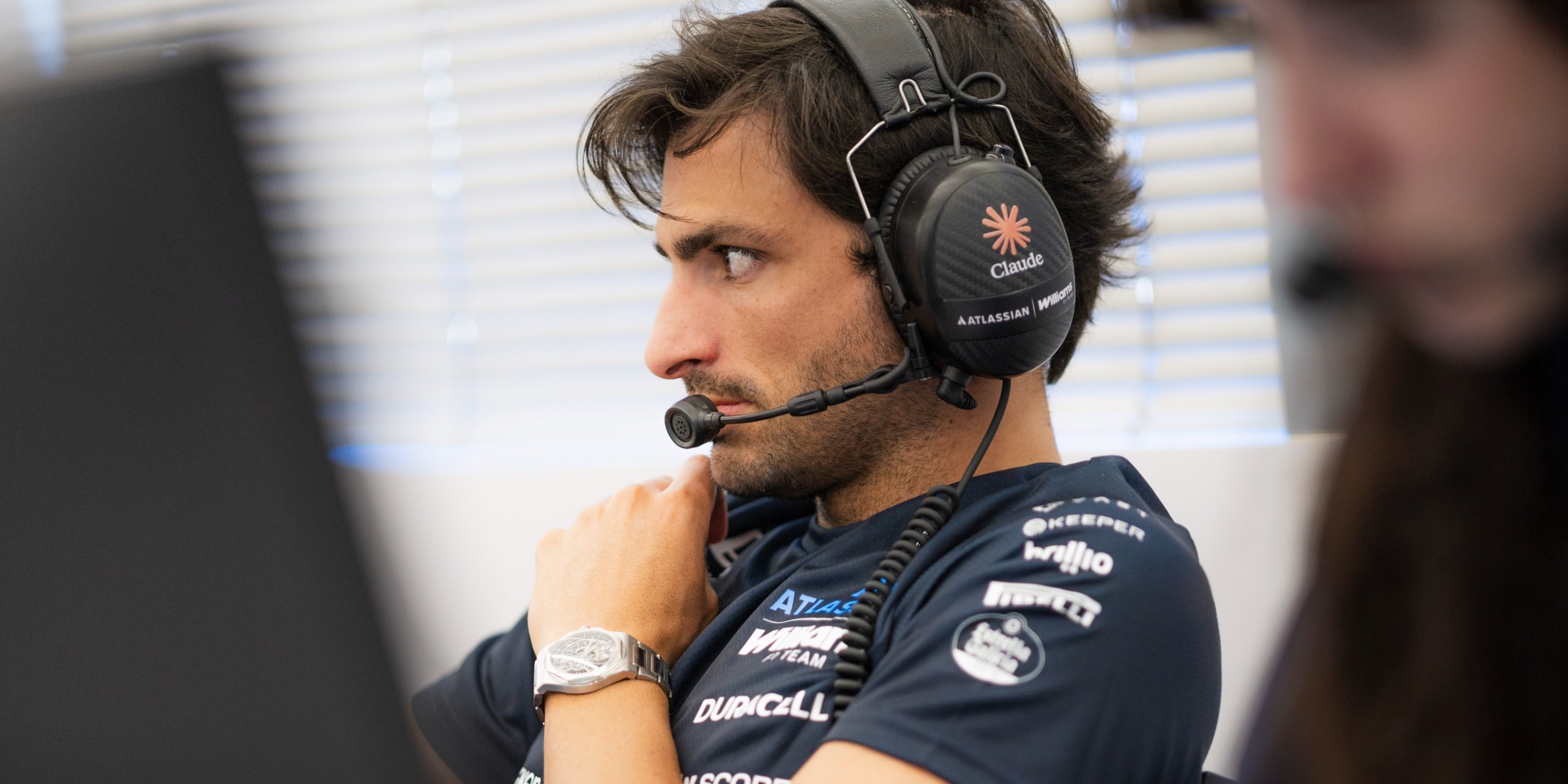
The architecture of a Formula 1 recovery is rarely built on sudden miracles, a reality Carlos Sainz has laid bare in his evaluation of the Williams team's demanding 2026 campaign. Speaking candidly on the podcast The Fast And The Curious, the seasoned Spaniard delivered a stark appraisal of the gap separating Grove from the midfield fight, pointing to a deficit of up to a full second per lap that a forthcoming B-spec package alone cannot magically erase.
Williams entered the 2026 season on the back foot after missing private shakedown tests in Barcelona in late January. Arriving at the official preseason tests in Bahrain with an overweight chassis, Sainz and teammate Alexander Albon found themselves immediately fighting against structural disadvantages. While upgrades introduced around the Miami Grand Prix shaved off crucial weight and propelled the squad to eighth in the constructors' standings with 11 points, the underlying performance chasm remains vast.
“It is very difficult for us to scoring points,” Sainz explained on the podcast, offering a pragmatic counterweight to optimism surrounding an anticipated major upgrade package slated around the Azerbaijan Grand Prix. “With our current lack of performance it is almost impossible. So in the second half or the last third of the season a lot has to change for us to really genuinely get involved in the fight for points.”
Sainz contextualized the widening competitive spread across the grid, highlighting just how far the baseline has shifted since his strong sophomore tenure at Williams began. Last year, when the team finished fifth in the championship, the deficit to title-winners McLaren hovered at a manageable four to five tenths. In contrast, the current landscape tells a punishing story: Williams trails Mercedes by a staggering two seconds and sits roughly a full second behind Racing Bulls.
“This year unfortunately very big gaps have been created, and if we want to fix them and get back on track we need very fundamental changes and we will probably need a whole winter to solve the difficulties we are dealing with,” Sainz noted. Crucially, the veteran dismissed the notion that the upcoming B-spec car would instantly recover the missing performance threshold. “When the B-spec car arrives, I don't believe it will bring us more than one second per lap, which is exactly what we need to get into the fight for points.”
For a driver who boasts a decorated 12-year career across five distinct teams—including stints as just the fourth driver in history to race for three iconic outfits in McLaren, Ferrari, and Williams—the current bottleneck is a test of organizational resilience. Having secured three podiums during a hard-fought previous year after overcoming a bumpy initial adjustment period to Grove's machinery, Sainz understands the precise anatomy of a midfield resurgence.
The Anatomy of the Grove Deficit
To understand the scale of the challenge facing Vowles' technical group at Williams, examining the chronological hurdles and performance gaps reveals why quick fixes are mathematically improbable under current regulations:
- The Winter Stumble: Missing the late-January private Barcelona tests after failing initial crash tests compromised early development milestones before a wheel turned in Bahrain.
- The Weight Penalty: Early-season races required dragging an overweight chassis until Miami-specific weight-saving components unlocked minor relief and 11 points.
- The Competitive Chasm: While last season's gap to the front-running McLaren benchmark sat at 0.4 to 0.5 seconds, the 2026 spread has blown out to 2 seconds behind Mercedes and 1 full second to direct midfield rivals like Racing Bulls.
- The B-Spec Ceiling: Incremental aerodynamic packages scheduled around Baku will aid drivability, but management and drivers alike recognize that structural aerodynamic and mechanical paradigm shifts require an entire offseason.
Sainz’s internal message to the factory underscores an insistence on uncompromising accountability. Rather than leaning on comforting rhetoric, the driver with stints at Maranello and Woking is challenging the entire organization to treat the performance shortfall not as a temporary operational blip, but as a deep structural challenge requiring collective urgency.
As the 2026 season grinds toward its final third, points will likely remain dependent on chaotic race-day variables rather than raw pace. For Sainz and Williams, the immediate mandate is surviving the mathematical reality of a one-second deficit while laying the unforgiving groundwork for the winter overhaul required to bridge the abyss.
Sources
These sources formed the evidence pack for this article. Links open the original publisher; inclusion does not imply endorsement.
- momlovesbest.com original
- svetformule.cz original
- gpf1.cz original