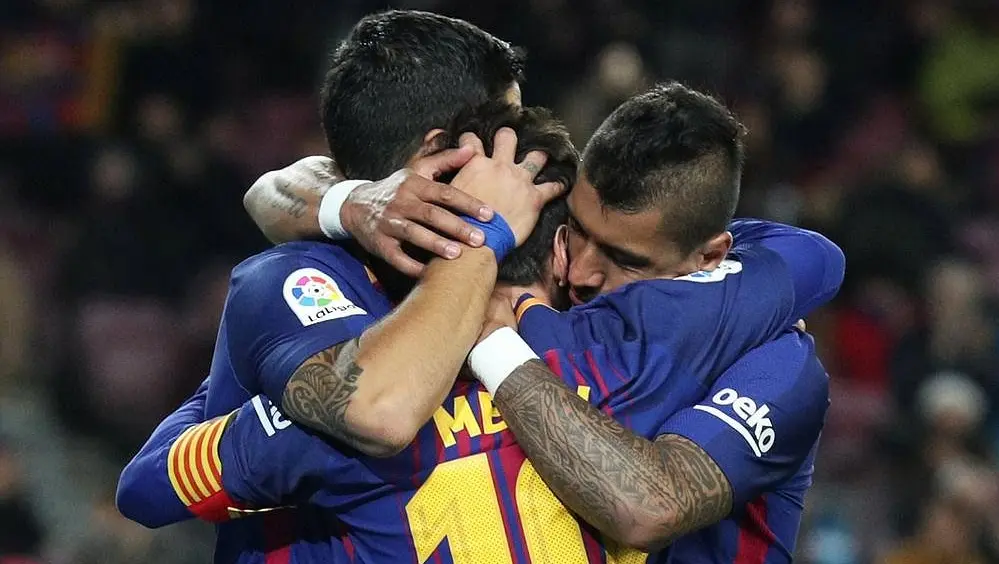
When international tournaments reach their boiling points, the friction rarely stays confined to the white lines of the pitch. Throughout Argentina's demanding journey to the 2026 FIFA World Cup final in North America, the psychological load carried by Lionel Messi and manager Lionel Scaloni has occasionally spilled over into conference rooms and heated on-field exchanges. While headlines frequently fixate on historical echoes—such as the politically charged "Le Malvinas sono argentine" banner unfurled by Lisandro Martínez and Giovani Lo Celso following their dramatic semifinal victory over England in Atlanta—the day-to-day management of the Albiceleste has been a masterclass in navigating high-wire tension.
That pressure was acutely visible long before the final hurdle against Spain. Following a harrowing group-stage escape and a tumultuous round-of-match sequence, Messi's public frustrations laid bare the raw stakes of the campaign. After missing a penalty against Egypt in a match that saw Argentina roar back from a 0-2 deficit to win 3-2, a visibly distraught Messi admitted to the press: Le lacrime sono state liberatorie, ero molto arrabbiato con me stesso per come avevo calciato il rigore. Sentivo di aver deluso il gruppo in un momento così importante.
The emotional volatility extended into the knockout rounds. During Argentina's bruising quarterfinal clash against Switzerland in Kansas City—where Messi failed to score for the first time in the tournament but secured a historic assist that made him the all-time leading assistman in World Cup history—the 39-year-old maestro memorably clashed with Portuguese referee Joao Pedro Pinheiro. Stung by what he perceived as a lack of deference following a heavy challenge, Messi confronted the official directly, warning: Parlami correttamente, non mancarmi di rispetto.
The Scaloni Balancing Act and Tactical Evolution
Managing the physical and emotional output of a 39-year-old talisman requires meticulous tactical restructuring. Scaloni addressed this head-on during press briefings leading up to the latter stages of the tournament. Reflecting on Messi's workload and psychological readiness, Scaloni noted:
Leo corre praticamente come sempre, ma oggi è molto più deciso nei momenti che contano. La squadra lo aiuta e il lavoro con il preparatore atletico gli ha fatto bene. Quando è motivato e sente di poter creare pericolo, diventa una macchina. Lionel Scaloni
This careful load management has allowed Argentina to survive matches where they were forced to dig deep, such as their grueling 120-minute, 3-2 extra-time struggle against Cape Verde in the round of 16. Scaloni admitted after that fixture that it was una di quelle che ricorderò di più nella mia carriera da allenatore
due to the sheer exhaustion inflicted upon his squad.
High-Leverage Moments: A Tournament Timeline
To understand the trajectory of Argentina's campaign, one must look at the sequence of survival and leverage shifts:
- Group Stage / Round of 16: Narrow escapes, including a 3-2 comeback against Egypt featuring Messi's missed penalty, followed by a draining 3-2 extra-time win over Cape Verde.
- Quarterfinals: A fiercely contested physical battle against Switzerland where Messi became the World Cup's all-time assist leader despite no goals from open play.
- Semifinals: A 2-1 thriller against Thomas Tuchel's England at the Mercedes-Benz Stadium in Atlanta, featuring late heroics from Enzo Fernández and Lautaro Martínez.
- The Final Act: A showdown against Spain awaiting in New York, pitting the South American champions against European opposition.
As the Albiceleste prepare to face Spain with a potential fourth international title in under six years on the line, the narrative surrounding Messi transcends mere statistics. Whether confronting referees, shouldering the emotional weight of missed penalties, or engineering late-game miracles, the tournament has proven that even legends are bound by human friction—and driven forward by it.
Sources
These sources formed the evidence pack for this article. Links open the original publisher; inclusion does not imply endorsement.
- pazzidifanta.com original
- lastampa.it original
- diretta.it original
- zazoom.it original
- corriereflegreo.it original
- La Redazione original
- Redazione ANSA original