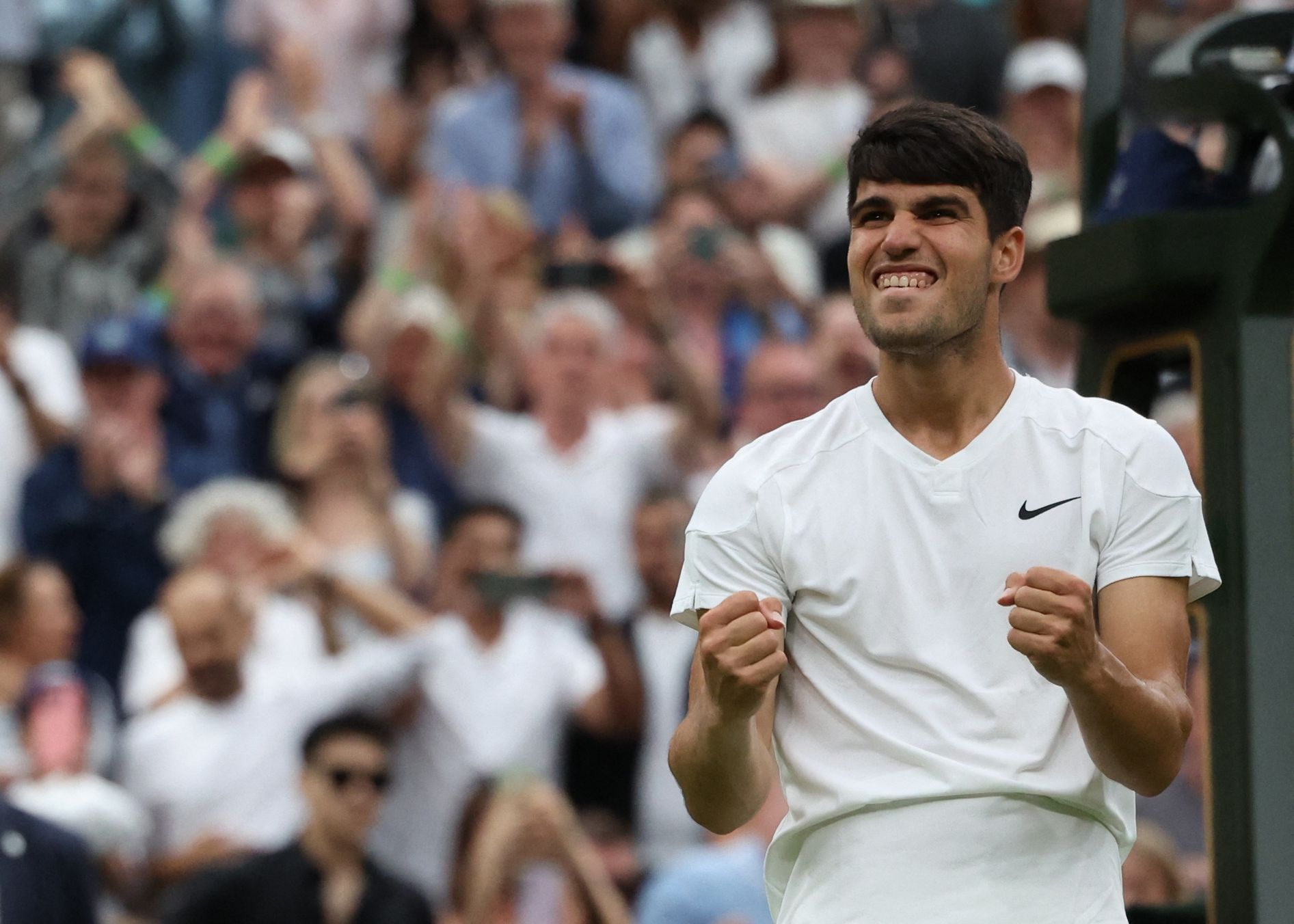
The lights of the Billie Jean King Tennis Center have a way of magnifying both greatness and vulnerability. As the 2026 U.S. Open rolls on, the narrative at Flushing Meadows has centered on several heavyweights, but perhaps no story is as precarious or as compelling as that of Carlos Alcaraz.
The Spanish phenom has officially passed his first U.S. Open test, but the victory is nuanced. It was not merely a test of his tactical acumen, but a trial of his physical durability—specifically, his wrist. For a player who has redefined the modern game through explosive versatility, the question isn't just whether he can win, but whether his body will allow him to compete at the standard the world expects.
The Physical Equation: More Than Just a Match
To understand the gravity of Alcaraz's position, one must look at the trajectory of his 2026 campaign. While he entered the year on a historic high—completing his career Grand Slam with a title at the Australian Open against Novak Djokovic—the momentum has been uneven. A wrist injury has acted as a brake on his season, casting a shadow over his ability to sustain the high-octane intensity that defines his play.
This is not a minor setback for a player of his profile. Alcaraz’s game is built on a foundation of extreme physical output. His style, often compared to the offensive versatility of Roger Federer, relies on an "explosive" forehand and a level of control at the net that allows him to shorten points and dictate play. When that physical explosiveness is compromised by injury, the very tools that make him a seven-time Grand Slam champion become liabilities.
A Champion’s Blueprint
Despite the physical concerns, the evidence of his talent remains irrefutable. Alcaraz is no longer just a rising star; he is a mainstay at the summit of the ATP rankings. His career milestones speak to a player who thrives under the highest pressure:
- Grand Slam Dominance: Seven Grand Slam titles, including a historic 2025 season where he claimed his fifth and sixth majors.
- The Youngest Record-Breaker: He holds the distinction of being the youngest U.S. Open winner since Pete Sampras in 1990.
- Surface Versatility: A player capable of winning on clay, grass, and hard courts, having recently conquered the French Open and Wimbledon.
His ability to navigate the early rounds of this tournament suggests that his "combat heart"—a trait often compared to his idol Rafael Nadal—is intact. He has managed to blend his signature drop shots and masterfully executed lobs with a disciplined approach to minimize unnecessary strain.
The Path Ahead: Tactical Survival
As the tournament progresses, the tactical battle for Alcaraz will be one of efficiency. He cannot afford to engage in protracted, grueling physical wars if his wrist remains a limiting factor. The goal will be to utilize his superior net play and aggressive positioning to keep points concise, effectively using his skill to compensate for any potential physical deficit.
The 2026 US Open is shaping up to be a tournament of attrition for the top seeds. While the bracket offers a balanced mix of title favorites and emerging talents, for Alcaraz, every match is a calculated risk in a high-stakes game of physical management.
Evidence-Led Forecast
Likely Tactical Pattern: Expect Alcaraz to lean heavily on his variety. To protect the wrist, he will likely look to utilize more short-angle shots, drop shots, and frequent forays to the net to avoid the repetitive, high-torque impact of deep baseline grinding.
Decisive Matchup: His ability to handle opponents who possess high-velocity, heavy-spin groundstrokes. These players will attempt to push him deep behind the baseline, forcing him into the exact defensive movements that stress the wrist.
Strongest Counter-Case: If Alcaraz is forced into a defensive shell by aggressive baseliners, the physical load on his arm could escalate rapidly, potentially leading to a mid-tournament breakdown.
The Variable: Any sign of inflammation or loss of racket head speed during high-intensity rallies will immediately shift the betting of the entire field toward his competitors.
Sources
These sources formed the evidence pack for this article. Links open the original publisher; inclusion does not imply endorsement.
- thesouthafrican.com original
- tennis-point.cz original
- sport.aktualne.cz original
- nytimes.com original