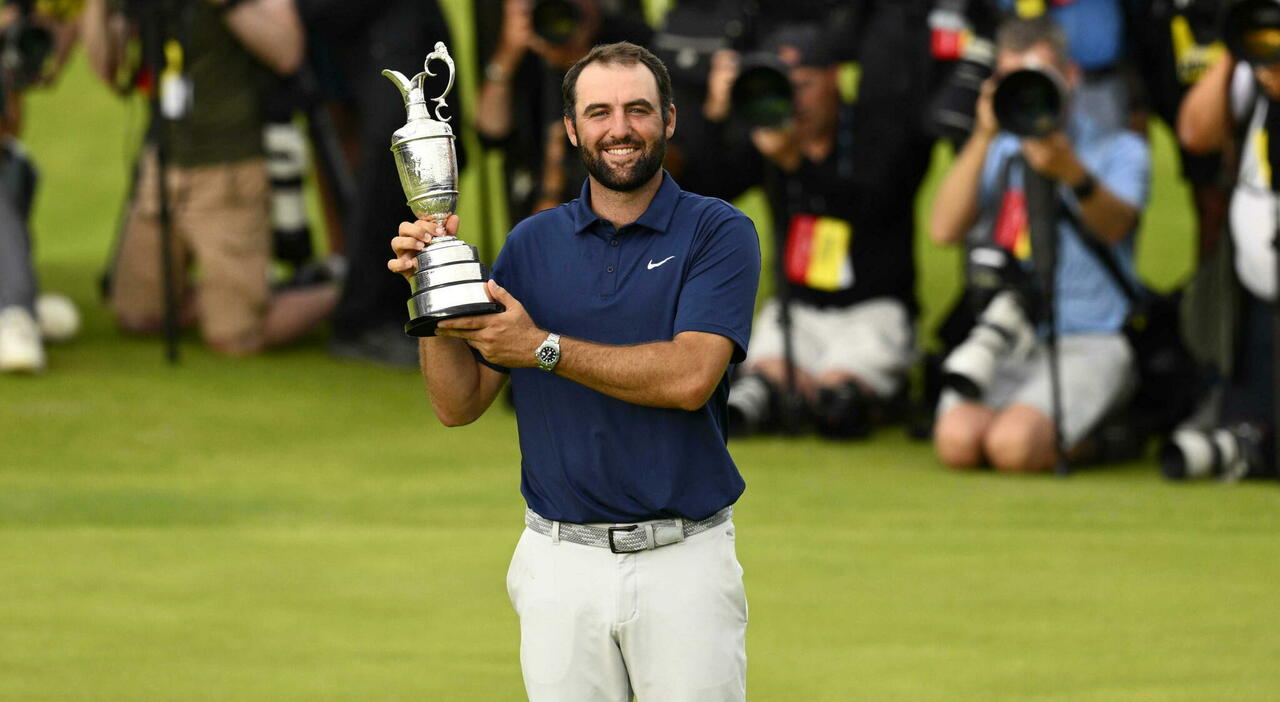
When Scottie Scheffler arrived at the Open Championship, the baseline expectation was total, unrelenting dominance. Having captured the Claret Jug the previous year and pushed deep into a Grand Slam pursuit at the U.S. Open, the world number one carried an unmistakable weight. Fans and pundits anticipated another masterclass on links terrain, hoping to see a clean break from the sluggish Thursday starts that had occasionally dotted his 2026 campaign.
The opening round delivered a complex hybrid of vintage ball-striking and typical major friction. Teeing off on the front nine at 9:58 am local time, Scheffler initially traded caution for control, reeling off pars before catching fire with consecutive birdies on holes 2-3 and 5-6. Yet, the links layout offered an immediate rebuke on the par-3 7th, where an overly aggressive second shot drifted onto the fringe and manufactured a costly bogey. The back nine proved equally unforgiving, punctuated by a late bogey on 17 that tempered what was otherwise an imposing statistical display.
When the dust settled on Thursday, Scheffler carded a two-under 68, placing him in a tie for 10th on the leaderboard—just two strokes adrift of co-leaders Sungjae Im and Daniel Brown, though with several players still navigating their remaining holes. Beneath the scorecard, however, the real story lived in the tee box.
The Driving Metrics and Putting Dichotomy
Scheffler's long game provided the engine for his opening campaign. His 341-yard high and 315-yard average driving distance outpaced his season norm by 3.3 yards, while an astonishing 92.9% driving accuracy obliterated his standard 65.31% season average. When the driver is operating with that level of surgical precision, the course naturally shrinks.
Yet, golf at this tier remains an exercise in reconciliation. While his approach play stayed sharp, his putting card read like a historical contrast:
- The High: Draining a mammoth 43-foot putt for birdie on the 6th hole.
- The Low: Missing a routine four-footer on the 17th for bogey.
- The Missing Link: An around-the-green touch that lacked the crispness required to turn a good round into a runaway lead.
Observers hunting for signs of a hangover from his recent missed cut found a completely different psychological profile. Rather than wrestling with the turf or engaging in the intense, animated discussions with his team that characterized his frustrations in earlier majors this season, Scheffler projected an eerie, grounded calm.
The Philosophy of the Defender
That composure surfaced transparently during his pre-round press conference, where he delivered a perspective that felt worlds away from standard sports cliches. Addressing the natural fatigue of relentless contention, Scheffler offered a candid assessment of elite-level endurance:
I feel at peace, yeah. I think sometimes it's not like — it's never the best thing to miss a cut, but like I said, sometimes having a couple days off, resetting, getting some time away — throughout the year, it's like — when you look at other sports and if you look at a football team that's made it really far each year in the NFL, it's really hard to continue to do that each and every year.Scottie Scheffler
That psychological reset appears to be paying immediate dividends. By stripping away the frantic need to force every pin, Scheffler has insulated himself from the mental erosion that typically traps defending champions. Whether that hard-won peace will hold firm over the remaining rounds—fending off a chasing pack that includes global elites and major winners—remains the central narrative of the week. For now, the champion is dictating terms on his own quiet frequency.
Sources
These sources formed the evidence pack for this article. Links open the original publisher; inclusion does not imply endorsement.
- Kailash Bhimji Vaviya Thu, July 16, 2026 at 3:24 PM UTC · 3 min read original
- Nicola Montanaro original
- zazoom.it original
- ilmessaggero.it original