The Pattern of the Near Miss
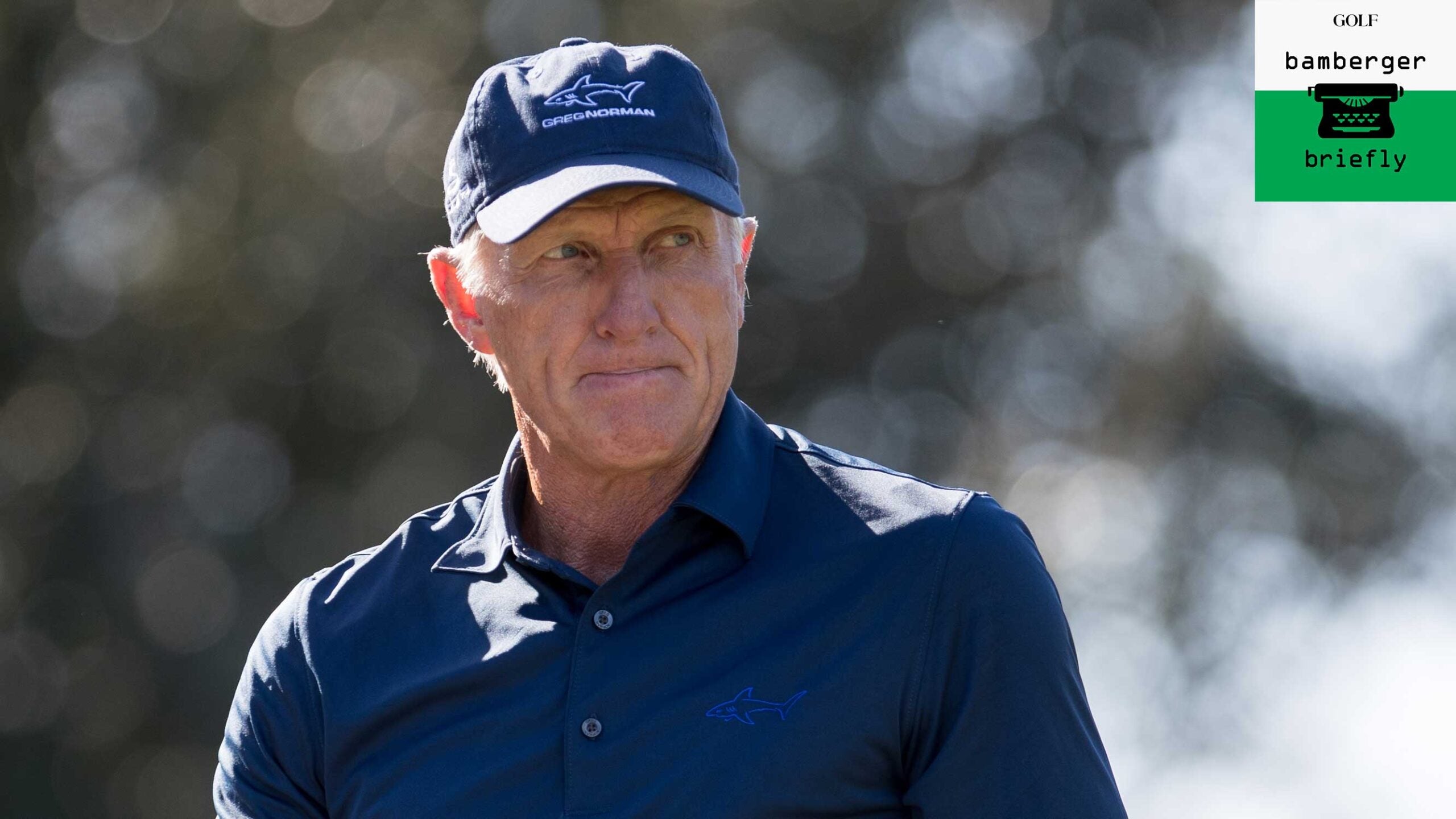
For decades, Greg Norman’s career was defined by the razor-thin margin between immortality and heartbreak. To the Australian public, he was the 'Great White Shark'—a charismatic, aggressive force of nature who dominated the global rankings but often found himself standing on the periphery of major glory. His history is a collection of the most agonizing 'almosts' in sporting history.
There was the 1986 Masters, where a commanding lead evaporated under the relentless pressure of a 46-year-old Jack Nicklaus. There was the 1987 heartbreak at Augusta, where a local unknown, Larry Mize, delivered a miraculous chip-in on the 11th to snatch the Green Jacket from Norman’s grasp. Even at the British Open, the tournament that most accurately summed up his career, Norman experienced the highs of a clinical 1993 victory and the lows of a 1989 playoff at Royal Troon, where a three-wood shot into a pot bunker cost him a legendary win.
Norman has always been a man of high-velocity swings and even higher-velocity risks. But as he moves into the twilight of his career, the stakes have shifted from individual trophies to the very structural integrity of professional golf. The man who once struggled to hold onto a six-shot lead at Augusta is now navigating a different kind of instability: the precarious future of the breakaway league he helped build.
A Missed Conversation at the Crossroads
The launch of LIV Golf in 2022 was intended to be the fulfillment of a vision Norman had been ruminating on since the early 1990s. Frustrated by the rigid requirements of the PGA Tour—where players once had to compete in a specific number of events just to maintain privileges—Norman sought a global, star-driven model that would allow professionals to maximize their earnings and showcase talent across different continents.
However, looking back from the vantage point of 2026, the former LIV chief admits the execution lacked the diplomacy required to prevent a civil war. In a candid reflection, Norman expressed deep regret over the communication breakdown that fueled the hostility between the rival tours.

"I just wish I'd sat down with Rory and a few others on the PGA Tour to explain to them what my mission was and what LIV mission was,"
Norman’s original intent was not a scorched-earth campaign, but rather a symbiotic relationship. He envisioned a worldwide LIV calendar that included four co-sanctioned American events, working alongside the existing power structures rather than attempting to dismantle them entirely. Instead, the launch triggered a period of fierce, divisive conflict that transformed Norman into golf’s most polarizing figure.
The Architect's Vindicated Vision
Despite the diplomatic failures, Norman maintains that the disruption served a greater purpose. He points to the shifting landscape of the PGA Tour as evidence that the 'rebel' circuit forced the establishment to confront its own obsolescence. When PGA Tour CEO Brian Rolapp recently conceded that LIV successfully highlighted flaws within traditional power structures—prompting improvements for both players and spectators—Norman found his moment of vindication.
"And when I look at social media and what Brian Rolapp just said recently, I went, 'Hallelujah, hallelujah. Finally,'" Norman remarked.
To Norman, the success of the LIV model isn't just measured in purses, but in player empowerment. He cites Bryson DeChambeau as the ultimate case study. By joining the breakaway, DeChambeau regained control of his intellectual property rights and leveraged his platform to build a massive social media following, a level of brand autonomy Norman believes would have been stifled under the old regime. Even the terminology of the game has begun to shift; the American 'purse' is increasingly being discussed in the British 'prize fund' parlance favored by the new movement's leadership.
The Precipice of the Saudi Exit
Yet, for all the ideological victories, the practical reality for LIV Golf is approaching a cliff. The engine that powered the league’s rapid expansion—the Public Investment Fund (PIF) of Saudi Arabia—is expected to cease its backing once the current season concludes.
The PIF, chaired by Mohammed bin Salman, has provided the massive capital necessary to underwrite new opportunities, including a $200 million commitment to boost the Asian Tour with ten new full-field events across Asia, Europe, and the Middle East. But as this financial lifeline prepares to retract, the responsibility for the league's survival has shifted from the visionary founder to the pragmatic successor, Scott O'Neil.
O'Neil now faces the monumental task of securing new, sustainable investment to keep the operation afloat. The question remains whether the 'additive new opportunities' Norman promised can exist without the bottomless well of Saudi capital. For a man who spent his career fighting fate and the 'brutality' of courses like Augusta, Greg Norman is once again facing a moment where the outcome is entirely uncertain. The Shark has built a new ocean, but he may find himself wondering if there is enough depth to keep him afloat.
Sources
These sources formed the evidence pack for this article. Links open the original publisher; inclusion does not imply endorsement.
- ausgolf.au original
- golf.com original
- gbnews.com original