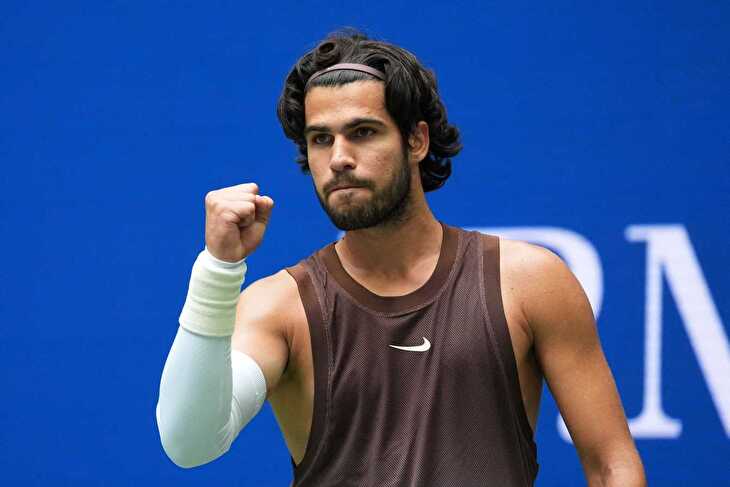
There is a specific kind of tension that accompanies a champion arriving at a Grand Slam without the luxury of a warm-up. For Carlos Alcaraz, the walk onto the Ashe court wasn't just about a first-round encounter; it was a high-stakes litmus test for a body that has spent much of the last four months in quiet rehabilitation.
Coming into the 2026 US Open, the narrative surrounding the 23-year-old was defined by absence. Following a right wrist injury sustained during the Barcelona Open in April, Alcaraz has been forced into a grueling hiatus, watching from the sidelines as Madrid, Rome, Roland Garros, Queen's, and Wimbledon passed him by. He arrived in New York without having played a single preparatory match, having bypassed the Canadian Masters in Montreal to prioritize a cautious recovery for the North American hard-court swing.
The Cost of Caution: A Four-Month Hiatus
The decision to skip the summer circuit was not made lightly. Alcaraz and his team have adhered to a strict, conservative rehabilitation plan designed to ensure long-term stability over short-term match fitness. Instead of rushing back, the focus has been on a "mini-preparation" involving cardiovascular work and gradual intensity increases to rebuild the physical sharpness required for the grueling New York heat.
This forced sabbatical has kept his ranking in a state of flux, leaving the door open for rivals like Alexander Zverev to challenge his positioning. However, as the lights dimmed on the first round of the US Open, it became clear that while the match rhythm might be theoretical, the instinct for Grand Slam dominance is visceral.
The Ashe Awakening: Navigating the Safiullin Volatility
The opening match against the "dangerous" Russian, Safiullin, provided a microcosm of what Alcaraz's title defense may look like: moments of pure finesse interrupted by the inevitable lapses that come with a lack of competitive tempo. Safiullin, a player Alcaraz has previously struggled against on hard courts, didn't offer an easy passage.
The Spaniard opened with controlled aggression, securing the first set 6-4 after capitalizing on break points with a combination of tactical precision and a "cannon-like" cross-court forehand. But the rust appeared in the second set. Alcaraz stumbled out of the gates, losing the first nine exchanges and falling behind 0-3. The threat of a momentum shift was palpable as he lost his serve for the first time in the match.
What followed was a display of the mental fortitude that has defined his rise. Rather than spiraling, Alcaraz stabilized his service games and utilized his inside-in forehand to reclaim control. By the third set, the "cooking" began in earnest. The lack of match play seemed to evaporate as he dictated play with clinical efficiency, utilizing his 16th winner of the set to dismantle Safiullin's resistance. The match concluded in under two and a half hours, a clinical statement that suggested his physical foundation remains unshakable.
The Statistical Edge: The Unbeaten Streak
- Current Major Winning Streak: 15 matches
- US Open Pedigree: Two-time Grand Slam Champion
- Match Duration: Under 2.5 hours
- Key Weapon: Inside-in Forehand
With this victory, Alcaraz has extended his incredible winning streak at major tournaments to 15 matches, a testament to his ability to perform when the stakes are highest, even when the preparation is minimal.
"Carlos is cooking on Ashe Up a set and a break now!" — US Open Tennis
While his history at Flushing Meadows includes high-water marks, it has also seen rare moments of vulnerability, such as his exit in the quarterfinals two years ago following a shock loss to Botic van de Zandschulp. To avoid such pitfalls, Alcaraz must now translate this first-round rhythm into sustained consistency against more seasoned opposition.
Evidence-Led Forecast: The Fariu Test
Likely Tactical Pattern: In his second-round matchup against Portugal’s Jaime Fariu, expect Alcaraz to lean heavily on his forehand to dictate court position early. Given Fariu's experience in grueling five-set matches, Alcaraz will likely attempt to shorten points to avoid testing the endurance of his recovered wrist.
Decisive Matchup: The battle between Alcaraz’s aggressive inside-in forehand and Fariu’s ability to absorb pace will determine if the Spaniard can maintain his momentum without entering long, attritional rallies.
Strongest Counter-Case: If Fariu can exploit any remaining lack of lateral movement or timing in Alcaraz's defensive transitions, he could force the Spaniard into the extended rallies that often expose a lack of recent match conditioning.
The Variable: Any early-set service volatility. If Alcaraz experiences another 0-3 start like the one seen against Safiullin, the match could shift from a clinical demonstration to a physical test of his injury's durability.
Sources
These sources formed the evidence pack for this article. Links open the original publisher; inclusion does not imply endorsement.
- welt.de original
- ctvnews.ca original
- tenisportal.cz original
- tennisworldde.com original