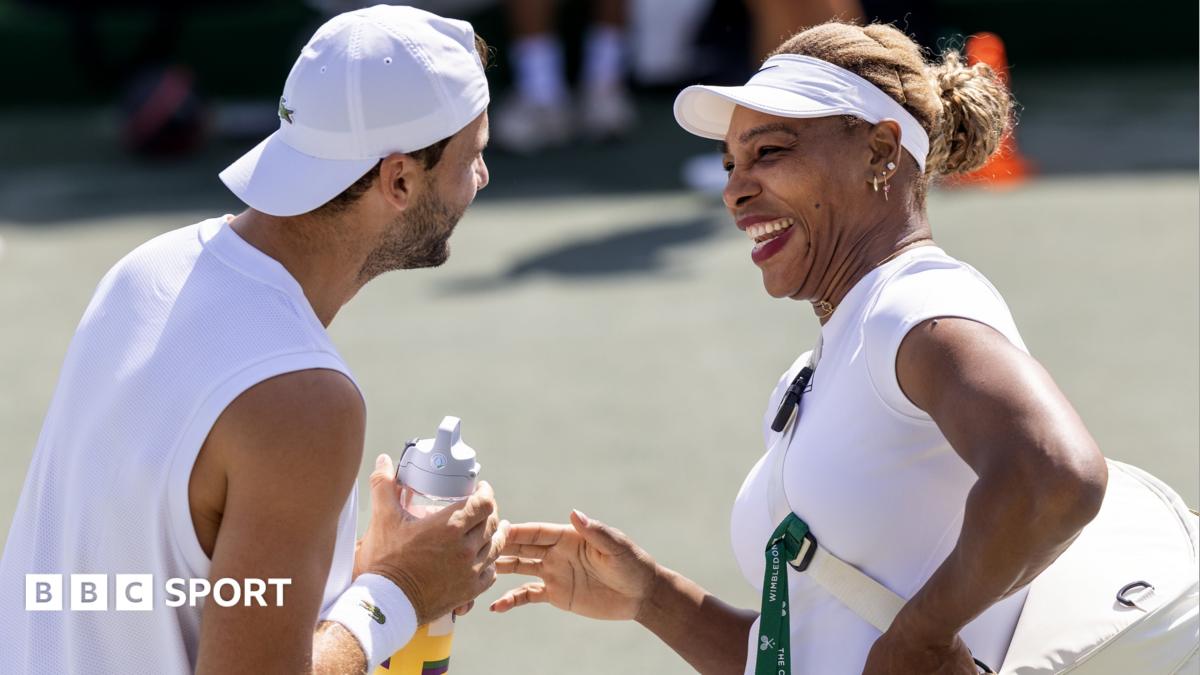
The dream of a singles fairytale at Wimbledon met the cold, clinical reality of a rising powerhouse on Tuesday night. For 15,000 spectators on Centre Court, the atmosphere was electric, a collective holding of breath as the legend of Serena Williams returned to the grass. But as the final ball landed, the narrative shifted from a nostalgic retrospective to a bold announcement of the future: Maya Joint has arrived.
In a match that spanned nearly two and a half hours, the 20-year-old Australian claimed a thrilling 6-3, 6-7 (6/8), 6-3 victory over the 44-year-old American. It was a result that felt like a seismic shift in the tournament's landscape, marking the end of Williams' first Grand Slam singles appearance in almost four years.
The Anatomy of an Upset
While the crowd's energy fluctuated between shouts of "Let's go, Serena" and the rhythmic "Aussie, Aussie, Aussie" chants for Joint, the match itself was defined by a stark contrast in styles and physicalities. Williams, a seven-time Wimbledon singles champion, showed flashes of the trademark power that defined her era, yet the gap in tempo was palpable.
Joint, whose career trajectory has seen her climb to a high of world No. 28 before a recent slide in rankings, played with a composure that belied her age. She didn't just survive the legend; she dismantled the rhythm. Joint’s strategy was effective and direct:

- Service Pressure: Joint fired down 10 aces to keep Williams on the defensive.
- Return Precision: She successfully broke Williams’s powerful serve five times throughout the contest.
- Mental Fortitude: Despite the surreal nature of the draw, Joint maintained a mindset of simply "playing the ball that was coming."
For Williams, the match was a testament to her "evolving" away from the sport rather than a simple retirement. Even in defeat, her ability to battle back from a set down and save match point in the second-set tie-break suggested that the competitive fire remains, even if the physical engine is facing new challenges.
The Physical Toll and the Media Storm
As the match progressed, the limitation of Williams's movement became a central theme. The power remained, but the ability to cover the corners was visibly restricted—a factor that may have been compounded by a late-set injury. Williams confirmed via Instagram that she "tweaked" her right knee during the latter stages of the first set.
This injury has already cast a shadow over her highly anticipated doubles return with her sister, Venus. While Williams's agent, Jill Smoller, stated that the star left the site unaided and is working toward recovery, the uncertainty remains regarding their Friday match against Solana Sierra and Camila Osorio.

The physical struggle was mirrored by a brief storm of social media criticism. Williams opted to skip her mandatory post-match press conference, leading to accusations from some fans that she had "flounced off" following the loss. However, the All England Club clarified that she was excused from media obligations by both Wimbledon and WTA medical teams due to the knee issue, and she will not face the standard fine for the absence.
The defense of Williams has been swift, with her coach Rennae Stubbs highlighting the lack of understanding regarding the physical demands placed on a returning athlete of her age.
A Career in Transition
For Maya Joint, the victory is a springboard. After a recent string of losses that saw her ranking fluctuate—with sources placing her anywhere between No. 53 and No. 87—this win provides the momentum needed to navigate the rest of the tournament. Her next challenge is the seeded Filipino player Alex Eala, a match that will test whether this performance was a flash of brilliance or a sustainable new standard.
For Serena Williams, the journey is far from over, though it is clearly changing shape. As Novak Djokovic noted, her dedication to the gym during this comeback has been "admirable," signaling that her goal isn't just to appear, but to compete. Whether that competition will manifest in the doubles draw or continue in singles remains the most pressing question of the fortnight.
Evidence-Led Forecast: The Williams Doubles Outlook
As the Williams sisters prepare to face the Argentine/Colombian duo of Solana Sierra and Camila Osorio this Friday, the following tactical and physical variables will dictate the outcome:
| Factor | Detail |
|---|---|
| Decisive Matchup | Serena’s net presence and service variety vs. the mobility and speed of Sierra and Osorio. |
| Likely Tactical Pattern | A heavy emphasis on veteran doubles positioning and serve-and-volley tactics to minimize baseline movement. |
| Strongest Counter-Case | If the right knee injury prevents Serena from exploding out of the corners, the pair may struggle to defend against rapid-fire exchanges. |
| The Pivot Point | The success of the match will depend entirely on the medical team's ability to manage Serena's inflammation in the 48 hours leading to Friday. |
Sources
These sources formed the evidence pack for this article. Links open the original publisher; inclusion does not imply endorsement.
- bbc.co.uk original
- vogue.com original
- dailymail.com original
- cnn.com original