
The 2026 County Championship season refused to be a predictable affair. It was a summer defined by a jarring spectrum of outcomes: the clinical dominance of a workhorse bowler, the tactical audacity of a social media blackout, and the recurring, bitter heartbreak of a club that has forgotten how to win.
The Engine Room of Edgbaston
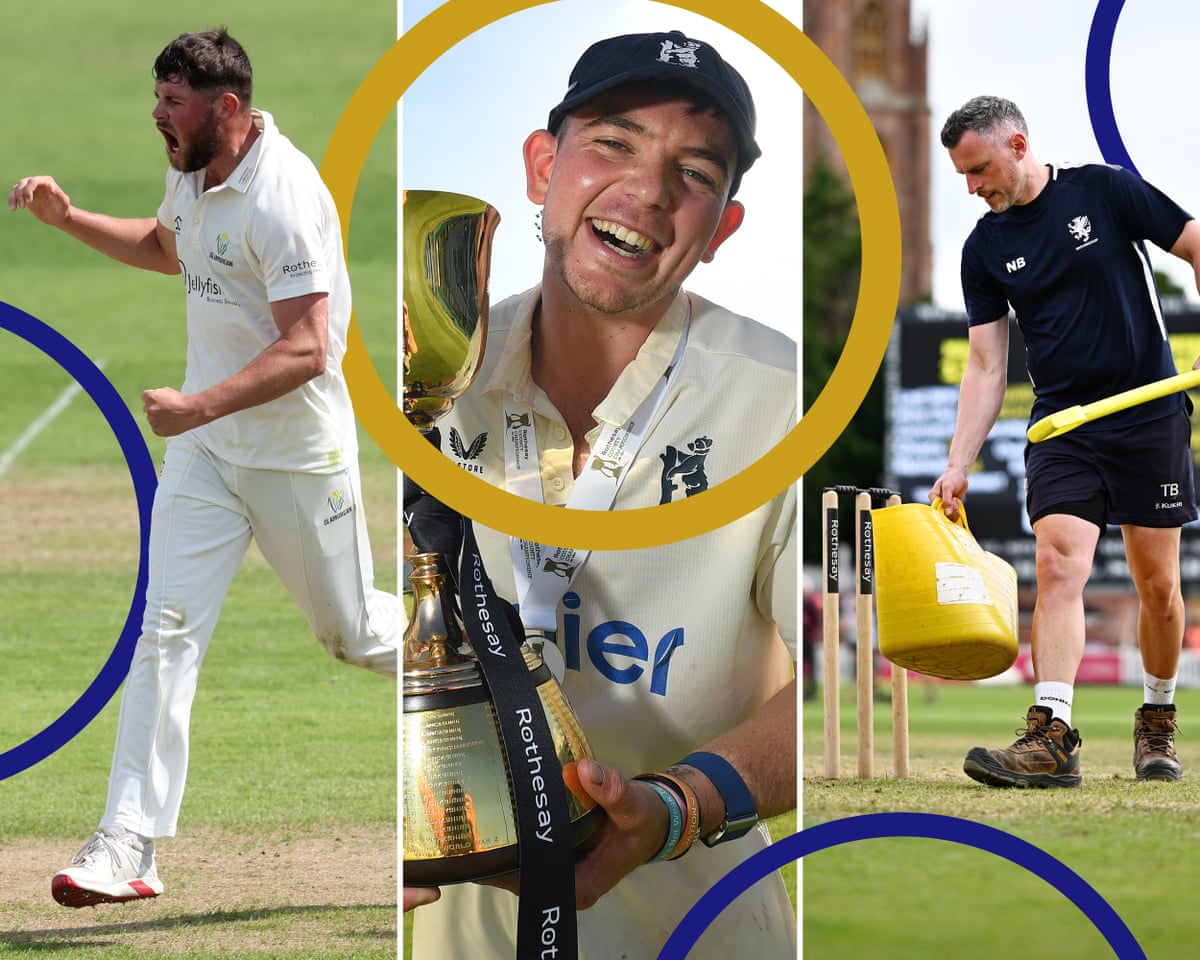
If there is a single figure who encapsulates the grit of this season, it is Ethan Bamber. As Warwickshire secured their ninth title—and their first since 2021—Bamber did not just contribute; he anchored the entire campaign. The Championship’s leading wicket-taker finished with 69 wickets, a workload that included a staggering 445.3 overs, the highest of any bowler in Division One.
His impact was most acute when the season resumed in August. In Warwickshire's five wins from six matches during that period, Bamber claimed 32 wickets at a clinical average of 12.71. Yet, despite the heavy lifting, the man described by captain Ed Barnard as "the nicest man in cricket" remained remarkably grounded. As he stood on the Edgbaston outfield, accepting a plastic cup of champagne while a man in a Scooby Doo costume drifted past, Bamber’s reflections were more self-effacing than his statistics suggested.
“You always wonder, as an average cricketer like me, how high your ceiling is, and in quiet moments I wasn't sure I quite had it,” Bamber told reporters. “Here I’ve been given the opportunity and space to express myself on the field. I feel like I have been the beneficiary of a really good group.”
It was a sentiment that mirrored the collective spirit of a Warwickshire side that dismantled Leicestershire by an innings and 79 runs to clinch the silverware.
A Prodigy Interrupted
The summer also provided a glimpse of the future in the form of Glamorgan’s Tom Norton. In early May, the 18-year-old achieved the unthinkable: a hat-trick on his Championship debut. His four wickets for 22 runs dismantled Somerset's top order at Sophia Gardens, prompting a jubilant scene as teammates chased the teenager around the ground. However, the meteoric rise was checked by biology; a stress fracture in his back ended his season by August. While Glamorgan successfully navigated their first year back in the top tier, the loss of Norton leaves a lingering question for 2027—and a warning for any batter facing him when he returns.
Tactical Silence and Riverside Resurgence
While some found success through volume, others found it through subtraction. Kent’s 2026 campaign serves as a masterclass in unconventional management. After a disastrous start to the year that saw them bottom of Division Two in April with just 21 points, coach Adam Hollioake implemented a radical strategy: switching off all comments on the club’s social media accounts. The goal was to provide players with the "freedom and clarity" to perform without the digital noise. The result was a spectacular reversal, as Kent secured promotion back to the top tier with what observers have described as a "Nokia brick in their pocket."
Similarly, the Riverside saw a transformation through individual liberation. When Ben Stokes returned to Durham following his departure from the England setup, he appeared unchained. During a midsummer clash against Northants, 871 spectators witnessed a masterclass of carefree cricket as Stokes struck 18 fours in a 95-run knock. That visit proved to be a turning point; Stokes committed to Durham for the remainder of the season, claiming 25 wickets and four fifties to propel them to runaway winners of Division Two.
The Bridesmaid’s Burden
For Somerset, 2026 was yet another chapter in a long, agonizing history. They finished as runners-up once again, extending a 136-year wait for a maiden County Championship title. Despite the immense contributions of Craig Overton, the season ended with a sense of profound frustration for the South West faithful, who had increasingly booked time off work in anticipation of a triumph that never arrived.
The cruelty of the season was perhaps best illustrated during the penultimate round at Headingley. Somerset captain Tom Abell, who scored the season's highest individual score of 307 against Surrey, was also preparing to serve as best man at the wedding of teammate Dom Bess in October. In a twist of sporting irony, it was Bess who stole the limelight, crafting 77 frustrating runs against his former colleagues to ensure a Yorkshire victory. It was a performance that broke Somerset hearts and added a layer of personal complexity to their upcoming October reunion.
The Extremes of the Summer
As the season drew to a close, the divergence in the fortunes of the clubs was stark. Lancashire, once tipped for promotion, faced a catastrophic collapse due to injuries to Ajeet Singh Dale and Luke Wells, eventually finishing 17th—the lowest in their history. Meanwhile, Surrey found success in an entirely different arena. Their "working from the cricket" initiative, which allowed spectators to use super-fast broadband at The Oval, turned a struggle for attendance into international news.
Beneath these highs and lows, the groundstaff endured a grueling physical battle. As heatwaves pushed temperatures into the mid-30s, they worked split shifts and late into the evening, attempting the near-impossible task of maintaining pitch moisture without scorching the squares. It was a summer that tested the endurance of the players, the strategy of the coaches, and the resilience of the very soil upon which the game is played.
Sources
These sources formed the evidence pack for this article. Links open the original publisher; inclusion does not imply endorsement.
- churchcc.co.uk original
- theukpulse.co.uk original
- theguardian.com original
- uk.sports.yahoo.com original