The opening weekend of the LaLiga 2026/27 season, slated for August 14–16, is currently shadowed by a mounting logistical crisis. What should be a straightforward kickoff for the campaign has instead become a focal point of frustration for club officials and fans alike. Specifically, the highly anticipated clash between Valencia CF and Real Betis at Mestalla is facing a legitimate risk of postponement—a situation being characterized by local reporting as a "despropósito" resulting from an increasingly compressed football calendar.
The root of the tension lies in the aftermath of the 2026 World Cup. With the tournament's semifinals and final looming over the summer, the necessity for player recovery and the difficulty of coordinating unified match dates across the league have created a perfect storm. For Valencia, a club currently attempting to pivot away from the instability of the previous season, the uncertainty of whether they will even play their opening fixture on schedule adds a layer of volatility to an already transformative period.
Tactical Archetypes: The Battle of Shape and Efficiency
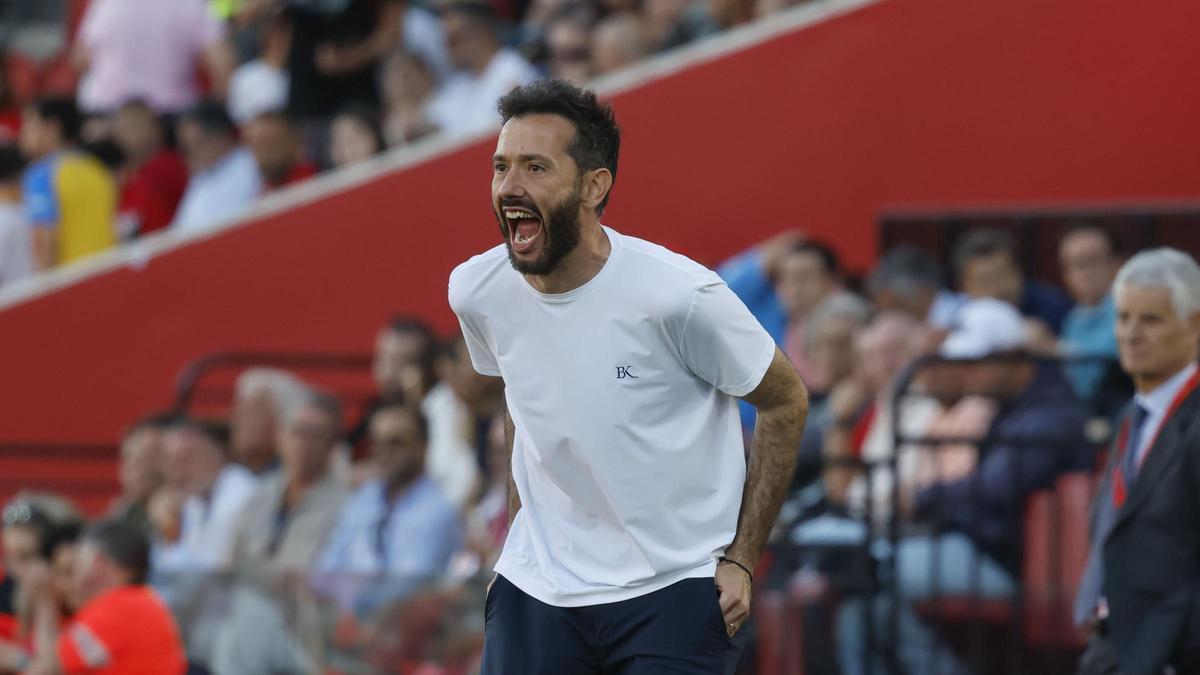
While the scheduling remains in flux, the tactical DNA of this matchup is well-documented. A look back at their encounter on February 1, 2026, provides a blueprint for how these two sides interact on the pitch. In that match, held at the Estadio de La Cartuja, the tactical divergence was stark: Real Betis deployed a 4-2-3-1 formation under Manuel Pellegrini, while Valencia countered with a more rigid 4-4-2 setup under Carlos Corberan.
The data from that encounter suggests a classic battle between territorial control and transitional efficiency. Betis utilized their structure to command the ball, maintaining 53% possession and completing 467 passes. However, Valencia’s 4-4-2 proved remarkably effective at disrupting Betis's rhythm, allowing the visitors to actually outshoot the hosts despite having only 47% of the ball. This discrepancy highlights a key analytical takeaway: Valencia’s ability to manufacture high-quality chances in a compact defensive shape often offsets the possession-heavy approach favored by Pellegrini’s side.

| Metric | Real Betis (4-2-3-1) | Valencia (4-4-2) |
|---|---|---|
| Total Shots | 14 | 15 |
| Shots on Goal | 2 | 4 |
| Possession | 53% | 47% |
| Total Passes | 467 | 404 |
| Accurate Passes | 391 | 332 |
| Corners | 3 | 5 |
| Fouls Committed | 15 | 13 |
In that February clash, Real Betis ultimately secured a 2-1 victory, but the statistical profile indicates that Valencia remained a constant threat in the final third, frequently finding ways to penetrate the box despite the deficit in midfield control.
A Club in Transition: From Relegation Scares to New Arrivals
For Valencia CF, the stakes of the upcoming season are significantly higher than mere points. The club is operating in the wake of a turbulent 2024/25 campaign where they fought desperately to avoid the drop, once struggling with a run that saw them secure only two victories in a critical stretch of the season. The current mission is a complete structural reset.
The squad is currently undergoing a significant identity shift, evidenced by a flurry of recent activity in the transfer market and training sessions. The integration of new signings such as Ryunosuke Sato, Dieng, and the veteran presence of Guido Rodríguez suggests a strategic move toward a more robust and experienced core. Sato, in particular, has been a central figure in recent club communications, expressing a clear desire to anchor himself in the Valencia project as they look to move past the defensive vulnerabilities that plagued their previous campaigns.
Real Betis, by contrast, enters the season from a position of relative stability, having finished the 2025/26 season in 5th place with 60 points. Their ability to maintain a high-level tactical identity under Pellegrini makes them the benchmark against which Valencia's new-look squad will be measured.
The Calendar Crunch
The immediate concern remains whether the LaLiga authorities can resolve the scheduling conflicts before the August kickoff. The interplay between international tournament demands and the domestic league's requirements has created a bottleneck that threatens to disrupt the traditional rhythm of the season. As the 2026 World Cup reaches its climax, the window for player rest and domestic preparation becomes dangerously narrow.
Whether the Valencia-Betis fixture at Mestalla proceeds as planned or is pushed to a later date, the match represents more than just a game; it is a litmus test for Valencia's new era and a measure of LaLiga's ability to navigate the complexities of a modern, hyper-congested global football calendar. For now, the fans are left waiting, caught between the excitement of a new season and the uncertainty of an unpredictable schedule.
Sources
These sources formed the evidence pack for this article. Links open the original publisher; inclusion does not imply endorsement.
- dazn.com original
- Javier Bengoa original
- livesoccertv.com original
- espanol.eurosport.com original
- eurosport.es original
- valenciacf.com original