The landscape of the Chicago infield is shifting. Following the announcement from Audacy that former White Sox shortstop Tim Anderson is retiring after a decade in the major leagues, the organization is already looking past the veteran era toward a future built on high-upside amateur talent.
The retirement comes at a paradoxical moment for the White Sox. While the roster undergoes a profound generational transition, the team is not in a state of collapse; rather, they entered the current stretch of the season sitting in first place in the American League Central. This stability has provided the front office with a unique luxury: the ability to aggressively reshape the roster's long-term architecture without the immediate pressure of a basement-dwelling rebuild.
The Cholowsky Blueprint
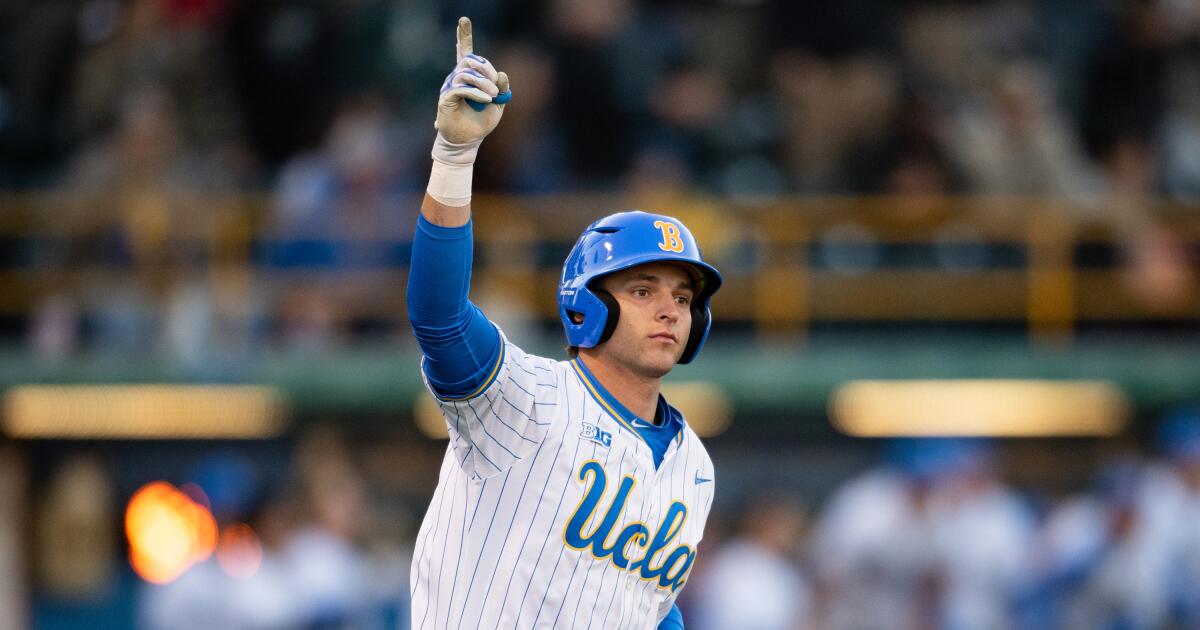
The centerpiece of this new era arrived with the first overall pick in the 2026 MLB Draft. Roch Cholowsky, the consensus top prospect out of UCLA, is the man tasked with occupying the vacuum left by departing veterans. A 6-foot-2 right-handed hitter and a Golden Spikes finalist, Cholowsky arrives in Chicago with a profile designed for immediate impact.
His collegiate numbers suggest a player who has already mastered the balance of contact and power. During his junior season at UCLA, Cholowsky posted a staggering 1.088 OPS, fueled by 21 home runs and 60 RBIs, earning him Big Ten Player of the Year honors. While scouts note he will need to adjust to the escalating velocity of upper-level minor league pitching, his defensive floor at shortstop remains a primary draw.

“He is a leader on the field as well as in the clubhouse,” White Sox general manager Chris Getz said in a statement regarding the selection. “He has more than lived up to very high expectations, and we cannot wait to get him into our organization, get started and see him continue his growth and success.”
Cholowsky’s arrival is the result of a calculated organizational pivot. The White Sox leveraged a massive draft pool—the largest of all 30 teams—to secure talent. This aggressive strategy was supported by the decision to trade established assets, including Colson Montgomery and Jacob Gonzalez, to fuel their ability to accumulate top-tier prospect capital.
Building Depth Through the Bonus Pool
The White Sox's strategy was not limited to the top of the draft. By utilizing their substantial bonus pool, the organization has attempted to surround Cholowsky with a diverse array of high-ceiling profiles across both the infield and the pitching staff. This is a classic "layering" tactic: securing a foundational star and then padding the system with specialized tools.
In the infield and hitting categories, the team focused on high-velocity profiles and power potential:
- Landon Thome (CBA): A high school shortstop likely to transition to third base, offering plus power.
- Cole Prosek (2): A more advanced hitter known for strong contact quality and hard-hit tendencies.
- Jayson Jones (8): A Wichita State senior who posted a .355/.430/.583 line, providing immediate depth with solid swing decisions.
On the mound, the White Sox have prioritized "stuff" and movement, seeking to build a rotation that can support their current divisional lead in the long term. The acquisitions of Joey Volchko (3), Eric Segura (4), and Cal Scolari (5) represent a clear intent to acquire mid-rotation upside through varied arm profiles and high-velocity fastballs.
| Player | Round | Profile/Key Attribute |
|---|---|---|
| Roch Cholowsky | 1 | UCLA SS; 1.088 OPS; Big Ten POTY |
| Landon Thome | CBA | High school hitter; plus power potential |
| Joey Volchko | 3 | Georgia RHP; mid-rotation upside; high movement |
| Eric Segura | 4 | Oregon RHP; 93-96 mph sinker/slider |
| Cal Scolari | 5 | Oregon RHP; 94-97 mph fastball |
The Tactical Trade-Off
The White Sox are executing a high-stakes maneuver. By trading away players like Montgomery and Gonzalez to bolster their draft position, they have essentially bet that the ceiling of a No. 1 overall pick like Cholowsky is higher than the floor of the players they moved. This is a transition from a roster of known quantities to a roster of projected stars.
The risk is evident in the secondary picks. While players like Cameron Johnson (15) and Kyle Casteel (11) offer high-upside gambles, they come with inherent volatility—Johnson, for instance, has shown significant command issues, walking 43 batters in 53 2/3 innings. However, for a team currently leading the AL Central, the White Sox have the breathing room to let these developmental projects fail without jeopardizing their immediate standing.
As the veteran presence of players like Anderson departs, the organization is not merely replacing names on a lineup card; they are fundamentally changing the DNA of the clubhouse. The era of established stability is being replaced by an era of extreme potential, centered on a UCLA standout and a draft class designed to overwhelm the American League Central for years to come.
Sources
These sources formed the evidence pack for this article. Links open the original publisher; inclusion does not imply endorsement.
- nytimes.com original
- tsn.ca original
- latimes.com original