The Silverstone Indictment
The silence in the Williams garage following the British Grand Prix was not merely the result of a quiet race; it was the sound of a season slipping through fingers. For Alex Albon, the weekend was defined by a single, costly moment on Lap 1. A collision with Ollie Bearman’s Haas left the Thai driver facing an immediate pit stop for a new front wing, effectively transforming his race into a glorified test session.
Albon, who has now endured three DNFs and one DNS this season, was quick to shoulder the responsibility for the mishap. My mistake,
Albon explained after the race. I think I had a bad start and locked up basically. It happens, unfortunately kind of ruined the race...
While the team used the remaining laps to gather data on a new front wing upgrade, the tactical tradeoff was transparent. By prioritizing data gathering over a competitive race pace that was already compromised, Williams signaled a team more concerned with the mechanics of their future than the results of their present. It is a pattern that highlights a broader, more systemic issue: the team's inability to bring competitive upgrades to the grid with sufficient frequency.
The Sainz Warning: A Reality Check on Pace
If Albon’s error was a momentary lapse in execution, Carlos Sainz’s post-race assessment was a systemic warning. Finishing 17th after an unusual late penalty, the Spaniard’s frustration was not directed at his own driving, but at the fundamental ceiling of the FW47.
Despite showing flashes of individual brilliance—briefly running in the top 10 at the start of the race—Sainz noted that the car’s inherent lack of pace makes his strong starts irrelevant. In the end, you always end up falling back to the place of the car in Quali,
Sainz remarked, reflecting on his 14th or 15th place qualifying positions. It is true in the long term, it starts being a bit frustrating because we are very far away from the points... we don’t seem to be finding any performance.
Sainz’s assessment provides the most stark evidence of the Williams predicament. While the team topped the midfield in 2025, they are currently struggling to even target the Racing Bulls, a benchmark they previously expected to challenge. The gap between driver performance and car capability is widening, creating a dangerous friction within a project built on the high-profile arrival of Sainz to elevate the team's standing.
The Ghost of 2025
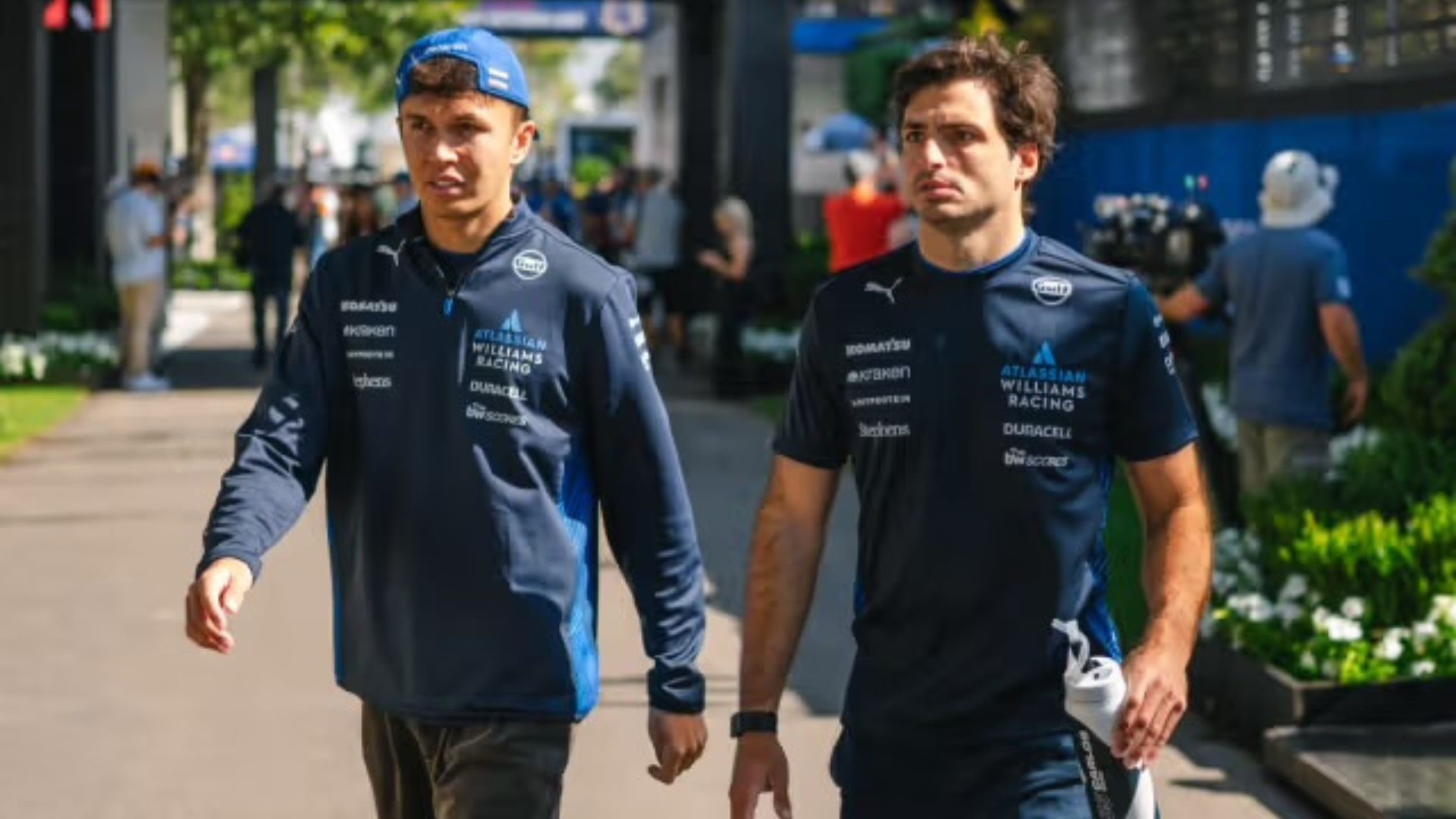
The current stagnation is particularly bruising when contrasted with the strategic prowess Williams displayed during the 2025 season. At the Australian Grand Prix, the potential of the Albon-Sainz partnership was vividly demonstrated through non-on-track contributions.
Following his own early retirement in Australia, Sainz did not retreat to the hospitality suite. Instead, he acted as an additional strategist from the garage. His insistence that Alex Albon switch to intermediate tyres during a brief rain shower proved to be the decisive move of the race, allowing Albon to secure a fifth-place finish—the team's best result in a full Grand Prix since 2017. That moment suggested a team capable of outthinking the field, even when the machinery was sub-optimal.
Today, however, strategy can only mitigate damage; it cannot bridge the massive aerodynamic and performance deficit that Sainz is now highlighting. The brilliance of the 2025 strategy is being overshadowed by the 2026 technical shortfall.
The Technical Horizon
Williams is currently banking on a "bigger package" due to arrive shortly to rectify the current trajectory. The pressure on the engineering department is immense. With Albon having committed his immediate future to the team with a contract extension through the end of the 2027 season, the stability of the driver lineup is secured, but the stability of the championship position is not.
For Williams, the coming weeks represent a fight for relevance. They must move from a reactive mode—using races as test sessions—to a proactive mode where upgrades actually facilitate points-scoring opportunities rather than merely serving as data points in a struggling campaign.
Evidence-Led Forecast
Likely Tactical Pattern: Williams will likely continue a high-risk developmental approach, utilizing mid-race scenarios or compromised race positions to validate new components, a necessity driven by their slow upgrade cycle.
Decisive Matchup: The ability of the upcoming major upgrade package to close the gap to Racing Bulls will determine if Williams remains a midfield contender or drifts into the back of the pack.
Strongest Counter-Case: If the upcoming package fails to deliver immediate, measurable lap time, the frustration expressed by Sainz could evolve from professional critique into a fundamental breakdown in team morale.
The Variable: The successful integration of the upcoming "bigger package" is the sole factor that could prevent the 2026 season from becoming a wasted year of data collection.
Sources
These sources formed the evidence pack for this article. Links open the original publisher; inclusion does not imply endorsement.
- formula1.com original
- skysports.com original
- news.gp original
- independent.co.uk original