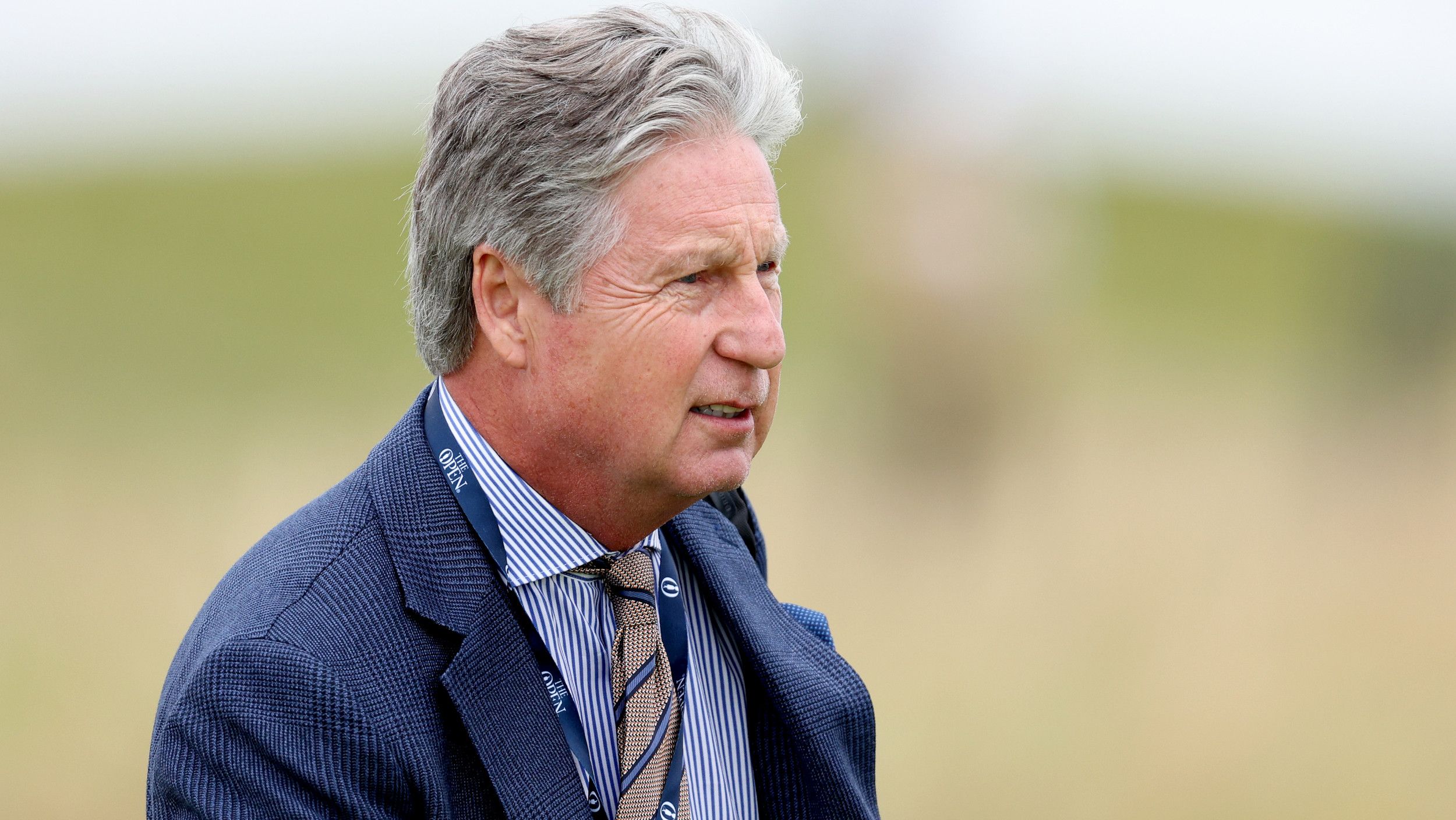
When modern professional golf gathers for its highest-stakes majors, the friction extends far beyond the ropes. Analysts, pundits, and players find themselves locked in a continuous debate over behavior, competitive structure, and the ultimate health of the sport. At the center of this discourse stands Golf Channel analyst Brandel Chamblee, whose vocal evaluations of player conduct, major championship dynamics, and the structural limitations of LIV Golf have sparked intense dialogue across the global golf landscape.
The Behavioral Shift: From Nicklaus to the Modern Era
Player decorum has become a dominant storyline, punctuated recently by Joaquin Niemann receiving a two-stroke penalty during the opening round of the U.S. Open for a breach of the USGA code of conduct. For Chamblee, this enforcement is a welcome corrective to years of escalating on-course frustration.
Reflecting on previous generations, Chamblee noted the stoicism of legends past. As he stated on Golf Channel, I never saw Jack Nicklaus throw a club. Never heard him yell an F bomb. Never heard a profane word from him on the golf course.
He extended that observation to Arnold Palmer, Tom Watson, Greg Norman, and even Phil Mickelson, asserting that historical greats maintained their composure through devastating losses.
Chamblee pointed to Tiger Woods as the catalyst for a cultural shift in player expression. Everybody that’s playing now watched Tiger… and it rains F bombs on the PGA Tour,
Chamblee observed, highlighting how modern players frequently lash out with profanity and broken equipment while operating under unprecedented public scrutiny. Praising the introduction of sterner codes of conduct following high-profile incidents—such as Wyndham Clark breaking a locker and Rory McIlroy tearing up a tee marker—Chamblee emphasized a fundamental truth of elite competition: Composure is a skill. And it’s lazy to throw clubs and drop F bombs when you know the world is watching.
Examining the Ceiling of LIV Golf
Away from conduct codes, the commercial and competitive tug-of-war between the PGA Tour and LIV Golf remains a constant undercurrent. When Phil Mickelson boldly claimed in an interview that additional superstar talent is bound to jump to the rival circuit (I don't think it, I know it. There are other stars heading our way,
), Chamblee offered a starkly skeptical counter-perspective.
While acknowledging that financial incentives will retain their pulling power, Chamblee questioned whether enough true difference-making talents remain gettable. Pointing out that top-tier icons like Tiger Woods and Rory McIlroy are immovable, Chamblee admitted that Jon Rahm's situation warranted mild concern, though he ultimately wagered that Rahm's respect for the historical gravity of the game would keep his allegiances anchored.
This fundamental divide between the tours, however, only serves to heighten the drama of the major championships. As Chamblee noted prior to the U.S. Open at Shinnecock Hills, the majors carry unmatched gravity precisely because they function as the sole arenas where fractured rivalries and disparate tours collide under maximum pressure.
Tactical Pressures on the Links
The debate over modern capability also manifested sharply in European links play, where Bryson DeChambeau’s tactical approach drew early skepticism from three-time Open champion Sir Nick Faldo. Faldo suggested in a Sky Sports podcast that DeChambeau lacked a grasp of links-style strategy—a critique that prompted a pointed response from the 32-year-old major champion after opening with a brilliant 63 (-3) at Royal Birkdale despite hitting just four fairways.
DeChambeau fiercely defended his approach in his R&A media session:
Bryson DeChambeau On this golf course, you have to be much more strategical, and I feel like I did a good job of being incredibly strategical today and super hard-focused on putting golf balls in the right spots.
Though Faldo subsequently doubled down on his technical reservations via social media, he sportingly conceded that DeChambeau's ability to execute under extreme, firm-and-fast links conditions put him firmly in command of the leaderboard. Chamblee, meanwhile, previously critiqued DeChambeau's off-course pivot toward internet content creation—remarking that the LIV golfer had shifted from chasing Scottie Scheffler and Rory McIlroy to pursuing YouTube personalities like Grant Horvat. Yet, as both analysts recognize, elite performance ultimately silences critique.
The Broader Stakes
Whether evaluating the discipline of the modern field, the economic realities of fractured tours, or the strategic chess match required to tame a fast-running links layout, the sport's most vocal observers agree on one core principle: pressure exposes everything. As major championships continue to force the world's best into shared fields, the tolerance for undisciplined play shrinks while the demand for mental fortitude—and genuine competitive strategy—remains absolute.
Sources
These sources formed the evidence pack for this article. Links open the original publisher; inclusion does not imply endorsement.
- pressroom.versantmedia.com original
- golfextra.cz original
- golfmonthly.com original
- golfinfo.cz original