Related coverage
View the Instagram post
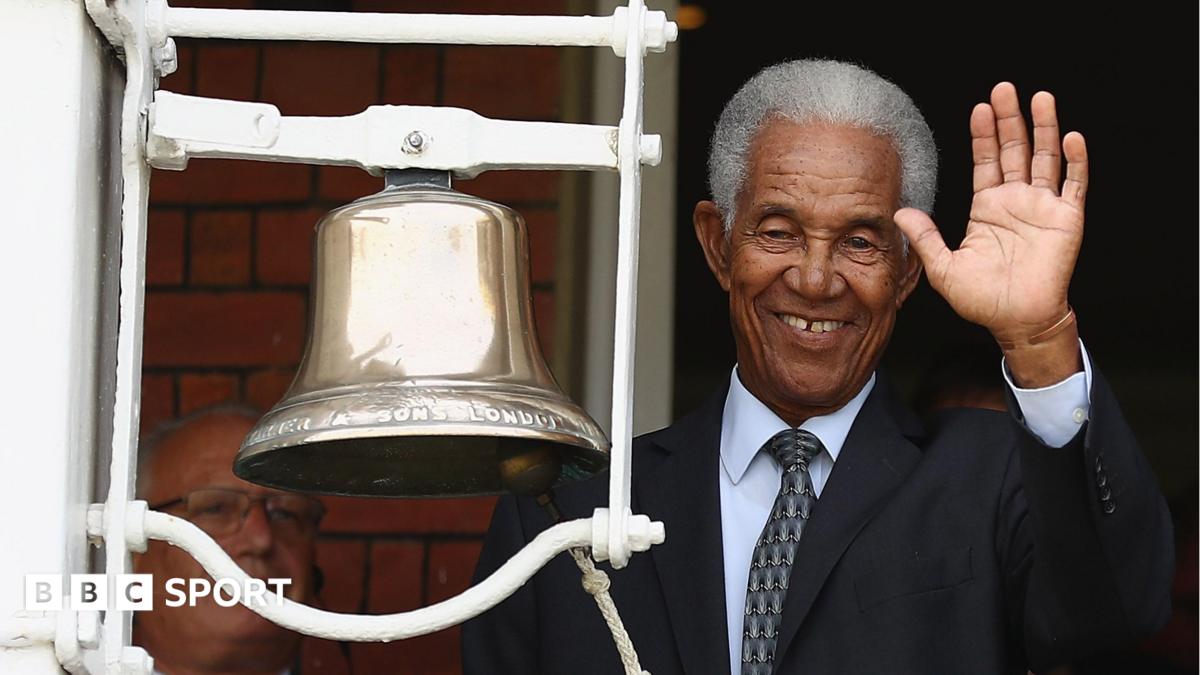
Cricket has lost its most versatile practitioner. Sir Garfield St Aubrun Sobers, whose mastery across every discipline of the sport turned the term all-rounder from a vague descriptor into a standard of peak excellence, has died at the age of 89. A national hero of Barbados and a titan of the West Indies, Sobers did not merely participate in the evolution of the game; he expanded the boundaries of what was tactically possible on a cricket pitch.
Born in Bridgetown on July 28, 1936, Sobers emerged from the district of Bayland with an innate aptitude that defied formal instruction. His professional trajectory was rapid. Selected for the West Indies as a 17-year-old replacement for the injured spinner Alf Valentine, Sobers debuted at Kingston’s Sabina Park in 1954. It was an arrival that signaled the emergence of a new force, placing the teenager alongside stalwarts like Weekes, Worrell, and Walcott.
His technical versatility remains the gold standard in cricketing history. A hard-hitting left-handed middle-order batter, Sobers possessed a range of motion and power that few could match. It was his bowling, however, that truly bewildered the world's finest. He could open with left-arm fast-medium, then pivot to orthodox left-arm spin, or switch to left-arm wrist-spin during a single match. To his captains, he was effectively five cricketers in one: an athletic force who could turn a match with a diving catch or a decisive spell.
His 365 not out against Pakistan in 1958 at Sabina Park remains a hallmark of concentration. Holding the world record for the highest individual Test score for 36 years—until it was eclipsed by Brian Lara in 1994—the innings cemented his reputation as a man capable of supreme longevity. Across 93 Tests from 1954 to 1974, he amassed 8,032 runs and claimed 235 wickets.
Sobers' influence extended deep into English county cricket. During his time with Nottinghamshire, he etched his name into history at St Helen’s Ground in 1968, becoming the first player to hit six sixes in a single over in first-class cricket. His success in Australia, including the 1960-61 season where he bowled 22 consecutive eight-ball overs in the Melbourne heat, confirmed that his genius was not confined to Caribbean soil.
His life, however, carried heavy burdens. In 1959, he was driving in Staffordshire when a collision with a cattle truck occurred. His teammate, Collie Smith, was in the car and suffered spinal injuries, passing away three days later. Sobers later noted that this loss profoundly altered his approach to the game, providing a haunting motivation to excel for those who could no longer compete.
Following the retirement of Frank Worrell—the first black captain of the West Indies—in 1965, the 28-year-old Sobers assumed the leadership role. His tenure was defined by a series win over England in 1966, where he scored 722 runs and took 20 wickets. Tributes have poured in from the global fraternity, including the BCCI and Cricket West Indies, along with players like Harbhajan Singh and Ishant Sharma, who emphasized his humility and the grace with which he carried the immense weight of expectation.
The sporting world now reflects on a life lived with extraordinary vitality. Whether he was bowling marathon spells or mentoring the next generation, his contribution to the sport was as wide as it was deep. Sir Garfield Sobers was not just a player; he was the measure by which all-rounders have been judged for over half a century.
Sources
These sources formed the evidence pack for this article. Links open the original publisher; inclusion does not imply endorsement.
- bbc.co.uk original
- IANS original
- Tony Cozier original
- BBC Fri, July 17, 2026 at 3:33 p.m. UTC · 1 min read original
- news.bbc.co.uk original
- caricom.org original
- britannica.com original