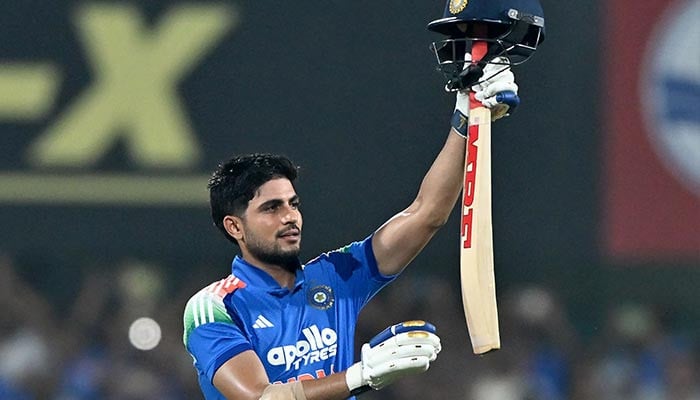
The scoreboard at Guwahati didn't just demand attention; it demanded a total rewriting of the One Day International record books. When the West Indies walked off the field having posted a monumental 405 for seven, the atmosphere was heavy with the expectation of a Caribbean victory. Instead, they witnessed a clinical, almost surgical demolition that saw India chase down the target with 39 balls to spare, finishing at 406 for two.
This wasn't merely a victory; it was a statement of intent. By completing the second-ever successful 400-plus chase in men's ODI history—following South Africa’s feat in 2006—India has not only secured an unassailable 2-0 lead in this three-match series but has also signaled a terrifying evolution in their batting depth.
A Triple-Century Storm in the Caribbean Spirit
The West Indies' innings was a whirlwind of individual brilliance that briefly felt unstoppable. For a period, the visitors looked to be channeling the pure, unadulterated power of the 'Universe Boss' era. John Campbell set the tempo with a rapid-fire 101 off 68 balls, striking nine boundaries and five sixes to exploit an inexperienced Indian pace attack.
The momentum only intensified as Shai Hope and Amir Jangoo took control of the middle and late overs. Hope, playing the dual role of anchor and aggressor, navigated a reprieve after being dropped on 27 by Virat Kohli to eventually reach 104 off 94 balls. Jangoo provided the finishing flourish, combining controlled stroke-play with aggression to reach 114 off 83 balls. It was a historic moment for the West Indies, marking the first time they had produced three centurions in a single ODI innings.
However, the statistical anomaly of their innings lies in the final stretch. Despite the triple-century onslaught, the West Indies managed only 82 runs for the loss of five wickets in the final 11 overs. This stagnation proved to be the decisive pivot point, transforming a massive total into a manageable target for an Indian top order in peak form.
The Counter-Blitz: Rohit and Gill
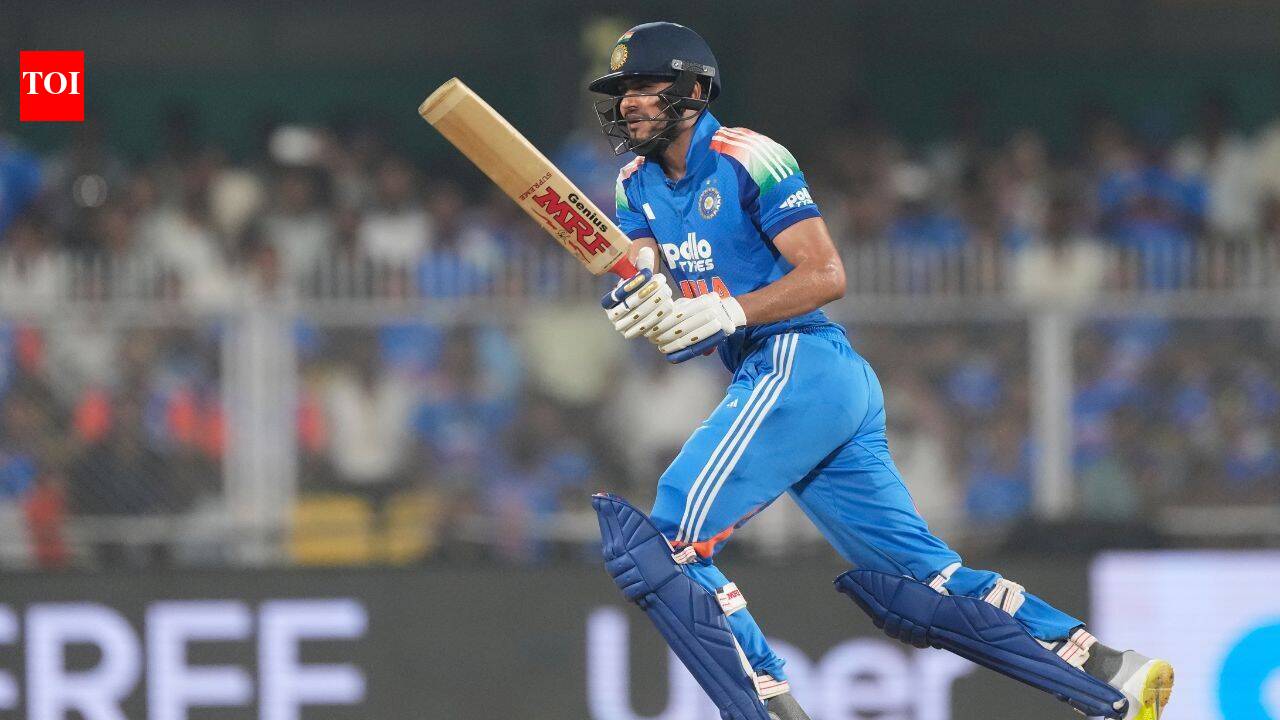
India’s response was characterized by an almost predatory intent. The opening partnership between Rohit Sharma and Shubman Gill was nothing short of predatory, adding 255 runs for the first wicket and effectively ending the contest before the West Indian bowlers could settle into a rhythm.
Rohit Sharma provided the necessary explosive support, playing a masterful 101 off 75 balls. His innings, punctuated by 10 fours and six sixes, ensured the required run rate never became a psychological burden for his partner. When Rohit was eventually trapped lbw, the platform was already set for a record-breaking individual performance.
| Player | Runs | Balls | 4s | 6s |
|---|---|---|---|---|
| Shubman Gill | 223* | 133 | 26 | 8 |
| Rohit Sharma | 101 | 75 | 10 | 6 |
| Amir Jangoo | 114 | 83 | 13 | 3 |
| Shai Hope | 104 | 94 | 8 | 3 |
| John Campbell | 101 | 68 | 9 | 5 |
Grit Amidst the Glory: The Toll of 223
While the statistics highlight the velocity of the chase, they fail to capture the physical sheer will displayed by the 27-year-old Shubman Gill. His 223 not out was not just a feat of skill; it was a triumph over physical distress. Throughout the innings, Gill battled both cramping and a painful neck, yet he remained undeterred, continuing to dismantle the West Indian attack with a relentless appetite for runs.

The speed of his achievement was breathtaking. Gill brought up his century in just 62 balls and reached his double century a mere 55 balls later. This 223* stands as the fastest double century in ODI history and represents the highest individual score in an ODI chase. It also cements his status as a premier captain, marking the highest score by a captain in the format.
With this performance, Gill has now amassed 11 ODI hundreds in 69 matches. He joins Rohit Sharma as the only batters in history to have scored multiple double-centuries in the ODI format, marking a significant passing of the torch in Indian batting lineage.
Statistical Context and Indian Bowling
The match was a study in contrasts for the Indian bowling unit. While the conditions in Guwahati offered little assistance to the seamers, Kuldeep Yadav managed to navigate the onslaught to claim 2-65 from 10 overs, a performance that saw him become the second-quickest Indian to reach 200 ODI wickets.
Conversely, the bowling unit struggled with consistency and fitness. Debutant Auqib Nabi endured a difficult introduction to international cricket, conceding 84 runs, while both Prasidh Krishna and part-time off-spinner Naman Dhir were forced from the field due to injuries. For the West Indies, this loss comes at a precarious time, as the squad faces both a battle to qualify directly for next year's competition and the internal pressure of proposed 25% pay cuts.
For India, the Guwahati masterclass serves as a definitive proof of concept for their batting philosophy: high-intent, high-speed, and relentless pursuit of the target, regardless of the scoreboard's daunting figures.
Sources
These sources formed the evidence pack for this article. Links open the original publisher; inclusion does not imply endorsement.
- timesofindia.indiatimes.com original
- yahoo.com original
- crictracker.com original
- bbc.com original