Related coverage
View the Instagram post
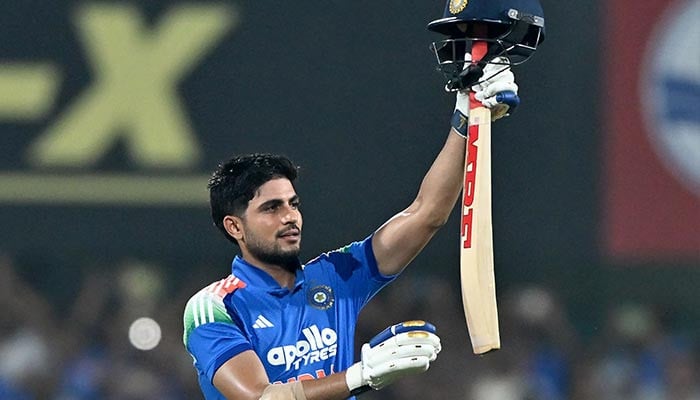
When West Indies accumulated 405 for seven in Guwahati behind a rare trio of individual centuries, the visitors appeared to have constructed an unassailable defensive wall. Instead, Indian captain Shubman Gill demolished it in 117 balls, authoring the fastest double-century in one-day international history and redefining the outer boundary of modern run chases.
Gill finished on an unbeaten 223 as India completed an eight-wicket victory with 39 balls to spare, taking an unassailable 2-0 lead in the three-match series. The successful pursuit of 406 stands as the second-highest chase in men's ODI history, surpassed only by South Africa’s legendary 438-9 against Australia at Johannesburg in 2006. It eclipsed India’s previous national record chase of 362, recorded against Australia in Jaipur.
Destruction at 117 Balls
Entering the match following a century in the series opener, Gill elevated his white-ball game into uncharted territory. His second career double-hundred came at a tempo never before seen in 50-over cricket, eclipsing his personal best of 208 set against New Zealand when he was 23.
The victory was built on a ferocious 255-run opening partnership between Gill and veteran opener Rohit Sharma. The 39-year-old Rohit set the immediate tone, attacking Alzarri Joseph in the second over with consecutive boundaries and a six. Rohit struck 10 fours and six sixes in a 75-ball blitz to score 101—his 35th ODI hundred—and surpassed 12,000 career ODI runs before falling lbw to Jayden Seales.

| Player | Runs | Balls Faced | Milestone / Details |
|---|---|---|---|
| Shubman Gill | 223* | 117 | Fastest ODI double-ton in history |
| Rohit Sharma | 101 | 75 | Surpassed 12,000 ODI runs |
| John Campbell | 101 | 107 | Set platform for West Indies total |
| Amir Jangoo | 114 | 109 | Top score for West Indies |
| Shai Hope | 104 | 98 | Captain's knock in first innings |
Although Virat Kohli was dismissed for 29 shortly after Rohit's departure, Gill maintained unrelenting pressure on the West Indian attack. Joined by Ruturaj Gaikwad, who contributed an unbeaten 31, Gill smoothly steered India past the target without further alarm.
Inside the 406-Run Vault
The total India hunted down was historical in its own right. West Indies' 405 for seven represented their highest-ever score in ODI cricket, surpassing their previous benchmark of 389 scored against England. Their innings featured three individual centurions: John Campbell (101), captain Shai Hope (104), and Amir Jangoo (114), before Roston Chase added a quickfire unbeaten 29.
Amid the heavy scoring, Indian left-arm wrist spinner Kuldeep Yadav managed crucial breakthroughs, picking up two wickets to reach the landmark of 200 ODI wickets. Yet on a flat batting deck, the West Indian tally proved insufficient once Gill got rolling.
The Captaincy Paradigm Shift
Gill’s historic double-ton reinforces his rapid elevation across all formats. Having succeeded Rohit Sharma as India’s 50-over captain following their Champions Trophy triumph, Gill has stepped seamlessly into leadership. His trajectory was signaled during his debut series as Test captain against England, where he amassed four centuries—including a marathon 269 and a second-innings 161 in the same Test at Edgbaston.
By pairing supreme strokeplay with breathtaking scoring speed, Gill has transformed India's top order into an aggressive engine room. His Guwahati display establishes a high watermark for run chases and sets a commanding standard for his tenure as captain.
Sources
These sources formed the evidence pack for this article. Links open the original publisher; inclusion does not imply endorsement.
- cricket.com.au original
- france24.com original
- geo.tv original
- theguardian.com original