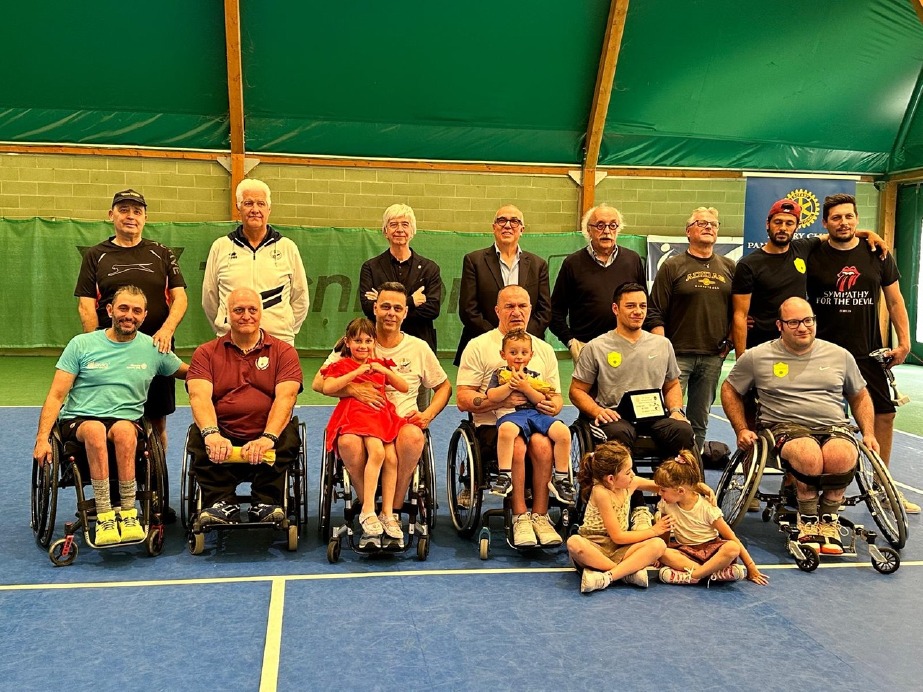
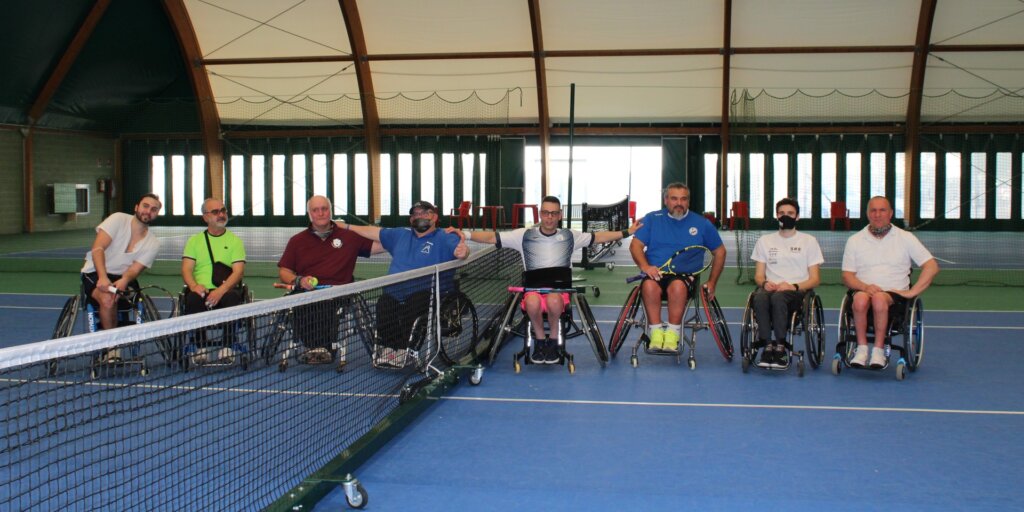
At the Centro Sportivo Al Tennis in Crema, located on Via Sinigaglia, the standard metrics of club tennis often give way to a more demanding narrative of technical refinement and human persistence. For years, the facility has served as an essential hub for wheelchair tennis, an evolution catalyzed by a strategic partnership between the club, led by Fabiano Gerevini, and the technical leadership of the Società Canottieri Baldesio. This initiative transcends local match-play, functioning as a critical development ground for athletes navigating the transition from intensive medical rehabilitation to the high-stakes demands of competitive court sports.
The tournament series, supported by the Rotary Club Pandino Visconteo, acts as a recurring pillar for the regional circuit. It provides a platform where the collaborative framework of coach Maura Cavagna and technical director Roberto Bodini—a veteran of the Baldesio wheelchair tennis project since its inception in 2009—can be measured against real-world performance. By rotating event venues across the province of Cremona, including the Crema area, the organizers ensure that participants remain battle-tested for regional team championships, such as those held in Brescia.
The competitive landscape of these events has evolved through distinct phases. In the inaugural tournament, the field highlighted the depth of regional talent across two tiers of play. The 2021 results underscored this competitive balance:
- Second Tier Singles: 1st place went to Paolo Cancelli, followed by Constantin Mircea, Alberto Moja, and Mauro Curioni.
- Second Tier Doubles: The pairing of Cancelli and Mircea secured the title.
- Third Tier Singles: Nazzareno Petesi emerged as the winner, with Matteo Sbordi in second, and local Crema athletes Giampietro Riseri and Andrea Cinquetti taking third and fourth, respectively.
- Third Tier Doubles: Petesi and Sbordi claimed the top spot.
By 2024, the tournament had evolved further, showcasing a shifting roster of winners. That year, Alberto Moia secured the first tier, while Andrea Cinquetti claimed the second tier singles, paired with Fabio Mazzocchi to win the second tier doubles. This year-over-year variation demonstrates a maturing competitive pool rather than a static hierarchy.
The technical rigor of these athletes is often a point of profound institutional pride. Giovanni Zeni, a captain for the Baldesio team, exemplifies the transition from other adaptive disciplines, such as wheelchair basketball, into the specific, high-endurance demands of tennis. His presence as a top-200 ranked athlete provides a benchmark for developing players like Riseri and Cinquetti, who continue to refine their craft through the support of the Baldesio and Al Tennis collaboration.

The success of the initiative is underpinned by a consistent institutional commitment, with support from the Panathlon Club Crema, the provincial administration, and municipal leadership. Walter Della Frera, who has represented the Crema municipal administration, has long argued that focusing on the 'disability' aspect of the competition misses the fundamental athletic truth of the event. His observations center on the technical discipline and moral strength required to compete at this level.
We have hit our target of promoting fun through sport, but the most beautiful thing is what you do. You are the best testimonials for what sport truly is,remarked Fabiano Gerevini during the 2024 awards presentation, highlighting the dual identity of the participants as both individuals and athletes.
The facility on Via Sinigaglia is now positioned not merely as a site for weekly play, but as a comprehensive development environment. By integrating service projects from the Rotary Club with high-level athletic coaching, the organizers have bridged the gap between social inclusion and elite sports development. For observers, the value lies in the consistency of the platform; as the sport continues to integrate into the wider provincial sports calendar, the Centro Sportivo Al Tennis remains a vital, evolving space for competitive rigor.
Sources
These sources formed the evidence pack for this article. Links open the original publisher; inclusion does not imply endorsement.
- Crema News original
- Mauro Taino original
- Cremona Sera original
- Simone Guarnaccia original
- Bruno original
- Rossana Monteverdi original
- juniortennismilano.it original