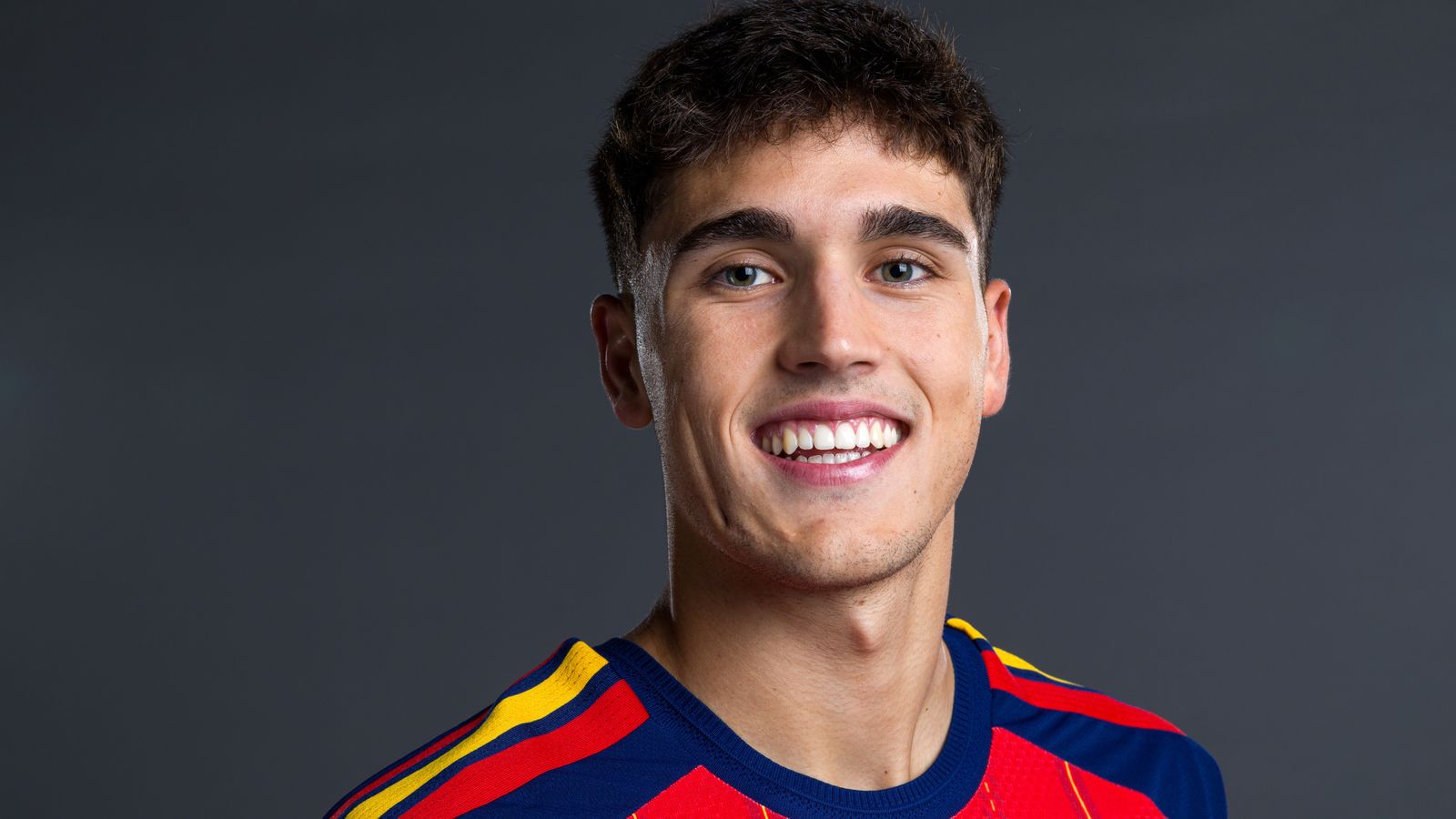
A teenager walking away with a young player award at a World Cup is, by now, almost expected. What is not expected is for that teenager to be a centre-back. Pau Cubarsí, 19, did exactly that on Sunday night at MetLife Stadium, taking the FIFA Young Player Award ahead of Lamine Yamal — the same Lamine Yamal who had owned the award two summers ago at Euro 2024 and who, in any normal tournament, would have been the easiest name on the shortlist.
This was not, however, a normal tournament. Spain conceded once in seven games, kept six clean sheets, beat a Kylian Mbappé-led France 2-0 in the semi-final, and finished the job against Argentina with a 106th-minute Ferran Torres goal in a final Argentina ended with two red cards and zero shots on target. In a campaign shaped that decisively by what happened at the back, the judges were not wrong to look past the usual suspects.
A job nobody notices
Centre-back has long been the loneliest place to be young and famous. Attacking teenagers get the close-ups; defensive ones get the half-time graphics. Cubarsí understood that long before this summer. Oscar Garcia, the former Barcelona player and now a coach who has watched the defender rise from Barcelona's academy, framed the dynamic plainly in a conversation with Sky Sports during the tournament.
"It is difficult in the youth department for people to talk about you. Normally, they will talk about a Lamine Yamal, a Lionel Messi, these kind of players. Not a centre-back. But for me, Cubarsi is fantastic."
Garcia's deeper read on what makes the teenager different is more useful than any highlight reel. In one-on-one duels — the place where young centre-backs are usually exposed — Cubarsí has the reading of the game and the recovery speed of a player several years further on. "In those one-on-one situations, he is really strong, and clever," Garcia said. Against France, that translated into a performance in which nobody on the pitch made more clearances than Cubarsí, and in which Mbappé, the player Spain had spent the week planning around, was reduced to a passenger.

The passer hiding inside the defender
What has always made Cubarsí unusual for his age and position is not what he does without the ball but what he does with it. Spain does not just need their centre-backs to defend; it needs them to start the moves that, in another era, would have begun with a midfielder. By the end of the group stage and into the knockout rounds, the numbers were stark. Only Rodri had completed more passes than Cubarsí at the tournament, and his pass completion rate was 96.2 per cent. No player in the 2026 field completed more through balls. No player played the offside trap successfully more often. No player sent more passes into the opposition half.
Yamal himself, not a man short of opinion on his own quality, has said publicly that Cubarsí is one of the three best players in the world at bringing the ball out from the back. The image of an 18-year-old attacker ranking his 19-year-old team-mate that highly is, in itself, an award. Against Belgium in the quarter-final, a Cubarsí shot was spilled by Senne Lammens and turned into the winner — a small, unglamorous reminder of the attacking tax a centre-half pays to play the way Spain demands.
Garcia's description captures the style: "He is really young, but he is very good in the build-up, because the first pass by him, it is always fantastic. He eliminates a lot of players from the opposition and does not miss the passes."
The bravery to play the line high
Barcelona and Spain have asked Cubarsí to do something most coaches would not ask of a teenager. Both teams push the defensive line high, leave space in behind, and trust their centre-backs to read danger before it arrives. It is a style that punishes hesitation, and it is the reason April's red card against Atlético Madrid — the night Barcelona's Champions League campaign ended at the Metropolitano — has to be read as the price of the role rather than a verdict on the player.
"To play as a centre-back at his age, for the big teams, it is the most difficult position. Because if you leave a lot of space behind you then you have to be very clever and very fast to be able to read the game."
That is also why the semi-final in Dallas mattered more than the highlight reels suggested. Spain's 2-0 win came from two narrow passages of play rather than a sustained battering of France: Mikel Oyarzabal's 22nd-minute penalty after Lucas Digne fouled Yamal while trying to clear a ball he should have left, and Pedro Porro's 58th-minute goal after exchanging passes with Dani Olmo. In between and after, the part of the pitch that stayed quiet was Cubarsí's — which, against this opponent, was the entire point.
The final, and the bigger picture
The final against Argentina posed a different problem. Lionel Messi, 39, had been the one consistent threat all tournament; he had been the difference in the semi-final win over England, scored in stoppage time, and was hunting a second straight World Cup as captain. Spain's response, as it had been for the previous six games, was to deny the opposition rather than to outscore them. Argentina's night ended with Enzo Fernández and Leandro Paredes sent off and not a single shot on target, while Torres turned in the winner three minutes into extra time to settle a match that had drifted in front of goal.
That seventh clean sheet — or, more accurately, that seventh game without defeat, the sixth without conceding — pushed Spain's unbeaten run across all competitions to 37 matches, a joint record for a European national team. It is a number built on the back of Cubarsí and Aymeric Laporte at its centre, with the teenager playing every minute of the campaign. By the time the trophy was lifted and Rodri was named the tournament's best player, the supporting case for Cubarsí was as comprehensive as the headline numbers.
The club only four have joined
By winning the final as a starter, Cubarsí joined a list that currently contains four names, including Pelé and Mbappé, of male players to have started and won a World Cup final as a teenager. Yamal, on the same night, became the third-youngest player to feature in a final. Two Barcelona academy products, both still teenagers, both World Cup winners, both with their own slice of history secured in the same match. The difference on Sunday night was that the judges gave the young player award to the one whose work had been hardest to see.
It is easy, in the days after a final like that, to argue that Yamal was more deserving, that his penalty-winning run against France and his influence on the team's attacking structure should have been enough. Garcia, for one, would have disagreed long before the votes were counted.
"Everybody talks about Lamine Yamal and he is obviously a fantastic, decisive player. But, for me, Cubarsi is key."
For a player who has spent the past three seasons being compared to a more famous team-mate his own age, the award is the clearest sign yet that the comparison no longer cuts only one way. From the village of Estanyol in Girona to a World Cup winners' medal in New Jersey in 19 years, Cubarsí has already done what most defenders twice his age never manage: changed the way a team plays, and forced a tournament to pay attention.
Sources
These sources formed the evidence pack for this article. Links open the original publisher; inclusion does not imply endorsement.
- fifa.com original
- Jarrod Fri, July 17, 2026 at 2:03 AM UTC · 6 min read original
- one.news18.com original
- english.ratopati.com original
- Barca Universal Wed, July 15, 2026 at 7:20 a.m. UTC · 2 min read original
- K.B. Sri Krish original