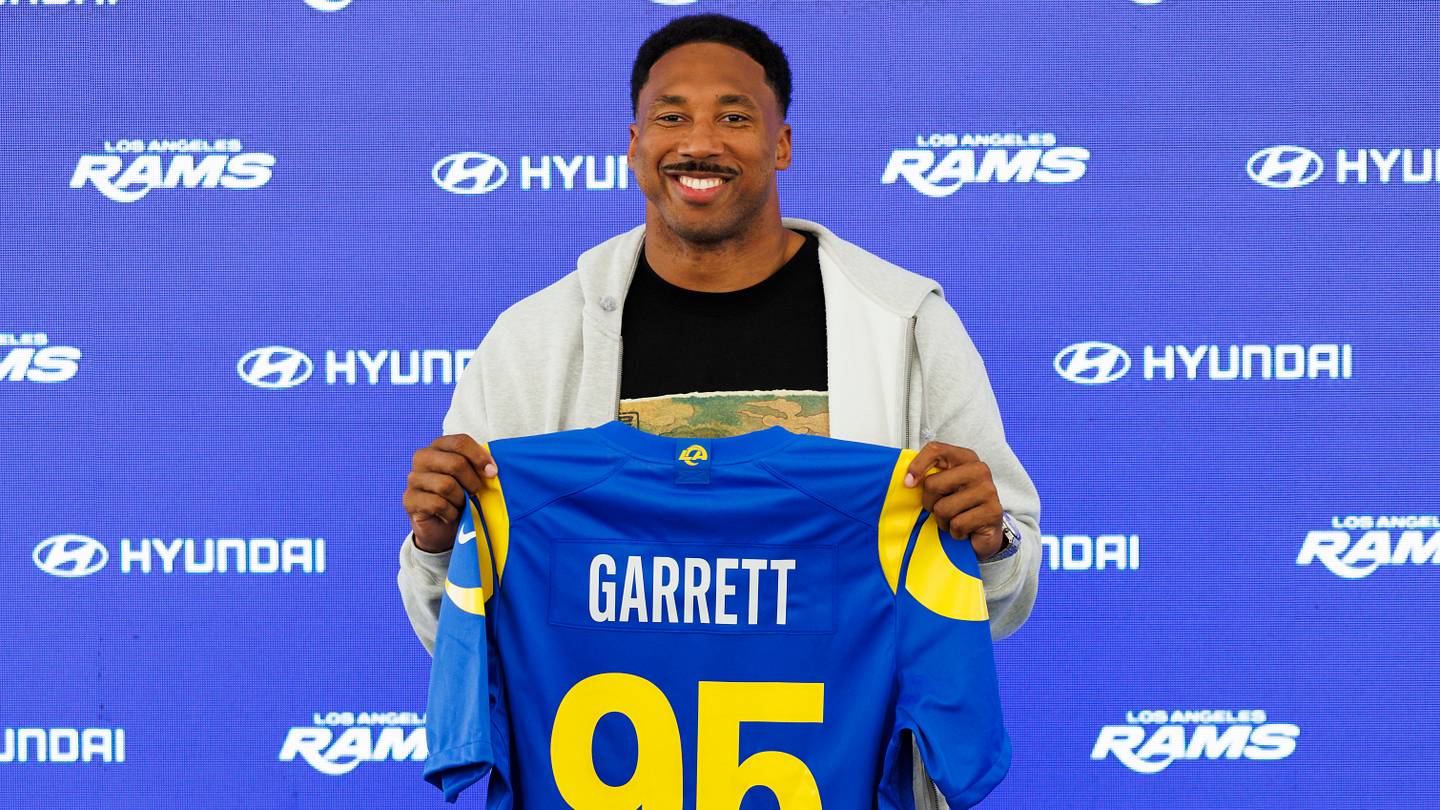
Blockbuster summer transactions have completely reorganized the NFL hierarchy entering the 2026 campaign. The offseason landscape reshuffled on June 1 when the Philadelphia Eagles traded wide receiver A.J. Brown to the New England Patriots, but the Los Angeles Rams delivered an even greater shock by acquiring Cleveland Browns edge rusher Myles Garrett. Coupled with tactical retools and roster shifts across both conferences, the distance between elite Lombardi trophy contenders and long-term rebuilding projects has widened considerably.
Standalone Supremacy in Southern California
The Los Angeles Rams occupied top billing in power rankings during early OTAs, but adding Garrett elevates Sean McVay’s squad into a league tier of their own. Fresh off a 2025 season in which he set the single-season sack record and earned his second Defensive Player of the Year award, Garrett gives Los Angeles a single-handed game-wrecker up front. Acquiring Garrett required surrendering third-year edge defender Jared Verse, but Les Snead and McVay clearly prioritized immediate championship impact over future depth. That front-seven firepower pairs directly with a rebuilt secondary, where Los Angeles addressed its most pressing weakness by acquiring Trent McDuffie and signing free-agent cornerback Jaylen Watson away from Kansas City.
On offense, veteran quarterback Matthew Stafford operates behind a sturdy offensive line with high-leverage perimeter targets Puka Nacua and Davante Adams. While maintaining durability across a grueling 17-game season remains essential, Los Angeles boasts a structural ceiling that creates real distance between themselves and the rest of the league.
The Primary Super Bowl Contenders
Directly behind Los Angeles sits a cluster of battle-tested contenders built for deep postseason runs:
- Seattle Seahawks: The reigning Super Bowl LX champions return quarterback Sam Darnold after a second consecutive elite campaign alongside reigning Offensive Player of the Year Jaxon Smith-Njigba. Even with Super Bowl MVP Kenneth Walker III leaving for Kansas City in free agency, general manager John Schneider replenished the backfield by drafting Notre Dame running back Jadarian Price in the first round.
- Denver Broncos: Head coach Sean Payton engineered a 14-3 record in 2025, taking the AFC West crown for the first time since 2015. With quarterback Bo Nix fully healthy, Denver's passing attack adds explosive vertical stretch following the acquisition of wideout Jaylen Waddle.
- San Francisco 49ers: With four playoff appearances over the past five seasons, San Francisco reached the 2025 Divisional Round despite deep roster attrition. The 49ers fortified Brock Purdy's options by signing veteran Mike Evans from Tampa Bay and adding speedster Christian Kirk, while welcoming back linebacker Dre Greenlaw to anchor the defense.
- New England Patriots: Pairing A.J. Brown with second-year quarterback Drake Maye gives Foxborough a dominant perimeter anchor to elevate Stefon Diggs and Kayshon Boutte, vaulting New England firmly into the top tier of AFC contenders.
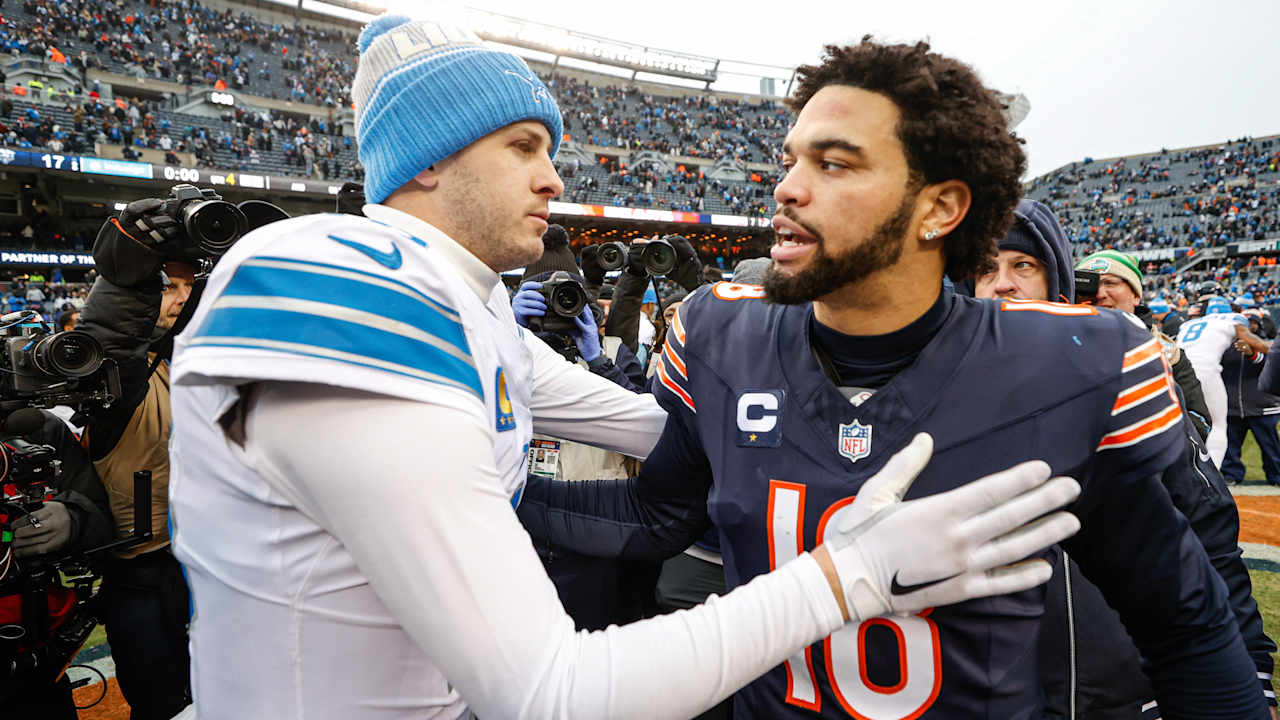
- Chicago Bears: The reigning NFC North champions enter year two under head coach Ben Johnson with heightened expectations. Madden NFL 27 cover quarterback Caleb Williams leads an ascending unit, while the defense added Super Bowl LX champion defensive back Coby Bryant on a three-year, $40 million deal.
High-Variance Challengers and Tactical Resets
Several playoff aspirants enter 2026 navigating scheme overhauls or significant roster transitions that introduce real strategic uncertainty.
The Philadelphia Eagles reallocated target distribution following Brown's departure, relying on DeVonta Smith and rookie Makai Lemon to absorb perimeter volume. However, quarterback Jalen Hurts must prove he can consistently attack the middle of the field to keep Philadelphia in the upper echelon. In Kansas City, the Chiefs seek to re-establish dominance after losing Patrick Mahomes late last season to a December knee injury. The Chiefs revamped their secondary with first-round cornerback Mansoor Delane, brought back offensive coordinator Eric Bieniemy, and added Kenneth Walker III to stabilize the rushing attack alongside receivers Rashee Rice and Xavier Worthy.
In the NFC North, the Detroit Lions aim to rebound from a 9-8 finish. New offensive coordinator Drew Petzing replaces John Morton, returning the play-calling emphasis to a balanced ground attack centered on Jahmyr Gibbs. Detroit strengthened its interior line by acquiring Cade Mays, Ben Bartch, Larry Borom, and trading David Montgomery to Houston for center/guard Juice Scruggs, while adding secondary depth in Roger McCreary, Chuck Clark, and Christian Izien. Meanwhile, Green Bay Packers head coach Matt LaFleur executed a full offensive scheme reinstallation following late-season missteps in 2025, though running back Josh Jacobs' May arrest introduces backfield uncertainty. The Minnesota Vikings, who won nine games last year despite zero stability under center, signed Kyler Murray to establish a higher baseline at quarterback.
Long-Term Asset Collection in the Rebuild Tier
At the bottom of the league hierarchy, several franchises are prioritizing roster resets and multi-year draft equity over immediate win-loss results.
The Las Vegas Raiders ushered in head coach Klint Kubiak, signing veteran quarterback Kirk Cousins to guide the offense while first overall pick Fernando Mendoza develops on the bench. Las Vegas supplemented its core by adding center Tyler Linderbaum, receiver Jalen Nailor, and linebackers Nakobe Dean and Quay Walker. In Arizona, new head coach Mike LaFleur will start Jacoby Brissett under center, supported by tight end Trey McBride, receiver Marvin Harrison Jr., and third overall pick Jeremiyah Love, with rookie quarterback Carson Beck waiting in reserve.
The Cleveland Browns chose long-term roster construction over short-term stability by trading Myles Garrett to Los Angeles. In return, Cleveland acquired third-year edge rusher Jared Verse—five years younger than Garrett—along with a 2027 first-round pick and two top-100 selections. While losing an elite defensive anchor pushes Cleveland toward the bottom of the 2026 standings, acquiring Verse and premium draft equity provides the Browns with a foundational springboard for their multi-year rebuild.
NFC West Dynamics and Postseason Projection Mechanics
Likely Tactical Pattern: Expect the NFC West to dictate conference playoff seeding. Garrett's presence on the Rams' front four will force opposing offenses into chip blocks and max protection on third-and-long, enabling Los Angeles to play deep coverage shells behind McDuffie and Watson. Seattle will counter stacked boxes by leaning on Sam Darnold's play-action passing to Jaxon Smith-Njigba while integrating Jadarian Price into early-down ground work.
Decisive Matchup: The head-to-head division battles between the Rams and Seahawks will determine NFC home-field advantage. Los Angeles' upgraded cornerback tandem against Seattle's wide receiver group stands as the single most critical matchup in the conference.
Strongest Counter-Case: Injury attrition along the Los Angeles offensive line or secondary could narrow the gap between the Rams and the chasing pack. If Denver's Bo Nix continues his upward trajectory under Sean Payton or New England's Drake Maye unlocks explosive downfield passing with A.J. Brown, the AFC champion could hold a distinct schematic edge over the NFC winner in Super Bowl LXI.
What Would Change the Read: A premature transition to rookie quarterbacks—such as Carson Beck in Arizona or Fernando Mendoza in Las Vegas—that yields surprising mid-season offensive efficiency would disrupt the bottom tier and alter projected draft order mechanics across the league.
Sources
These sources formed the evidence pack for this article. Links open the original publisher; inclusion does not imply endorsement.
- pff.com original
- nfl.com original
- fansided.com original