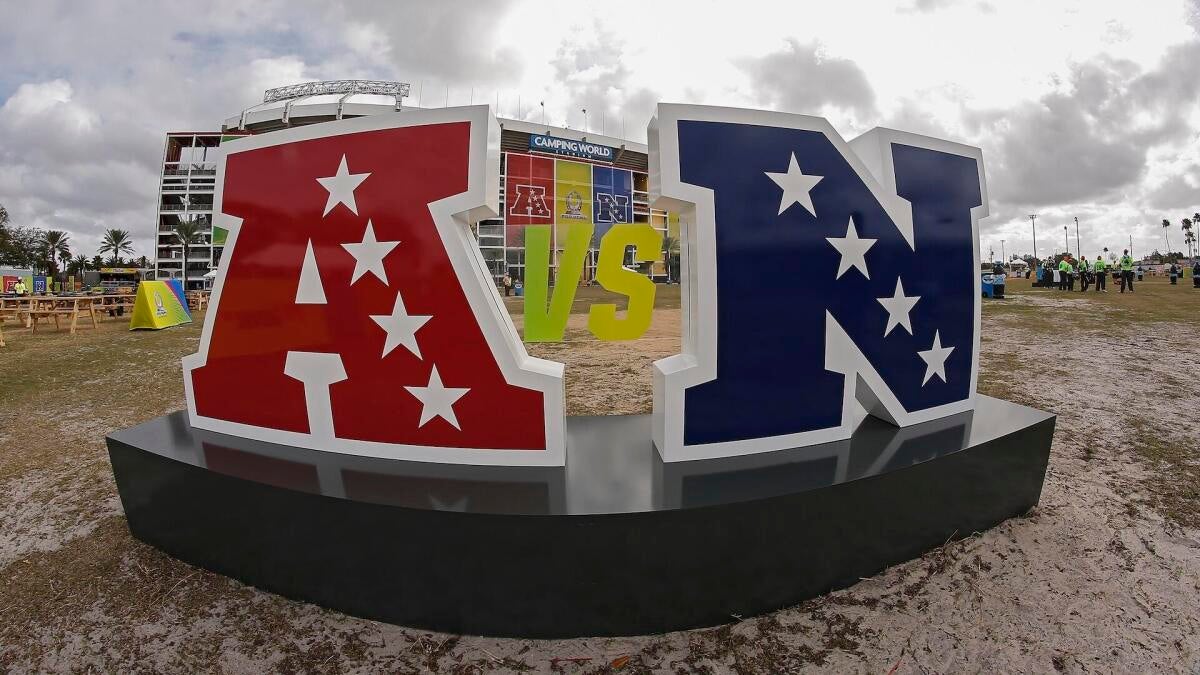
At the league’s spring owners’ meeting in Atlanta, NFL executives Peter O’Reilly and Troy Vincent Sr. delivered a long-overdue reality check to team owners: the Pro Bowl game is officially dead. After 75 years of evolving from a full-contact exhibition into a televised flag-football contest, the league has permanently eliminated all on-field all-star games. Starting this season, the Pro Bowl transforms strictly into an individual award granted to exactly 88 players, stripping away the substitute roster bloat that eroded the honor over the past decade.
Instead of suiting up for an exhibition on the Tuesday before the Super Bowl or risking injury in post-playoff flag drills, selected players will be invited to Los Angeles in February for an in-person celebration. The shift signals a rare admission from league leadership: attempting to stage high-stakes physical football after a grueling postseason—or dressing up low-intensity drills for television—simply no longer works.
Earning the Title Without Taking the Snap: Escalators, CBA Rules, and the 88-Player Cap
While fans may no longer see helmet-free flag shootouts on their screens, keeping the official Pro Bowl designation intact is vital for team front offices and player contracts. Under the Collective Bargaining Agreement, the NFL retains sole discretion over whether an all-star game is physically played, provided it replaces the event with a platform that recognizes top talent after consulting the NFLPA.
Crucially, the raw selection matters on balance sheets across all 32 front offices:
- Rookie Performance Escalators: Players drafted in rounds two through seven earn automatic contract escalators for earning an initial Pro Bowl nod during their rookie deals.
- Fifth-Year Option Tiers: First-round draft picks see their guaranteed fifth-year option values escalate depending on how many Pro Bowls they accumulate over their first three seasons.
- Veteran Incentive Bonus Clauses: Millions of dollars in contract incentives remain tied directly to earning a ballot spot on the official 88-man roster.
By capping the roster precisely at 88 players—voted on by equal thirds of fan, player, and coach ballots across the AFC and NFC—the league stops contract metrics from inflating due to secondary substitute call-ups.
From Aloha Stadium Hit Sticks to Convention Center Shootouts: The Dilution of a 75-Year Tradition
The Pro Bowl was held in some form almost every single year since 1951, pausing only for the 2021 COVID-19 pandemic. Its historical footprint mapped the modern evolution of the league itself. The Los Angeles Memorial Coliseum hosted the event 23 times, including 22 consecutive editions from 1950 through 1971, before rotating through Houston, Kansas City, Miami, New Orleans, Seattle, and Tampa. Aloha Stadium in Honolulu eventually became the event's iconic anchor, hosting 35 editions across multiple stretches between 1979 and 2015.
Yet as player compensation soared and modern playoff leverage intensified, the intensity on the field evaporated. Troy Vincent Sr. recalled entering his first Pro Bowl after a seven-interception campaign in 1999, when veteran linebacker Hardy Nickerson gave him an unvarnished mandate in Hawaii.
“Those were direct orders from the Mike linebacker,”
Vincent recalled.
“‘This ain’t no party. You get a chance to spend some time at the pool today when we get back to the hotel. We came here to win a football game.’ That’s how it was. When you got to Honolulu, that was the message. That wasn’t the message anymore.”
Subsequent operational pivots failed to restore that edge. A 2013 shift to captain-led fantasy drafts featuring Deion Sanders and Jerry Rice lasted briefly before reverting to the AFC-NFC format in 2016. Moving the game to Orlando’s Camping World Stadium (six hosting stints), Las Vegas’s Allegiant Stadium (twice), and eventually San Francisco’s Moscone Center for skills drills and flag football failed to stem declining public interest.
Snoop Huntley, Shedeur Sanders, and the Devaluation of the Alternate Tag
The primary driver behind eliminating the game entirely was the rapid devaluation of the title through alternate invites. When the Pro Bowl was played in Honolulu, non-attending starters were rare exceptions. In 1998, just seven players missed the game, five of whom were resting for the Super Bowl. By 2018 in Orlando, that replacement figure ballooned to 35.
Though switching to flag football in 2022 reduced average alternates to 26 per season (down from a 35-player average between 2016 and 2020), extreme statistical anomalies damaged the award's prestige. In 2022, Baltimore Ravens quarterback Tyler "Snoop" Huntley earned an AFC Pro Bowl invite as a fourth alternate despite starting just four games. Last season, Cleveland Browns rookie quarterback Shedeur Sanders was selected as a sixth alternate following a 3-4 starting campaign to fill in for Super Bowl LX quarterback Drake Maye, joining other late additions like Devin Lloyd and Jake Ferguson.
Earlier this summer, Vincent convened a video conference with a panel of star veterans—including Jalen Hurts, Jalen Ramsey, George Kittle, and Dion Dawkins—to gather direct feedback on the award's future.
“The alternate thing didn’t sit well with the guys, especially those that we would consider perennial Pro Bowlers,”
Vincent explained.
“And in their mind, ‘I want to be considered the world’s best.’ And when you start getting into the fourth and fifth and sixth alternates, it waters down the entire team.”
“It’s OK to be the first league to walk away from a competitive all-star game,”
O’Reilly noted of the league's final decision.
“All-star games, I think, for all leagues have been fraught for a long time... What’s the Pro Bowl about? It’s about recognizing the best of the best. No replacements. Eighty-eight.”
Los Angeles 2028 and the Redefined February Summit
Staging the newly structured celebration in Los Angeles serves a clear promotional strategy. With flag football set to make its official Olympic debut at the 2028 Los Angeles Summer Games, the NFL plans to utilize its February gathering in Southern California to launch promotional activations and highlight flag football on a global stage—without forcing its top gridiron stars into an unwanted physical exhibition.
By prioritizing contract precision and elite peer recognition over forced broadcast gimmicks, the NFL resolves decades of identity crisis. The Pro Bowl game is officially history; the distinction of being named one of the league's top 88 players remains standard lore.
Sources
These sources formed the evidence pack for this article. Links open the original publisher; inclusion does not imply endorsement.
- nytimes.com original
- aol.com original
- cbssports.com original
- apnews.com original