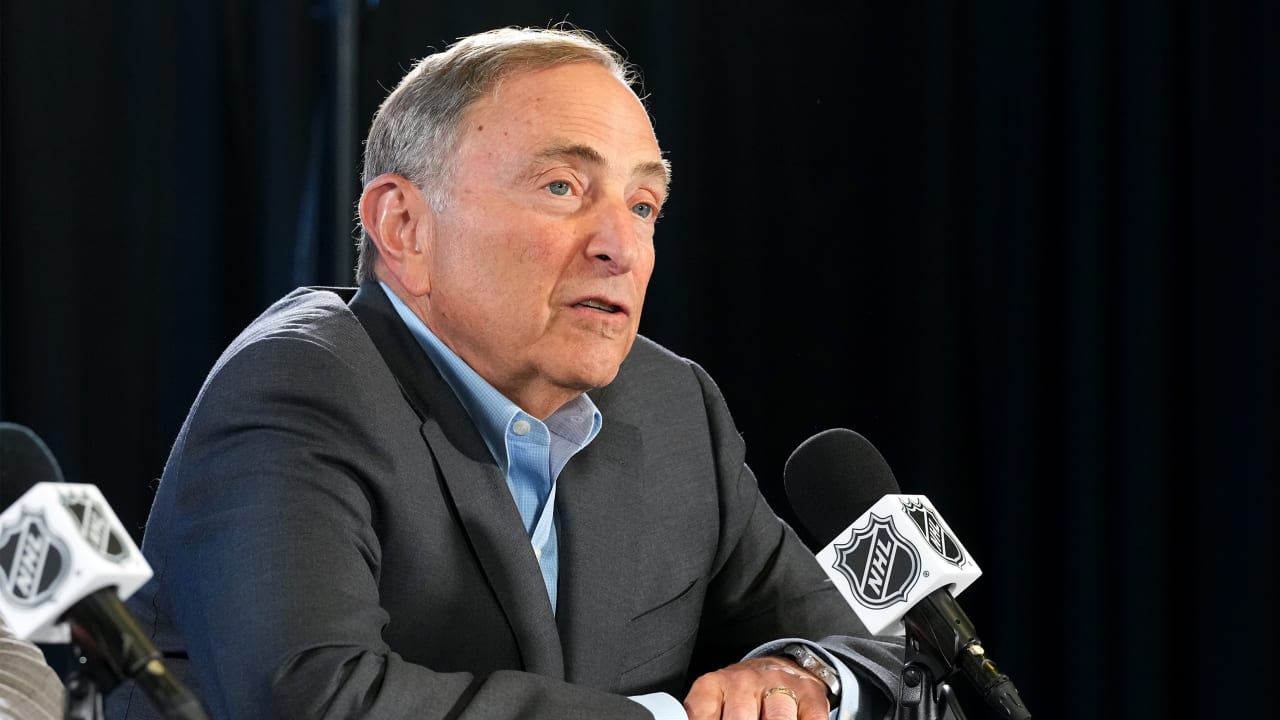
The National Hockey League is moving decisively closer to a footprint expansion that could reshape the map of the American Southwest. Following a meeting of the Board of Governors, NHL Commissioner Gary Bettman announced that the League has entered a six-month evaluation process with the Friedkin family, led by CEO Dan Friedkin, to explore establishing a 33rd franchise in Texas.
The prospective ownership group, operating through its global sports platform Pursuit Sports, has engaged in a framework agreement that involves an estimated $3.5 billion investment. That massive capital commitment covers both the incoming expansion fee payable to the League and the requisite construction of a brand-new arena. While preliminary discussions spanning the better part of two years initially centered squarely on Houston, the fluid nature of the venue search has expanded the target zone to include Austin.
Each city brings unique attributes that would make a new team a huge success, the Friedkin family noted via an official statement released through Pursuit Sports. Both have the infrastructure, passionate fan bases, and economic strength needed to support a championship-caliber franchise for years to come.
The proposed expansion path highlights distinct structural choices by the League's front office. Rather than forcing an immediate vote, the Board of Governors' Executive Committee endorsed the underlying terms of the arrangement, leaving a formal vote open for conclusion once the six-month study window elapses. The Friedkin family portfolio carries significant multi-sport operating experience, notably encompassing Italian soccer club AS Roma and Premier League side Everton.
Market Dynamics and Arena Realities
The geographic chess match between Houston and Austin presents distinct operational challenges and spatial advantages. As Commissioner Bettman noted during the announcement, neither prospective home city currently possesses a suitable venue capable of meeting the operational demands of a modern major-league hockey club.
We have been in discussions for the better part of two years with the Friedkin family, principally for the last two years about Houston as an expansion opportunity, Commissioner Bettman explained. As we continued to focus with them, particularly on the need for a new arena in Houston, the discussions morphed into also a discussion about Austin, which would also need a new building.
Unlike previous expansion scenarios where territorial rights sparked intense inter-club friction, the Dallas Stars do not hold regional veto power over the rest of the state. Commissioner Bettman dismissed the notion that Dallas would obstruct a fellow Lone Star franchise, offering the assessment that regional growth would ultimately benefit the game statewide. Meanwhile, other speculative markets such as Atlanta and Arizona remain on a separate track, though they currently lack the advanced framework agreement that positions the Friedkin bid at the forefront of the League's expansion queue.
Historical Context of League Growth
Should the Texas evaluation culminate in an official franchise, it would continue a rapid wave of geographic footprint modification for a league that operated with rigid stability for decades. The NHL successfully integrated the Vegas Golden Knights as its 31st franchise ahead of the 2017–18 campaign for an expansion fee of $500 million, followed by the Seattle Kraken coming aboard as the 32nd team for $650 million in 2021–22. More recently, the corporate transition of the Arizona Coyotes' hockey assets to Salt Lake City under the Smith Entertainment Group demonstrated the League's ongoing willingness to tap into high-growth western and southern markets.
Executives have repeatedly stressed that division symmetry is not a governing principle for growth. Just as the League operated with an uneven number of teams following Vegas's arrival, the addition of a 33rd team would not disrupt operational logistics if the foundational pillars—ownership stability, market size, and arena infrastructure—are firmly secured.
As the six-month evaluation clock ticks down toward year's end, the operational focus shifts from broad conceptual interest to concrete real estate planning. Whether the League ultimately plants its flag in the sprawling corporate ecosystem of Houston or the rapid technology-driven growth of Austin, the commitment to establishing a second anchor in Texas signals that the NHL's southern expansion strategy remains firmly in motion.
Sources
These sources formed the evidence pack for this article. Links open the original publisher; inclusion does not imply endorsement.
- tsn.ca original
- nhl.com original
- yardbarker.com original


