The era of unchecked, multibillion-dollar state backing for LIV Golf is coming to a close. Saudi Arabia’s Public Investment Fund (PIF) will officially withdraw its financial support at the conclusion of the season, ending weeks of speculation and plunging the future of the breakaway tour into profound uncertainty.
News of the withdrawal broke as the league announced a "strategic evolution" designed to secure replacement capital. As part of this corporate reorganization, PIF governor Yasir Al-Rumayyan has stepped down as board chairman. Al-Rumayyan co-founded the tour in 2021 alongside Greg Norman and served as its most influential power broker, playing a central role in both its rapid ascent and the 2023 framework negotiations with the PGA Tour.
In a statement released on Thursday, the PIF explained that the substantial, long-term capital required by the event is "no longer consistent with current phase of PIF's investment strategy." While the fund emphasized that LIV had "forever changed the game of golf for the better" through its transformational impact, the financial toll of the project has been staggering. Having poured nearly $6 billion into the venture, the tour accumulated net losses exceeding $1.1 billion between 2022 and 2024 alone, with international market losses mounting to $462 million in 2024.
Despite the looming financial cliff, executive leadership insists the business is pivoting from a state-subsidized startup to a self-sustaining entity. LIV officials have told potential investors that ten of its teams will turn a profit this year, and that the organization is on course to earn $100 million more in 2026 than it did the previous season. To steer this transition, the tour established an independent board led by corporate governance professional Gene Davis and financial restructuring expert Jon Zinman.

"LIV Golf has built something truly differentiated – a global league with passionate fans, world-class talent, and demonstrated commercial momentum," Davis said in a statement. "The executive leadership team, along with Jon and I, see a clear opportunity to help the league formalise its structure, attract and secure long-term capital, and position the business for growth."
Internally, however, the reality is stark. Officials acknowledge that the series will almost certainly need to be significantly scaled back, dropping well below its current 14-event calendar. The turbulence has already impacted scheduling; a planned June tournament in New Orleans was recently postponed. While official statements cited summer heat and course conditions, local golf leaders disputed those claims, casting further light on the operational friction surrounding the tour.
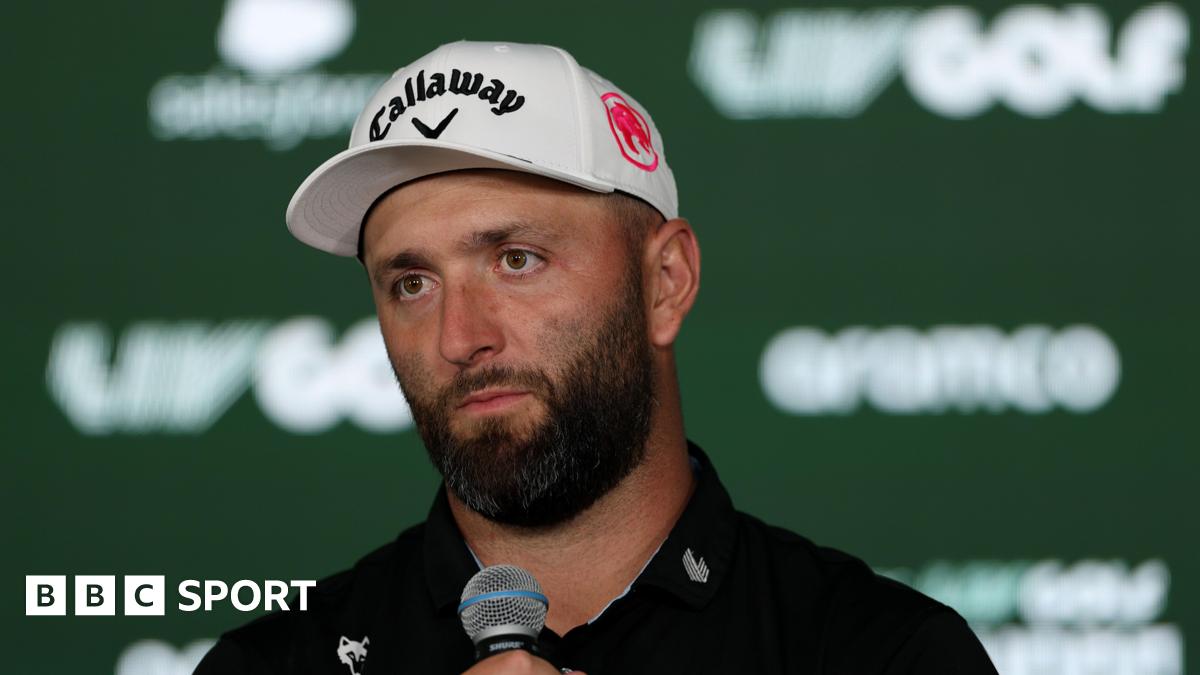
Team captains, staff, and marquee players—including major champions Jon Rahm, Bryson DeChambeau, Phil Mickelson, and Cameron Smith—must now weigh their long-term futures. DeChambeau, speaking after a recent event in Mexico City, expressed a clear sense of duty to keep the enterprise afloat. As of right now, my job is to help make the league work after this year,
DeChambeau said, as cited by BBC Sport. I just feel like I have a responsibility. I've put a lot of effort into it. So that's what I'm going to do, we're going to make this work.
For players eyeing the exits, returning to traditional circuits will not be straightforward. Earlier this year, Brooks Koepka utilized a one-time returning member program to rejoin the PGA Tour, a path that reportedly cost him up to $90 million in forfeited bonuses, equity, and charitable contributions. PGA Tour chief executive Brian Rolapp made it clear that accountability remains paramount for any future defectors seeking reinstatement. There were rules, and they were broken,
Rolapp noted, according to The New York Post. With rules comes accountability... It has to be accounted for in some shape or form.
As LIV Golf prepares to finish out its current calendar—with stops remaining in South Korea, Spain, Britain, and Trump Bedminster—the immediate priority for Davis and Zinman is finding viable outside investors before the funding tap runs completely dry. Whether global capital markets are willing to absorb a scaled-down team golf model without the backing of the world's most powerful sovereign wealth fund remains the ultimate question for a sport still reeling from years of fracture and excess.
Sources
These sources formed the evidence pack for this article. Links open the original publisher; inclusion does not imply endorsement.
- fairmont.com original
- bbc.com original
- nypost.com original
- linkedin.com original