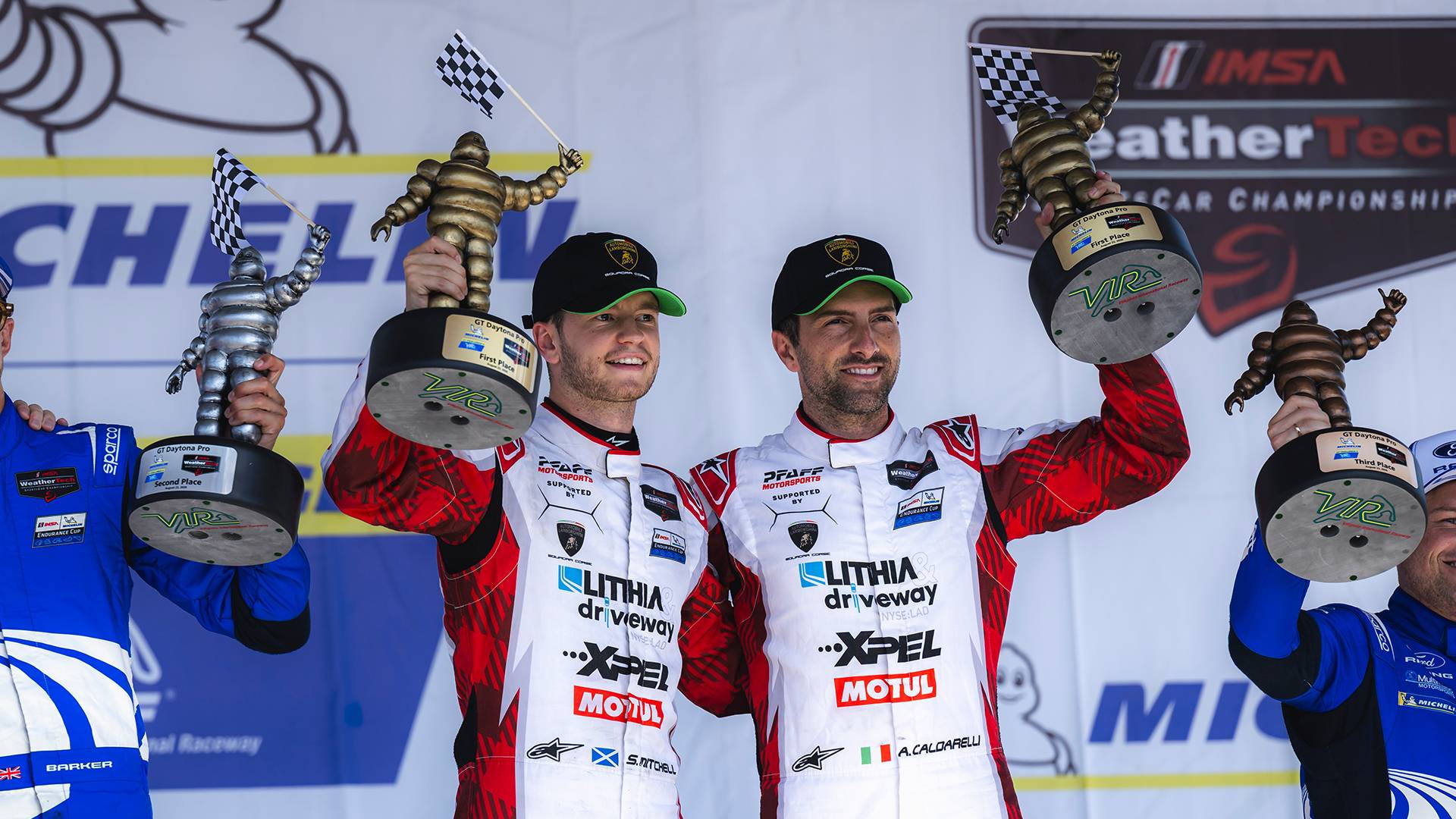
When Lamborghini expands its footprint across international circuits, the engineering transition from road-going architecture to GT3 competition is rarely a quiet affair. Recent success on American soil highlights the competitive trajectory of the brand's latest racing machinery, punctuated by the Temerario GT3 capturing its second IMSA victory of the year in Virginia. This milestone underscores the relentless development pacing happening within Sant’Agata Bolognese’s motorsport division, translating high-revving hybrid-era road philosophies directly into endurance racing pedigree.
While the production Temerario relies on a revolutionary 4.0-liter twin-turbocharged V8 paired with three electric motors to generate a staggering 907 horsepower—blasting from 0 to 60 mph in a blinding 2.1 seconds during testing—the GT3 iteration strips away road-legal complexities to focus purely on aerodynamic efficiency, weight distribution, and sheer mechanical endurance. The Virginia triumph validates the foundational aluminum spaceframe and chassis geometry developed to replace the venerable Huracán lineage on both street and circuit.

The Dual-Front Battles: ADAC GT Masters and Championship Pressure
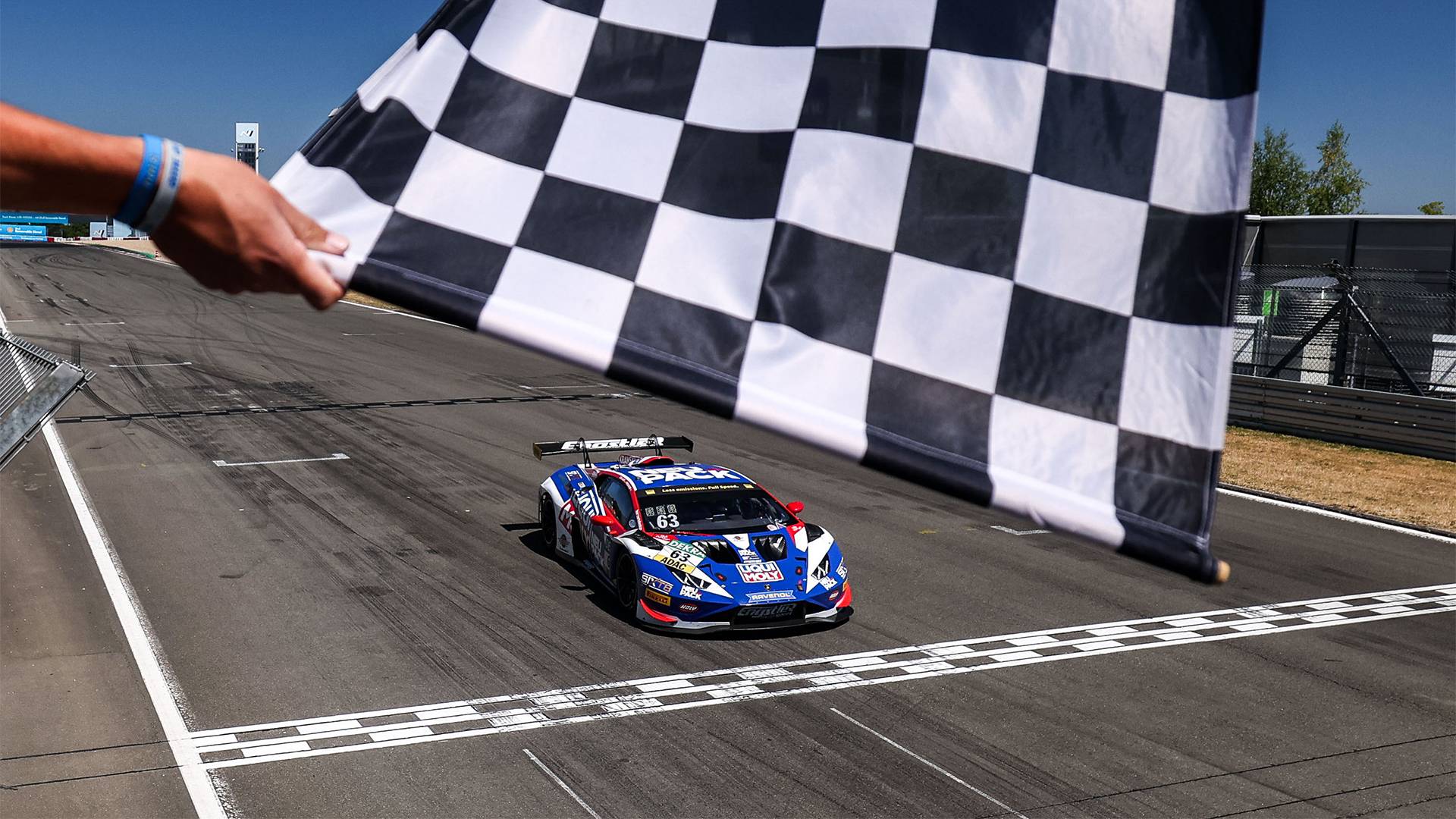
Away from the IMSA paddocks, Lamborghini's GT3 machinery continues to headline European competition. At the Nürburgring, Team Engstler Motorsport’s Finn Zulauf and Felix Hirsiger delivered a masterclass in the #63 Lamborghini Huracán GT3 EVO2, securing their third ADAC GT Masters victory of the season. Coming off a difficult round at the Lausitzring, the pairing rebounded emphatically.
Hirsiger set the tone early by topping Friday afternoon running with a lap of 1m25.998—six-tenths clear of the field—before dominating Saturday morning qualifying with a 1m25.104 to claim crucial championship points. Executing a flawless opening stint, Hirsiger built a healthy margin over the chasing Ford Mustang before handing over during the mandatory pit stop with just under 29 minutes remaining.
Tyre wear is extreme in these temperatures, which is why I tried to bring the win home safely in my half of the race. It feels good to lead the championship again. I like being the hunted. However, what really matters to us, is to be top of the table after the final race of the season.
Finn Zulauf
Running without success ballast in the first race, German driver Zulauf extended his advantage to nearly six seconds by the checkered flag. However, the subsequent round presented the inevitable tactical penalty of success: carrying 20kg of ballast for race two dropped the #63 crew to ninth. Concurrently, the guesting #22 GRT – Grasser Racing Team entry, driven by Gottfried Grasser and Gerhard Tweraser, matched that ninth-place finish. The weekend left Zulauf and Hirsiger clinging to a razor-thin one-point lead in the championship standings heading into the Salzburgring.
Tactical Realities and Tyre Management
Across both endurance sportscar racing and sprint GT formats, thermal degradation remains the defining variable. As highlighted by Team Engstler's engineering approach in high-temperature conditions, managing the initial opening laps to build a safe cushion is essential for preserving rubber over a double-stint structure. Drivers must balance aggressive cross-axle deployment with heat dissipation, a challenge amplified as championships tighten toward their autumn finales.
Whether observing the raw acceleration metrics of the newly minted Temerario variants or tracking the tactical defensive driving required to protect a single-point championship lead in the ADAC standings, Lamborghini's motorsport ecosystem is operating at a relentless cadence. The transition from the outgoing Huracán platform to the new generation of turbocharged and hybrid architectures has done nothing to blunt the brand's competitive edge on global circuits.
Sources
These sources formed the evidence pack for this article. Links open the original publisher; inclusion does not imply endorsement.
- supercars.net original
- caranddriver.com original
- lamborghiniphiladelphia.com original
- lamborghini.com original