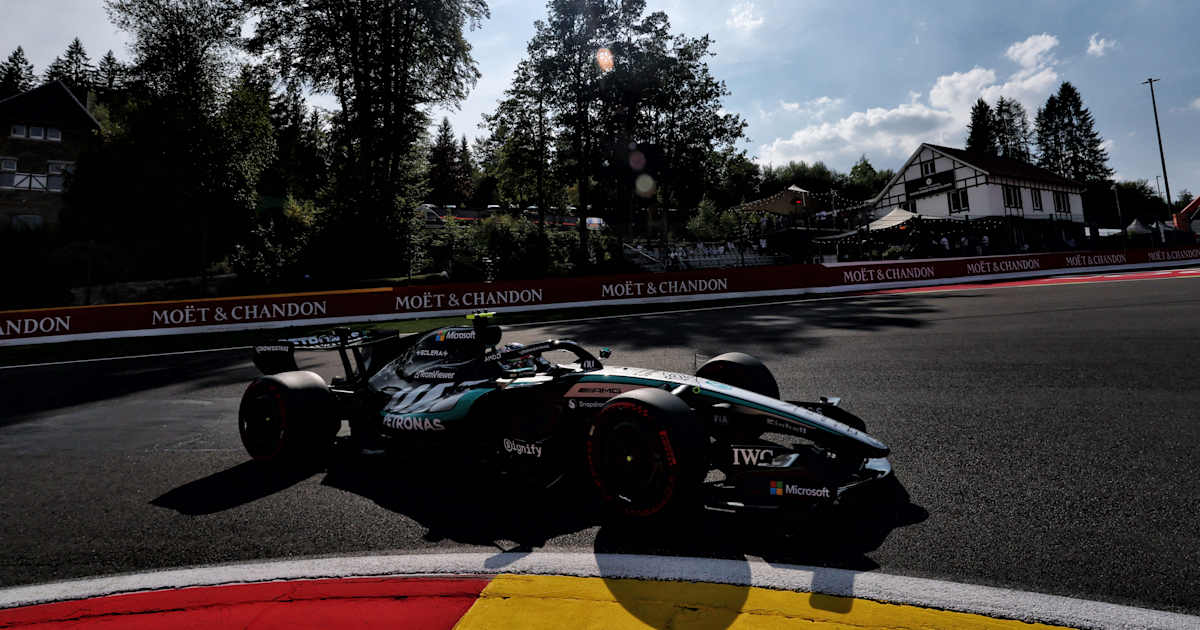
When Formula One returns from its summer stretches or cycles through European mid-season rounds, the margin for aerodynamic error shrinks to millimeters. At the Circuit de Spa-Francorchamps, that tension snapped on Friday morning during opening practice when Mercedes prodigy Kimi Antonelli found his fast lap ruined by Carlos Sainz’s dawdling Williams in the second sector.
Approaching the exit of Stavelot at high speed, Antonelli was forced to abort his push lap abruptly as Sainz backed off near the end of a fast corner. Venting his fury over the team radio in the heat of the moment, the 19-year-old Italian did not hold back:
Sainz! What an idiot!
The near-miss quickly mutated into a broader paddock debate once the session concluded, drawing competing interpretations over driver safety, technical limitations under modern regulations, and the boundaries of permitted team radio language.
The Technical Reality of the Straight Mode Conflict
Speaking to reporters after putting his Mercedes at the top of the timesheets in FP2 with a 1:45.944—rebounding dramatically from a difficult sixth-place finish in the morning—Antonelli defended his reaction while acknowledging his choice of vocabulary.
He took his foot off the throttle at the end of a fast corner, where you’re normally in seventh gear,
Antonelli explained, as noted by speedweek.com. I had to cut my lap short and that was quite risky. Of course I wasn’t happy about it, and yes, in the heat of the moment I perhaps didn’t choose the best words, but the whole thing was quite dangerous.
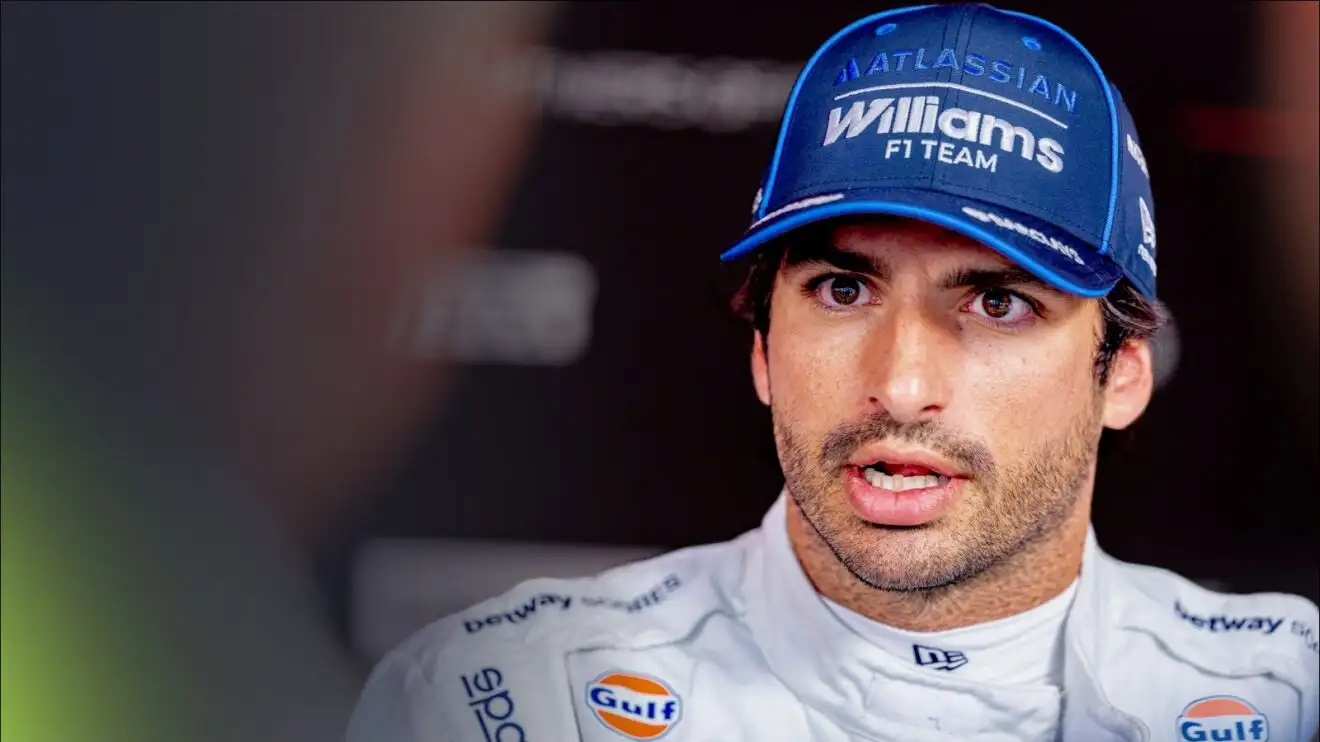
Sainz offered a very different perspective on the incident, pointing out the unique technical demands placed on modern cars running open-wing modes where downforce is severely compromised. Defending his actions to media outlets including AS and PlanetF1, the Williams driver suggested that Antonelli needed to check his temper:
I think he felt like I impeded him – I don’t feel like I did,
Sainz stated. I guess nowadays with the SM, if you don’t get out of the way exactly, you cannot turn because you have no downforce with the wings open. Maybe he felt like I could have got out of the way in a better way. But I don’t think he should call me an idiot either, on the radio, I think that’s forbidden, to swear and insult a rival – so I think he should calm down a bit.

Stewards’ Verdict and Regulatory Enforcement
Despite Sainz’s assertion that insulting a rival breaches sporting etiquette, the FIA stewards took no action against either driver. The racing regulators declined to investigate Sainz for impeding, signaling that they saw no regulatory violation in his positioning at Stavelot. Furthermore, while the governing body flirted with strict anti-swearing prohibitions last season, those rules have been significantly scaled back, meaning Antonelli faced zero formal repercussions for his blunt assessment.
The flashpoint added to an already chaotic Friday for Sainz, who also picked up a stewards' warning later in the day after crossing the pit-lane entry line before remaining on track on team instructions—a mistake the Spaniard readily shouldered as he worked to preserve battery charge for soft-tyre simulations.
Context Within the 2026 Grid Dynamics
The friction at Spa highlights how razor-thin the margins have become as teams extract performance from evolving aerodynamic packages. For Antonelli, the ability to pivot between a troublesome morning session and a dominant afternoon practice underscores the raw speed that has made him a central figure at Mercedes. Yet, as the championship battle intensifies across European rounds, quick tempers and blunt radio exchanges are proving to be an inevitable byproduct of high-stakes competition.
Sources
These sources formed the evidence pack for this article. Links open the original publisher; inclusion does not imply endorsement.
- speedweek.com original
- AFP 4 min read July 1, 2024 - 6:50AM original
- Sam Cooper original
- Ian Mangan original
- Daniel Novak original