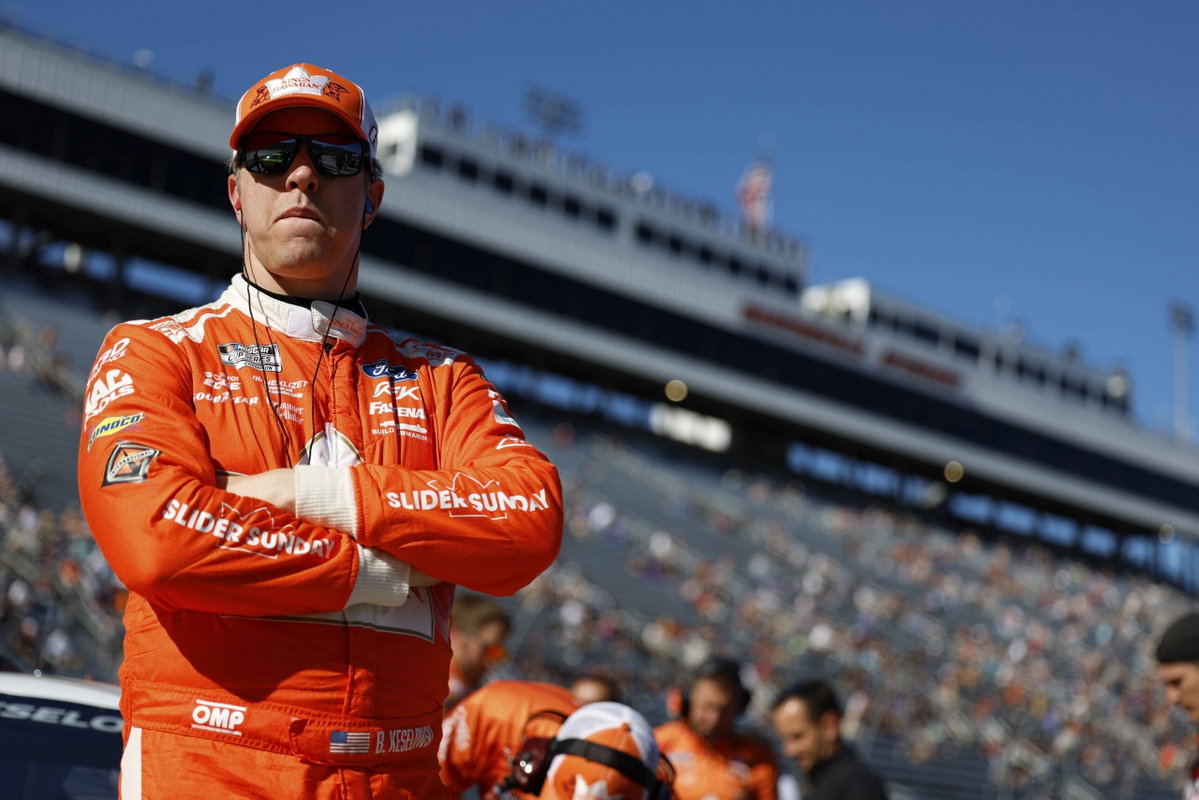
On Lap 220 at World Wide Technology Raceway, Brad Keselowski’s afternoon at the Enjoy Illinois 300 unraveled in a burst of high-rpm fury. Having led 55 laps and controlled multiple restarts, the RFK Racing co-owner watched helplessly as Team Penske’s Joey Logano powered past his No. 6 Ford on the outside. What followed was an unfiltered radio rant captured on NASCAR’s Radioactive broadcast that reverberated well beyond the Gateway garage.
“I wish I was one of the Fords that gets a good engine. Instead, we’re considered a s*** box. It’s f****** b********. F****** just motored right by me with a motor that’s significantly better.”
As spotter T.J. Majors scrambled over the radio to calm his driver down and reset his focus, Keselowski’s explicit outburst exposed deep, lingering tensions regarding Ford’s operational hierarchy, technical disparity, and manufacturing strategy in the Cup Series.
Internal Pushback: Bullins and the Roush Yates Reality
While Keselowski laid the blame squarely on engine allocation, his own crew chief, Jeremy Bullins, offered a far more diplomatic assessment when addressing the radio outburst on SiriusXM NASCAR Radio. Dismissing the notion of a systemic motor bias between Ford’s top stables, Bullins emphasized that engine output across the board remains tightly packed.
“I know it’s frustrating sometimes when you get passed, but certainly from four to four, I think we’re all fairly close. To be honest, it’s not something that I get caught up in because from my end, we’re a customer in the engine shop, and I know they’re doing the best they can to give us the most horsepower they can.”
Bullins acknowledged that while Chase contender cars might occasionally receive a specification featuring one or two extra horsepower, the overall output supplied by Roush Yates Engines and President/CEO Doug Yates remains consistent across teams. Rather than horsepower deficits, technical analysts point toward setup discrepancies and aerodynamic efficiency as the primary variables differentiating Penske’s top-tier pace from RFK’s late-run drop-offs.
Harvick's Diagnosis: The Structural Dysfunction in the Ford Camp
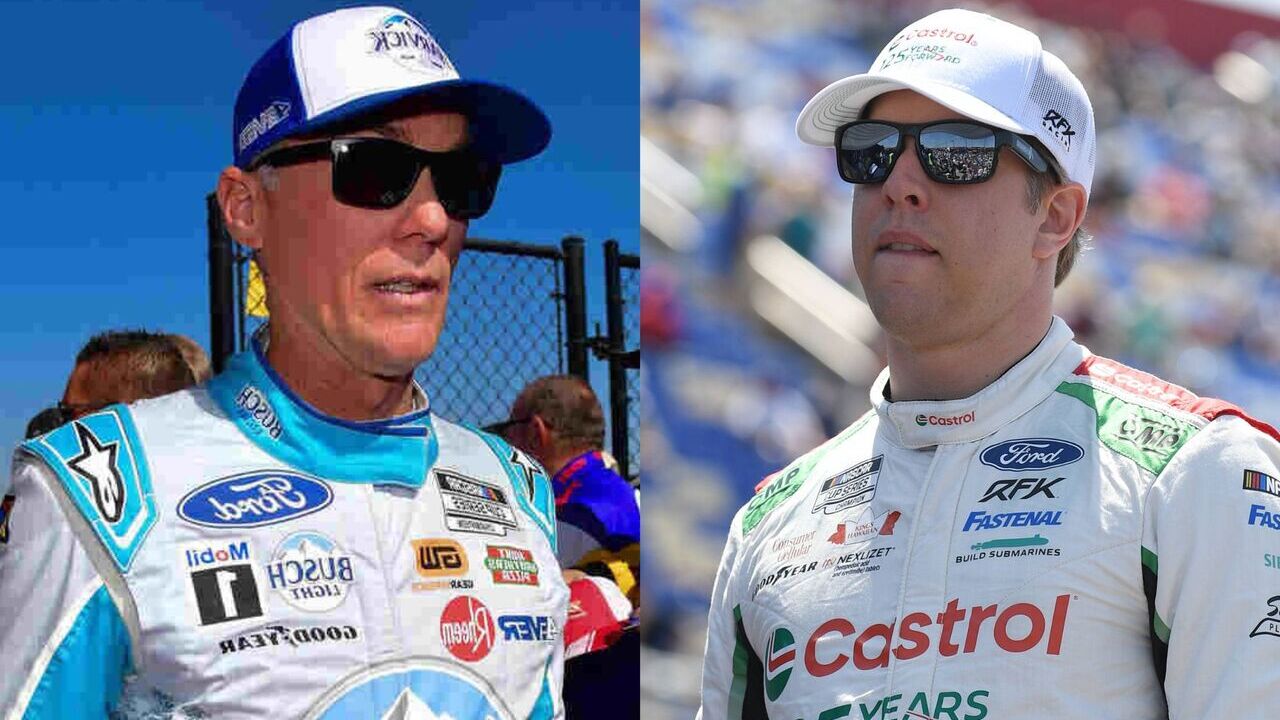
Keselowski’s dissatisfaction with Ford’s organizational dynamic is not an isolated complaint. Former Cup Series champion Kevin Harvick, who spent a decade driving Ford machinery at Stewart-Haas Racing, publicly validated Keselowski’s frustrations, describing Ford’s Cup Series ecosystem as historically fragmented.
Comparing Ford’s setup to Toyota’s highly coordinated alliance structure—where TRD aligns Joe Gibbs Racing, 23XI Racing, and Legacy Motor Club to build shared technology platforms—Harvick noted that Ford teams operate in isolated silos. Toyota and Chevrolet feature paid technical pipelines, such as 23XI paying Joe Gibbs Racing or Spire Motorsports compensating Hendrick Motorsports for engine and chassis data. Conversely, Harvick pointed out that Keselowski is effectively asking competing Ford teams to pool elite intellectual property without a shared financial incentive model.
Dale Jr and the Media Leverage Strategy
NASCAR Hall of Famer Dale Earnhardt Jr. analyzed Keselowski’s vocal criticisms on his Dale Jr Download podcast, pointing out that public callouts are a deliberate tactical maneuver. Earlier in the summer at Chicagoland Speedway, Keselowski openly praised Toyota for establishing two "A-organizations" through "elite collaboration," contrasting it directly with Ford's tiered hierarchy.
“Brad’s using the media as some leverage to try to get Ford to react in the manner that he wants them to react. If the conversation behind closed doors isn’t working, you go in that media center and you make it known.”
Earlier in the campaign—when Ford sat at the bottom of the manufacturer standings with just a single victory through 19 races (Ryan Blaney at Phoenix Raceway in March)—Keselowski began escalating his public feedback. Even as Ford’s win total reached six through 28 races, RFK Racing remained winless on the season, sharpening the urgency for the organization’s executive driver.
Navigating Feuds and On-Track Reality at Gateway
The frustration over Logano’s Lap 220 pass unfolded against an already volatile backdrop at Gateway. Pre-race storylines focused heavily on potential retaliation between Keselowski and Spire Motorsports driver Carson Hocevar, following an earlier crash at Darlington where Hocevar spun the No. 6. Tensions escalated prior to Gateway when Spire team executive Jeff Dickerson publicly warned that if Keselowski interfered with Hocevar’s Chase run, Spire’s No. 77 would target RFK playoff drivers Chris Buescher or Ryan Preece.
Despite the pre-race grandstanding, the track action remained surprisingly clean. Hocevar yielded racing room to Keselowski in late traffic, ultimately finishing 8th to pick up 34 points and elevate himself to 9th in the Chase standings. Keselowski faded to 12th, extending a winless streak that stands at 87 races—spanning over two years and four months since his last victory at Darlington in May 2024.
Keselowski’s path to turning RFK Racing into a multi-win powerhouse faces an immovable structural barrier: team co-owner Jack Roush remains resolutely committed to Ford’s legacy model, leaving little room for external manufacturer transitions. Unless Ford restructures its technical sharing permissions or Keselowski convinces competing owners to adopt TRD-style collaboration, RFK Racing must overcome its horsepower and aerodynamic margins through pure internal setup engineering.

Sources
These sources formed the evidence pack for this article. Links open the original publisher; inclusion does not imply endorsement.
- essentiallysports.com original
- firstsportz.com original
- rfkracingdigest.com original
- sportsnaut.com original