The early stretch of the 2026 NFL season reaches a critical juncture on Sunday, September 27, as the New York Jets square off against the Detroit Lions in a 1:00 PM ET kickoff. The matchup represents a fascinating clash of early-season betting trends and offensive ceiling. While market oddsmakers highlight New York’s opportunity to maintain a perfect mark against the spread, Detroit brings an explosive scoring core capable of altering game scripts in a single quarter.
New York's Spread Surge and Market Momentum
Through the opening two weeks, market sentiment around New York has solidified around defensive baseline consistency and competitive game management. Sports Illustrated's betting analysts emphasize backing the Jets to move to 3-0 Against The Spread (ATS) in this Sunday clash. The capability to beat market expectations consistently through two weeks signals that oddsmakers may still be adjusting to New York's game control and point-differential resilience.
For bettors and market observers, covering spreads consistently on the road requires mitigating defensive breakdowns and avoiding catastrophic turnovers. New York's ability to stay within striking distance—or pull outright upsets—has transformed them into one of the early season's most reliable against-the-spread commodities.
Detroit's Red-Zone Threats: Gibbs and St. Brown
Standing in the way of New York's coverage streak is a Detroit offense built to capitalize on leverage inside the 20-yard line. According to FanDuel's Week 3 touchdown board, running back Jahmyr Gibbs and wide receiver Amon-Ra St. Brown stand out as top-tier targets in the anytime touchdown market.
Detroit’s scheme creates high-value touches for both skill players. Gibbs presents a dual-threat menace through dynamic perimeter runs and backfield targets, while St. Brown remains the primary target on high-leverage third downs and red-zone passing concepts. If Detroit converts possessional drives into seven-point returns rather than field goals, New York's against-the-spread cushion could erode rapidly.
Week 3 League Landscape: MVP Movements and Quarterback Shuffles
The Sunday afternoon contest takes place against a rapidly shifting league-wide backdrop. The Week 3 action opened on Thursday, September 24, with the Atlanta Falcons delivering a decisive 35-14 victory over the Green Bay Packers. Meanwhile, the early-season MVP race continues to evolve dynamically across both conferences.
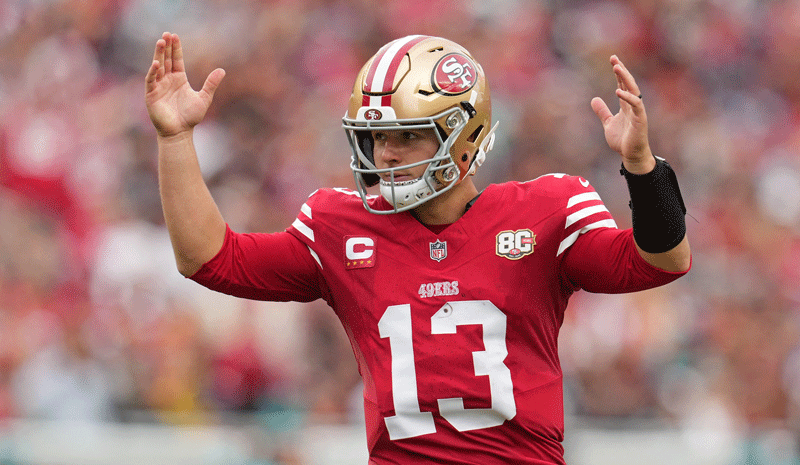
Buffalo quarterback Josh Allen continues to headline the MVP market following a dominant opening fortnight. However, San Francisco’s Brock Purdy—boasting an 80% completion rate for the 2-0 49ers—and Cincinnati’s Joe Burrow have both surged ahead of Baltimore's Lamar Jackson in futures trading. Conversely, Chicago saw quarterback Caleb Williams' MVP market share collapse from 12% to 3% after he suffered a Grade 1 hamstring injury against Minnesota, clearing the way for veteran Case Keenum to prepare for a start against the Philadelphia Eagles.
Evidence-Led Forecast: Tactical Blueprint and Key Factors
Likely Tactical Pattern: Expect Detroit to test New York's defense early through rhythm passing to St. Brown across the intermediate middle, opening up space for Gibbs on perimeter zone stretches. New York's priority will be controlling tempo, keeping Detroit's high-octane offense on the sideline, and staying within the key numerical margin required to cover the spread.
Decisive Matchup: Detroit's red-zone efficiency against New York's bend-don't-break defensive front. If Gibbs and St. Brown finish drives in the end zone, Detroit can pull away. If New York forces field goals, the Jets maintain strong value to cover.
Strongest Counter-Case: A low-turnover, grind-it-out script favoring New York keeps the point margin tight throughout four quarters, ensuring New York advances to 3-0 ATS regardless of straight-up win-loss outcomes.
What Would Change the Read: An early multi-score deficit forced by Detroit big plays or defensive turnovers would force New York out of its balanced offensive structure, severely compromising their spread-covering baseline.
Sources
These sources formed the evidence pack for this article. Links open the original publisher; inclusion does not imply endorsement.
- covers.com original
- si.com original
- fanduel.com original
- sportsline.com original