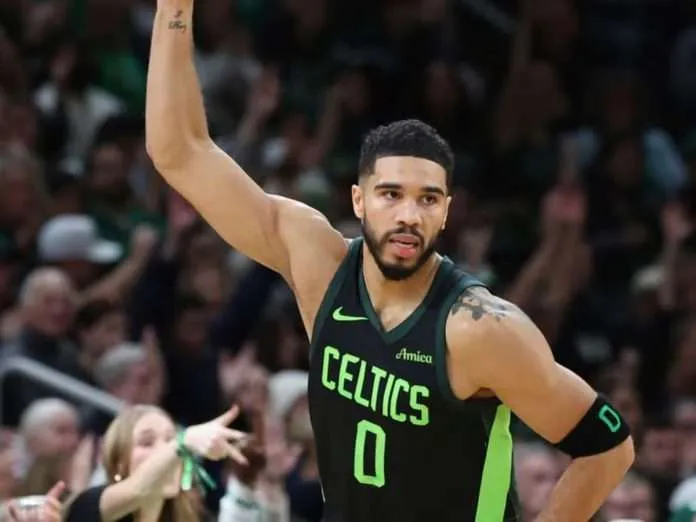
When Jayson Tatum powered through a back-to-back road stretch by dropping 40 points in a 126-114 victory over the Toronto Raptors—fresh off a grueling 122-120 road win against the Detroit Pistons—it signaled more than just an individual scoring outburst. It served as a definitive declaration: the Boston Celtics belong entirely to Tatum now. The long-standing debate over dynamic hierarchy and dual-wing alpha status that defined Boston’s modern era has officially dissolved, reshaped by Jaylen Brown’s departure to the Philadelphia 76ers and Tatum’s recovery from a severe Achilles injury suffered on May 12, 2025, during the Eastern Conference semifinals against the New York Knicks.
The Transition from Dual-Wing Tension to Singular Command
For years, Boston’s trajectory was linked to the combined output of Tatum and Brown. Yet, the friction inherent in sharing primary playmaking duties reached a tipping point during Tatum’s extended absence. In Tatum's downtime, Brown blossomed as Boston's undisputed primary option, recording 28.9 points (fifth-highest in the NBA), 7.2 rebounds, and 5.0 assists per game, ultimately securing a sixth-place finish in Most Valuable Player voting. That trial run as the lone focal point altered the chemistry when Tatum made his late-season return, creating an unavoidable clash in bravado and ball dominance.
Now operating on a star-studded 76ers roster alongside three other ball-dominant playmakers, Brown leaves behind a vacant throne in Boston. While Brown offered elite isolation bucket-getting and perimeter defense, Tatum’s game presents a broader playmaking canvas. Unlike Brown’s direct scoring attacks, Tatum possesses the court vision to manipulate defenses, navigate incoming double-teams, and act as an offensive orchestrator. The question confronting head coach Joe Mazzulla is no longer how to split touches between two elite wings, but how high Tatum’s ceiling can rise when given total control over Boston's system.
Roster Construction and Lineup Cascades Around Tatum
The operational framework surrounding Tatum has undergone a systematic recalibration. The front office bolstered the roster depth by adding Paul George, Mitchell Robinson, and veteran point guard Mike Conley Jr. These additions, paired with an established core featuring Derrick White and Payton Pritchard, provide Tatum with a far more complementary set of floor-spacers and rim protectors than last season's configuration allowed.
| Player | Role / Fit | Impact on Tatum's Primary Offense |
|---|---|---|
| Paul George | Secondary Wing Creator | Eases perimeter pressure without restricting Tatum's initiating duties |
| Derrick White | Two-Way Guard | Capitalizes on Tatum's drive-and-kick passes; increases catch-and-shoot efficiency |
| Hugo González | Sixth Man / Defensive Specialist | Injects defensive intensity and transition speed alongside secondary units |
| Neemias Queta | Pick-and-Roll Big | Serves as a vertical threat capitalizing on Tatum's heavy pick-and-roll volume |
| Mitchell Robinson | Interior Anchor | Provides offensive rebounding depth and rim protection |
The tactical ripple effects extend down the depth chart. Defensive prodigy Hugo González has developed into an impactful sixth man, providing high-motor transition play and perimeter clamping alongside Derrick White. Meanwhile, roll-threat Neemias Queta gains elevated rim-running value from Tatum's pick-and-roll delivery, while perimeter shooters Baylor Scheierman and Sam Hauser profit from the increased gravity Tatum generates when commanding double-teams.
Overcoming Backcourt Shortages in the East Standings Race
The viability of Tatum’s solo leadership was tested immediately during Boston’s recent trip to Toronto. Operating without three primary point guards, Tatum shouldered the entire initiating burden, driving Boston to a 26-point second-half cushion despite early heavy legs from the previous night's tight finish in Detroit. His 40-point masterpiece underlined the structural difference in this year's squad: where Boston once stumbled when shorthand in the backcourt, Tatum's presence as a giant primary ball-handler stabilizes the entire floor.
This individual momentum directly impacts the Eastern Conference standings, where Boston continues to battle the Detroit Pistons for the top seed. With Detroit mounting a formidable push, Boston's ability to pull out gritty road games without their full guard rotation reinforces the value of having Tatum operating at peak efficiency.
Tactical Forecast: The Solo Engine vs. Contention Roadblocks
As the regular season heads into its home stretch, Boston’s identity is clearer than it has been in years. The long-running debate over co-alphas is finished. Jayson Tatum has the ball, the system, and the undisputed leadership of the franchise firmly in his hands.
Sources
These sources formed the evidence pack for this article. Links open the original publisher; inclusion does not imply endorsement.
- celticsblog.com original
- elpregon.news original
- somosbasket.com original